Converting a spare bedroom into a dedicated closet is one of the most satisfying home improvements a fashion lover or organization enthusiast can make.
Instead of cramming clothes, shoes, and accessories into an overstuffed wardrobe, imagine having an entire room designed specifically around your storage needs.
The process involves more planning than simply moving a bed out, but the result is a functional, beautifully organized space that makes getting dressed feel genuinely enjoyable.
Whether you prefer a boutique-style setup or a practical storage system, there are options for every budget.
Mapping Mechanical and Architectural Constraints
Success begins with a tape measure and a clear understanding of the room’s physical limits.
While a tiny 5×5 foot space can technically work, a functional and comfortable dressing room typically requires at least 7×10 feet to allow for a central walkway.
Before ordering any shelving, map out the invisible obstacles that bedrooms possess but closets usually don’t. This includes HVAC vents, electrical outlets, light switches, and access panels.
Blocking a floor vent with a heavy cabinet can lead to poor air circulation and moisture buildup, which is disastrous for leather goods and natural fibers.
Ensure the layout allows for a 36-inch walkway so you can move freely without bumping into racks.
If the room is narrow, a single-sided layout is best, but wider rooms can support double-sided storage or even a central feature.
The Wardrobe Audit and Classification
A new space deserves a curated collection. A successful transformation starts with the edit, where items are sorted into keep, donate, or discard piles. This isn’t just about cleaning; it’s about data collection.
Measure the actual volume of your wardrobe to determine your specific needs. Group clothes by category: short items like shirts and folded pants need double-hang rods, while long dresses and coats require a full 66 to 72 inches of vertical clearance.
Professional organizers recommend arranging foldable items in 10-inch-high stacks, which helps prevent toppling and keeps everything visible.
By classifying accessories like ties, belts, and shoes separately, you can design active zones for daily essentials and passive zones for seasonal items.
Custom Built-Ins versus Modular Track Systems
Choosing the right foundation for your storage determines the room’s lifespan and the impact on your home’s resale value.
Custom built-ins are treated as permanent architectural millwork, anchored directly to the wall studs and floor plates.
They use high-quality materials like furniture-grade plywood or solid wood that won’t sag under the weight of heavy coats.
Modular systems, such as IKEA PAX, offer a budget-friendly, DIY alternative using track-and-rail mechanisms.
However, these often use particle board, which is more prone to moisture damage and warping over time.
| Feature | Custom Built-Ins | Modular Systems |
| Structural Mounting | Anchored to framing (studs/floor) | Hung on track/rail or freestanding |
| Material Grade | Furniture-grade plywood/MDF | Particle board/melamine |
| Lifespan | 20–30+ years | 5–10 years |
| Home Appraisal | Classified as permanent fixture | Classified as personal property |
| Resale Value | Positive ROI (adds home value) | Neutral to negative |
UV Filtering and Preservation Strategies
Unlike traditional dark closets, bedrooms have windows that introduce a hidden enemy: UV radiation.
Sunlight causes irreversible fading and weakens the molecular structure of delicate fabrics like silk and wool.
To enjoy natural light without ruining a collection, apply a clear UV-filtering film to the glass to block up to 99% of harmful rays.
Supplement this protection with functional window treatments. Roman shades or solar screens provide a polished look and allow you to control light levels throughout the day.
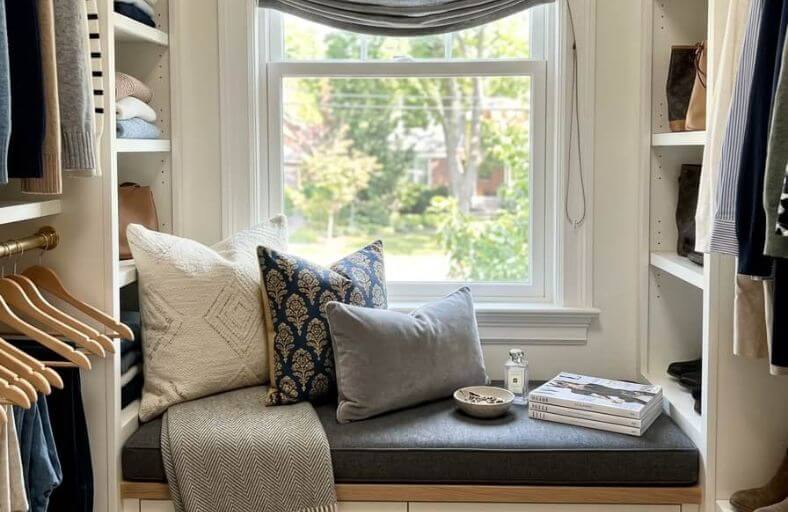
If a window sits on a primary storage wall, consider building cabinets around it or adding a window seat with integrated drawers.
This preserves the architectural feature while maximizing every inch of storage space.
Optimizing Rod Heights for Garment Types
The utility of a dressing room is defined by its ergonomics. A poorly planned layout results in a space that feels chaotic despite having ample square footage. Proper rod placement is the most critical factor in closet usability.
Standard design guidelines recommend double rods installed at 40 and 80 inches from the floor to accommodate shirts, blazers, and folded trousers.
Long-hang sections require a vertical clearance of approximately 66 to 72 inches to accommodate maxi dresses and long overcoats without the fabric dragging on the floor.
Rods must be positioned at least 24 inches from the back wall to ensure hangers move freely and clothes do not press against the cabinetry.
| Hanging Category | Rod Height (from floor) | Best For |
| Upper Rod (Double-Hang) | 80–84 inches | Shirts, blazers, short jackets |
| Lower Rod (Double-Hang) | 40–42 inches | Trousers (folded), skirts |
| Single Rod (Long-Hang) | 66–72 inches | Full-length dresses, long coats |
Ceiling-High Shelving and Accessibility Solutions
Maximizing vertical space is the most effective way to increase storage capacity without expanding the room’s footprint.
In a bedroom with standard 8-foot or 9-foot ceilings, the upper 24 inches of wall space are prime real estate for seasonal storage and bulky items.
Install shelving at least 12 inches from the ceiling to allow for easy access and cleaning.
These high shelves are ideal for storing out-of-season wardrobes in clear, labeled bins, which keep items visible and organized while protecting them from dust.
To solve the accessibility problem, integrated sliding library-style ladders or stylish prop-up ladders are a common luxury feature.
They allow for safe access to the highest reaches of your cabinetry without the need for a cumbersome step stool.
Adjustable shelving is a smarter investment than fixed units, as it enables you to restructure storage heights for handbags or boots as your collection evolves.
Layering Ambient, Task, and Accent Lighting
Effective dressing room lighting must serve three distinct purposes: general navigation, garment selection, and aesthetic appeal.
LED strip lighting integrated into the underside of shelves or inside cabinets is highly recommended.
Unlike traditional bulbs, LEDs emit very little heat, making them safe for close proximity to delicate fabrics and luxury perfumes.
Color rendering is a critical factor for a professional finish. High-quality lighting ensures you can distinguish between similar dark hues, such as navy and black.
While a glam chandelier can provide a beautiful focal point and polish off the room, it should always be supplemented by functional task lighting.
For a seamless boutique experience, consider motion sensors that trigger the lights as soon as you enter the room, ensuring your wardrobe is beautifully showcased the moment you begin your morning ritual.
Focal Points for Accessory Storage
If your room dimensions allow for at least 10 feet of width, adding a center island is the hallmark of a luxury conversion.
The island serves as a visual centerpiece while providing a multifunctional surface for folding laundry, staging outfits, or packing suitcases.
To remain functional, an island requires at least 36 inches of clearance on all four sides.
The base of the island is typically fitted with drawers for small accessories like jewelry, watches, sunglasses, and belts. Using drawer dividers is essential to ensure these items stay organized and do not get tangled or scratched.
For an added touch of glamor, a glass-top island creates a display case feel where your favorite pieces are visible from above.
In smaller rooms where a full island isn’t feasible, a narrow peninsula or a chic ottoman can provide similar utility without obstructing the central walkway.
Designing Professional-Grade Vanity Stations
Moving your hair and makeup routine into the dressing room creates a seamless flow that eliminates the morning back-and-forth between the bathroom and the closet.
A dedicated vanity station requires a minimum footprint of 30 by 48 inches to be functional. Position this area near a natural light source if possible, but always supplement it with professional-grade lighted mirrors to ensure perfect color application.
Storage is the secret to a clutter-free vanity. Incorporate deep drawers with integrated electrical outlets to keep hair dryers and styling irons plugged in but hidden from view. This keeps cords from tangling and surfaces clean.
Adding a mix of smaller mirrors and a full-length mirror nearby provides a 360-degree view of your final look, making the room feel like a high-end salon.
Flooring Selection for Sound, Comfort, and Value
The choice between carpet and hardwood in a dressing room involves balancing barefoot comfort with long-term financial return.
Hardwood is considered the gold standard for home appraisal, potentially increasing a home’s value by up to 2.5%.
It is also more hygienic, as it does not trap the dust, dander, and allergens that naturally accumulate in dressing areas.
| Financial Factor | Carpet (Installed) | Hardwood (Installed) |
| Upfront Cost (sq ft) | $3–$11 | $8–$25+ |
| Lifespan | 5–15 years | 30–100+ years |
| Resale Impact | Neutral to Negative | Positive (70–80% ROI) |
| Maintenance Exp. | ~$10.46 / 100 sq ft | ~$3.02 / 100 sq ft |
While carpet offers immediate warmth and sound dampening, it has a firm expiration date and requires frequent professional cleaning.
To get the best of both worlds, many designers install high-quality hardwood and layer it with a plush area rug.
This preserves the asset value of the wood while providing the soft feel you want when stepping out of bed.
Specialized Racks for Shoes and Accessories
The difference between a generic storage room and a luxury suite lies in the precision of the organization.
Shoes require specific shelf depths to stay protected: standard shoes fit on 12 to 15-inch deep shelves, while boots need 18 inches to prevent the shafts from folding.
Open, angled shelves with heel catches are ideal for displaying designer footwear while keeping them easily accessible.
For handbags and hats, avoid hiding them in dark boxes. Use clear acrylic dividers on visible shelves to keep bags upright and organized.
Small accessories like watches, belts, and jewelry should be stored in drawers with velvet-lined dividers to prevent tangling and scratching.
Using specialized pull-out racks for ties or scarves ensures that every item has a designated home, maintaining the tidy boutique atmosphere you have worked hard to create.
Hardware, Trim, and Aesthetic Cohesion
The final layer of your conversion involves the aesthetic details that tie the entire room together. Cabinet hardware, such as drawer pulls and rods, should follow a consistent finish to create a polished look.
Popular choices like brass, matte black, or polished chrome can instantly elevate simple cabinetry.
Color and texture also play a vital role. Neutral tones like ivory or warm grey help a small room feel open, while deep navy or charcoal can create a dramatic, executive vibe.
Final touches such as vintage trays for perfume, fresh flowers, and fashion coffee table books glam up the space, making it feel like a personal sanctuary.
To complete the transformation, add a comfortable seating element like a plush ottoman or a velvet stool, providing a place to relax and enjoy your newly organized environment.