Deciding whether to reupholster a couch or simply replace it is a question that comes down largely to cost, and getting a clear answer requires understanding what goes into the pricing.
Fabric choice alone can account for a significant portion of the total bill, and labor costs vary widely depending on where you live and who you hire.
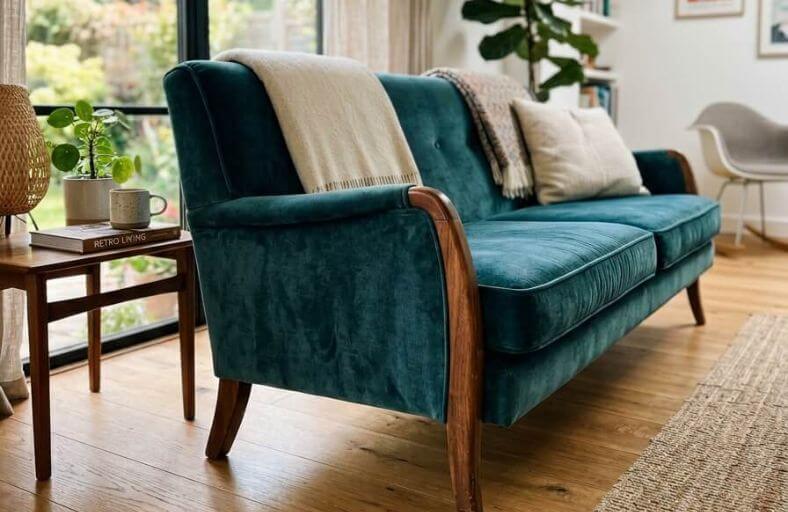
A couch with intricate detailing, carved wood accents, or an unusual shape will naturally cost more to reupholster than a simple, straight-lined sofa.
Knowing these variables upfront helps you budget accurately and avoid unpleasant surprises.
Classification by Design and Size
The most immediate factor determining your bill is the physical scale and mechanical complexity of the furniture.
A larger couch naturally requires more textile material and more hours of artisan labor to strip and recover.
Professional reupholstery for a standard three-seat sofa typically ranges from $1,000 to $2,500, while a larger sectional can easily exceed $4,500 due to its modular nature.
If your couch includes mechanical parts, such as a recliner or a sleeper sofa, expect to pay a surcharge of $200 to $500.
| Couch Category | Est. Total Cost (All-In) | Fabric Needed (Yards) |
| Loveseat (2-seater) | $600 – $1,500 | 8 – 12 |
| Standard Sofa (3-seater) | $1,000 – $2,500 | 12 – 20 |
| Large Sectional | $2,000 – $4,500+ | 20 – 35 |
| Recliner / Sleeper | $1,200 – $3,500 | 14 – 25 |
These pieces are more labor-intensive because the upholsterer must work around complex metal frames and folding mechanisms.
Material Selection and Textile Engineering
Fabric is often the most expensive variable in your project. Upholstery-grade textiles are engineered to withstand thousands of double rubs or mechanical cycles, which is why they cost more than clothing fabric.
Prices range significantly based on the material’s durability and maintenance needs. For a standard project requiring 16 yards, upgrading from a $30/yard basic polyester to a $100/yard luxury leather adds over $1,100 to your total.
Performance fabrics like Crypton or Sunbrella are popular choices because they resist stains and moisture, providing high durability for homes with pets or children.
Additionally, if you choose a fabric with a large pattern, you must purchase 10% to 30% more yardage to ensure the design aligns perfectly across the cushions and frame.
Professional Labor and Expertise
Labor accounts for a massive portion of the reupholstery process, usually ranging from $500 to $1,200 for a standard sofa.
Professionals typically charge between $40 and $150 per hour depending on their expertise and geographic location.
A simple sofa recovery can take between 12 and 20 hours of concentrated work.
The complexity of the design also dictates the labor cost. Features like deep button tufting, decorative nailhead trims, or contrast welting (piping) require specialized skills and extra time.
Tufting alone can increase the labor cost by approximately 30% because of the precision required to fold and secure the fabric.
Structural Reinforcement and Frame Repair
True restoration goes beyond the surface. If your couch squeaks or feels uneven, the internal skeleton likely needs help.
Structural repairs are often hidden costs discovered only after the old fabric is removed.
Repairing a cracked wooden frame or tightening loose joints typically costs between $100 and $400.
The suspension system is another critical component. Traditional high-end sofas use eight-way hand-tied springs, which are labor-intensive to repair. Replacing or re-tying these springs can add $150 to $400 to your quote.
Ensuring the frame is stable is essential, as even the most expensive fabric will sag prematurely if the underlying structure is compromised.
Restoring Comfort Layers and Foam Physics
Cushion foam often degrades through repeated compression long before the wooden frame reaches the end of its life. If your seats feel thin or you can feel the frame beneath you, it is time for a refill.
Replacing the foam for a standard three-seater with high-density upholstery foam typically costs between $200 and $300.
While budget-grade foam is cheaper, investing in high-resilience materials ensures the sofa maintains its shape for another decade.
In humid climates, choosing moisture-resistant or anti-mold padding is a smart tactical move to prevent internal decay.
| Service Item | Est. Cost Per Cushion | Quality Tier |
| Budget Grade Foam | $40 – $60 | Low density; short lifespan |
| High-Density Foam | $85 – $120 | Best for daily use |
| Down-Enveloped Core | $200 – $500 | Maximum luxury and comfort |
You can also opt for luxury wraps like down-enveloping to add a plush, high-end feel to your existing structure.
Logistics, Shipping, and Decorative Extras
Beyond the basic labor and fabric, secondary costs can influence your final investment.
Because reupholstery requires heavy machinery and specialized tables, it cannot be done in a standard living room.
Transporting a large sofa to and from a professional shop typically adds $100 to $300 to your total bill.
Some local shops in specific regions may offer free two-way shipping as a part of a premium package, so always ask before booking.
Decorative detailing is another variable. Adding contrast welting, custom fringe, or hand-applied nailhead trims requires significant extra labor. These stylistic finishes generally range from $75 to $300 depending on the complexity.
While these are optional, they are often what makes a reupholstered piece look truly custom and expensive.
Repair vs. Replace
The logic of reupholstery depends heavily on the original quality of your piece. If you own a budget sofa originally purchased for under $800, reupholstery is rarely cost-effective as the service will likely exceed the price of a brand-new replacement.
However, for high-end or heirloom furniture with solid hardwood frames, restoration is the fiscally responsible choice.
Professional reupholstery typically costs 30% to 50% of the price of a new piece of comparable quality.
Before deciding, test the frame. If the piece is exceptionally heavy and feels rock-solid when you shake the arms, it likely has a hardwood frame worthy of investment.
Restoration not only saves money on a premium asset but also keeps quality furniture out of landfills, making it an eco-conscious home styling choice.