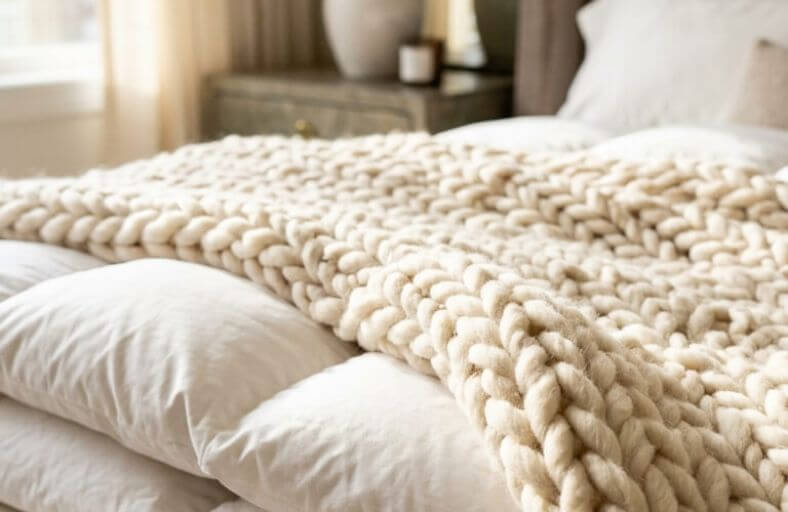
Walking into a bedroom only to find a flat, lifeless bed is an aesthetic nightmare that immediately dampens the mood of the entire space.
To achieve that high-end look, you need more than just a clean set of sheets. Professional styling is all about the science of volume and the art of layering textures.
By treating your bed like a piece of architecture, you can transform a simple sleeping space into a lush sanctuary.
These designer-approved steps will guide you through the process of building depth from the mattress up, ensuring your bed looks as good as it feels.
1. Build volume from the base
The secret to a “cloud-like” bed often hidden from view is the mattress topper. Professional designers rarely start with the mattress alone; they add a high-quality topper to create immediate volumetric loft.
This layer provides the necessary base for subsequent fabrics to drape beautifully rather than falling flat against the mattress.
You can choose your foundation based on the “vibe” you want to achieve:
| Component | Material | Visual Result |
| Down Topper | Duck or Goose Down | Soft, “dipping” curves for a relaxed look |
| Memory Foam | High-density foam | Structured, tailored, and crisp silhouette |
| Protector | Cotton or Bamboo | Smooth substrate that prevents fabric bunching |
Beyond aesthetics, a breathable mattress protector is essential to preserve the longevity of your investment while adding a subtle extra layer of cushioning. This foundational engineering ensures that the visible layers have a plump, inviting surface to rest upon.
2. Tuck corners for a crisp finish
To achieve a drum-tight, wrinkle-free foundation, you must master the “hospital corner” technique. Start by laying your fitted sheet and ensuring the tag is at the bottom right corner for a perfect orientation every time.
If you prefer using a flat sheet as a base, the hospital corner is non-negotiable for a five-star hotel finish.
To execute this, tuck the end of the sheet firmly under the foot of the mattress. Lift the hanging side fabric at a 45-degree angle, anchor the small triangle of fabric beneath it, and then drop the fold down to tuck it firmly. This create a crisp, anchored edge that won’t budge.
Precision at this stage is what separates an amateur bed from a professional one. A loose or bunching base layer will undermine all the decorative work you do on top, so take the time to smooth out every ripple before moving forward.
3. Lay the flat sheet upside down
One of the most common mistakes in bed-making is placing the flat sheet with the pattern facing up. For a true designer-level “turn-back,” you should place the flat sheet pattern-side (or “finished” side) down.
This ensures that when you open the bed and fold the top third back over your duvet, the most beautiful side of the fabric, including any embroidery or decorative borders, is visible to the eye.
This simple reversal provides an essential visual transition. It allows the crispness of the cotton to contrast against the heavier textures of the duvet and pillows.
When smoothing the sheet, leave enough length at the head of the bed to facilitate a generous fold later. This “reveal” is a fundamental styling trick that creates immediate depth and makes the bed look impossibly inviting the moment you walk into the room.
4. Add weight with a middle layer
Introduce a transitional mid-layer, such as a coverlet, quilt, or lightweight blanket, to bridge the gap between thin sheets and a voluminous duvet.
Known as the “workhorse” layer, this piece provides structural heft and prevents the bed from looking thin or clinical. In the summer, a matelassé coverlet offers beautiful texture without trapping excess heat, while a quilted layer adds essential warmth during winter months.
This layer should be laid evenly from top to bottom and can be tucked in alongside the sheets for a tailored look or left to drape for a more relaxed aesthetic.
Designers often use this layer to introduce a secondary color or a subtle geometric pattern to contrast with the solid tones of the base sheets.
Not only does it add visual weight, but it also serves as a functional temperature buffer, allowing you to adjust your comfort levels throughout the night without stripping the entire bed.
5. Double-stuff your duvet for maximum loft
The duvet is the “hero” of your bed, and designers have a secret for that incredibly plump, cloud-like volume: they use two inserts inside one cover.
Alternatively, you can choose an insert that is one size larger than your duvet cover, such as a King insert inside a Queen cover. This technique eliminates hollow corners and ensures the fabric remains taut and luxurious.
When placing your duvet, spread it evenly across the bed and then pull it back about one-third of the way from the head of the bed.
This “fold-back” creates immediate visual depth by revealing the layers of sheets and quilts beneath. If you want an extra lush look, fold the duvet back twice to create a thick, inviting “roll” of fabric.
This over-stuffed appearance is the hallmark of five-star hospitality design and makes the bed look far more substantial and comfortable than a single, thin layer ever could.
6. Master the 4-2-1 pillow blueprint
Arranging pillows with mathematical precision is what distinguishes a styled bed from a messy one. Designers typically follow the “4-2-1” formula to create a balanced, architectural look at the head of the bed. This setup ensures that your pillows provide height, structure, and a clear focal point.
| Pillow Type | Quantity | Purpose |
| Base Pillows | 4 | Stacked or leaned to provide a sturdy foundation |
| Euro Shams | 2 | Large square pillows (26×26) that add height |
| Accent Piece | 1 | A long lumbar or decorative cushion for a final pop |
A vital pro secret for that magazine-perfect finish is to use inserts that are 1 to 2 inches larger than the pillow covers.
For example, a 20-inch decorative cover should be paired with a 22-inch insert. This extra tension ensures the pillows maintain their shape and prevents “sad,” drooping corners.
You can choose between “The Stack” for a modern, minimalist vibe or “The Lean” for a more traditional, hotel-luxe volume.
7. Ground your design with a final throw
The final structural layer is the throw blanket or bed runner, placed strategically at the foot of the bed. This piece serves to “ground” the entire ensemble, tying your color palette together while introducing a final, contrasting texture.
Whether you choose a chunky knit, smooth velvet, or a breathable linen weave, this layer adds that coveted sense of “lived-in” luxury.
For a formal and tailored appearance, fold the throw into a crisp rectangle and lay it horizontally across the bottom third of the bed.
However, if you prefer an “effortlessly chic” vibe, try the diagonal drape. Simply toss the throw casually over one corner of the foot of the bed to break up the formal lines and make the space feel more welcoming.
This final touch provides a resting place for the eye and offers an extra layer of warmth that is easy to reach on chilly nights.