A gorgeous velvet headboard loses its charm the moment the mattress starts to sag into the cavernous gaps of a poorly engineered base.
This structural failure is the ultimate aesthetic nightmare that turns a peaceful sanctuary into a source of morning back pain and frustration.
Choosing a bed frame is far more than a simple decor decision; it is an architectural investment in your spinal health and the longevity of your mattress.
By focusing on material integrity and mechanical support, you can transform your bedroom into a stable, silent, and restorative retreat that stands the test of time.
1. Structural Foundations
The mechanical relationship between your frame and mattress is the most critical factor for comfort. Platform bed frames utilize a solid surface or closely spaced slats to support the mattress directly.
This design is highly efficient because it eliminates the need for a bulky box spring, providing a firm and consistent base that modern memory foam or latex mattresses require to prevent sagging.
In contrast, panel frames are designed with side rails and a headboard, traditionally requiring a box spring to bridge the gap.
If you choose a panel frame for a heavy hybrid or foam mattress, ensure you add a flat foundation or a bunkie board.
Without this extra layer, the wide gaps between the few provided rails can lead to catastrophic structural failure and void your mattress warranty.
2. The Durability of Hardwoods
Wooden bed frames are prized for their thermal neutrality and natural beauty, but the engineering quality depends entirely on the timber species.
Hardwoods like oak, walnut, and maple are the gold standard for longevity. These materials possess high fiber density, which allows for incredibly tight and durable joinery that resists wobbling over time.
A solid oak frame can literally last for generations, developing a rich patina as it ages. While softwoods like pine are more budget-friendly, they have lower compressive strength and are more susceptible to surface indentations or loose screws.
If you want a frame that remains silent and sturdy for decades, investing in kiln-dried hardwood is the smartest choice for environmental stability and mechanical performance.
3. The Strength of Metal Frames
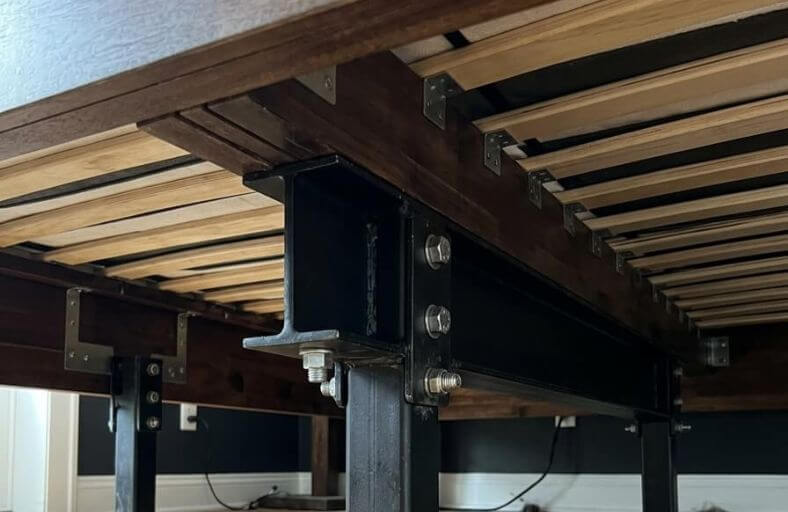
Metal bed frames, typically constructed from high-quality steel or iron, offer an exceptional strength-to-weight ratio.
These frames are nearly indestructible under static loads and provide a sleek, minimalist aesthetic perfect for industrial or modern designs.
One major engineering advantage of metal is its resistance to pests like termites and its hypoallergenic nature, as it does not trap dust or moisture like organic materials.
However, the primary challenge with metal is acoustic resonance. If the assembly bolts are not tightened with sufficient torque, the metal-on-metal friction can create high-pitched squeaks.
To ensure a silent sleep, look for powder-coated steel frames that include noise-reduction gaskets or felt padding at the connection points.
4. Upholstered Elegance
Upholstered bed frames add a layer of luxury and sound absorption that hard materials cannot match.
By wrapping a structural core in foam and fabric, these frames create a soft, inviting focal point that is perfect for those who enjoy sitting up in bed to read.
From an engineering perspective, the durability of an upholstered frame is determined by the “rub count” of the textile and the density of the underlying padding.
While fabrics like linen and velvet offer sophisticated textures, they require more maintenance than wood or metal.
They can trap allergens and may fade if placed in direct sunlight. For a balance of style and practicality, consider faux leather or performance fabrics that offer stain resistance while maintaining a high-end interior look.
5. Slat Spacing
The distance between the slats on your bed frame is not an arbitrary design choice but a critical mechanical requirement for your mattress health.
If the gaps are too wide, the mattress material, especially pliable foam, will begin to “creep” or bow downward into those spaces, causing permanent structural deformation and often voiding your warranty.
To ensure your mattress stays flat and supportive, you must match the slat intervals to your specific sleep technology.
| Mattress Technology | Maximum Allowable Gap |
| All-Foam / Memory Foam | 3.0 cm (1.2 in) |
| Natural Latex | 3.0 to 5.0 cm |
| Hybrid (Coils + Foam) | 5.0 to 6.5 cm |
| Traditional Innerspring | 6.5 cm (2.5 in) |
For memory foam and latex, gaps exceeding 3 cm are risky because these dense materials flow into gaps more easily under sustained load.
If your dream frame has slats that are too far apart, you do not have to give up on it. Simply adding a thin bunkie board or a sheet of plywood can provide the dense support needed for these sensitive materials.
6. Ergonomic Height
Getting in and out of bed should feel effortless, not like a morning workout. The perfect bed height is deeply personal and depends on your own physical measurements.
As a general rule of thumb, the top of your uncompressed mattress should be roughly level with the crease at the back of your knee when you are standing.
When you sit on the edge, your feet should be flat on the floor with your knees at a comfortable 90 degree angle.
| User Height | Target Mattress-Top Height |
| Shorter (Under 5’4″) | 18 to 20 inches |
| Average (5’4″ to 6’2″) | 20 to 24 inches |
| Taller (Over 6’2″) | 24 to 30 inches |
This alignment provides the mechanical advantage needed to stand up with minimal strain on your joints, which is especially vital for seniors or anyone recovering from surgery.
Keep in mind that your total height is a sum of the frame, the foundation, and the mattress itself. If you love a thick, 14 inch luxury mattress, you might need a low-profile platform frame to keep the total height manageable.
7. Load-Bearing
A bed frame must support more than just the silent, unmoving weight of its occupants. Most manufacturers list a static weight capacity, but in real life, movements like sitting down quickly or rolling over generate dynamic loads that can be 1.5 to 2 times your actual body weight.
To play it safe, always look for a frame with a capacity that offers a 20% to 30% safety margin above the combined weight of the sleepers and the mattress.
For Queen and King sizes, a center support rail with at least one (and ideally two or three) support legs is a non-negotiable requirement.
Without this central reinforcement, the frame will inevitably bow in the middle, creating a “taco effect” where both sleepers roll toward the center of the bed.
High-quality heavy-duty frames often utilize 14-gauge steel and bolted corner joints to handle these intense forces without creaking or failing over the years.
8. Ventilation
Hygiene is an often-overlooked factor in bed frame selection, but it is essential for a healthy sleep environment.
Humans lose a significant amount of moisture through sweat and breath every night, and without proper airflow, this moisture can get trapped under the mattress.
A slatted base acts as a natural ventilation system, allowing air to circulate and help moisture evaporate.
If you place a mattress directly on the floor or a solid, unventilated platform, you risk condensation, especially if the bed is pushed against a cold exterior wall.
This dew point moisture is the perfect invitation for mold and mildew to grow, which can ruin your mattress and trigger respiratory issues.
To keep your sanctuary fresh, choose a frame with high-clearance legs to allow for cleaning and consistent airflow.
A small gap of 1 to 2 inches between your frame and the wall also breaks up condensation zones and keeps your sleep space mold-free.
9. Silent Sleeping
The most common complaint about bed frames is the development of annoying squeaks that wake you up every time you roll over.
These noises are usually not signs of structural failure but are simply results of mechanical friction at connection points.
To maintain a silent frame, perform a quick tune-up every six months by checking for loose bolts. Tightening these fasteners is often the easiest way to silence a groaning bed. If the sound persists, you can use common household items to create a buffer.
For example, placing old socks or felt pads between the slats and the side rails acts as a noise-canceling cushion.
| Noise Type | Likely Source | Quick Fix |
| High-pitched rattle | Metal joints or loose bolts | Tighten bolts and apply WD-40. |
| Deep wooden groan | Friction between slats and rail | Apply beeswax or use felt strips. |
| Thumping sound | Frame legs on an uneven floor | Add floor padding or non-slip pads. |
For wooden frames, avoid petroleum-based sprays; instead, rub a little candle wax or beeswax on the contact areas to provide a wood-friendly lubricant.
10. Storage and Traffic Flow
Selecting a bed frame requires balancing the size of your sleep surface with the actual physical footprint of the furniture.
Always remember that the exterior dimensions of a frame are larger than the mattress itself due to the thickness of headboards and side rails.
To ensure your bedroom feels like a retreat rather than a cramped maze, you should aim for at least 30 to 36 inches of clearance around the sides and foot of the bed. This space is essential for moving freely, changing linens, and accessing closets.
In smaller urban living spaces, your bed frame can double as a powerful organization tool. There are two primary mechanical approaches to under-bed storage.
Drawer systems are convenient for frequently used items like extra bedding, but they require significant clearance on the sides to open fully.
If your room is very tight, a hydraulic lift system is a smarter choice. These frames use gas-pressurized struts to lift the entire mattress, revealing a massive storage cavern underneath without needing any side clearance at all.
11. Style Integration
Your bed frame is the primary visual anchor of your room, and its silhouette should harmonize with your architecture.
If you have a large bedroom with high ceilings, a grand four-poster or canopy bed can help fill the vertical volume and create a dramatic focal point.
For those living in smaller spaces, a low-profile platform bed without a footboard is often the best choice. This streamlined design keeps sightlines open, making a tiny room feel much larger and more modern.
Consider how the style narrative of the frame fits your personal aesthetic. Minimalist frames with clean lines and light wood tones evoke a sense of calm and order.
If you prefer a more traditional or luxurious vibe, look for heavy hardwoods with ornate headboards or deep tufted upholstery.
Industrial designs often blend raw materials like iron piping and distressed wood for a rugged look. Ultimately, the proportions of the frame should complement your other furniture items to create a cohesive and welcoming atmosphere.
12. Delivery and Assembly
Before you fall in love with a specific design, you must consider the logistics of getting it into your home. This is particularly important for residents of apartments with narrow stairwells or tight hallways.
Solid, non-modular frames like large platform beds can be extremely difficult to navigate through standard doorways.
If you have restricted access, look for modular designs that ship in multiple smaller boxes and are assembled in place.
High-quality assembly hardware is another indicator of a frame’s longevity. Frames that rely on simple wood screws are more likely to loosen and strip over time compared to those using machine bolts and threaded inserts.
For a truly frustration-free experience, consider Japanese-style joinery. These frames use interlocking parts that fit together without any screws or bolts at all.
This engineering approach makes the bed naturally resistant to squeaks and incredibly easy to assemble or disassemble whenever you move. Always check the manufacturer’s warranty and assembly instructions to ensure you are investing in a product that is as easy to build as it is beautiful.