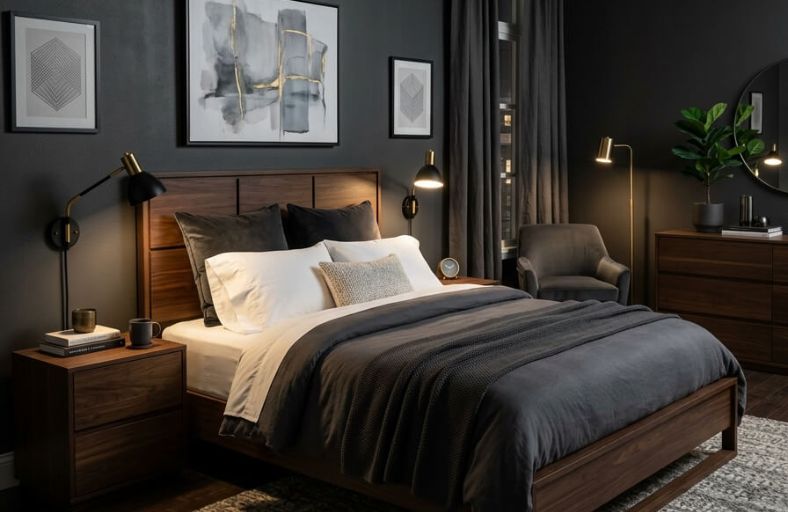
Walking into a bedroom filled with dark, heavy furniture often feels like stepping inside a massive chocolate box.
While those rich espresso or walnut pieces bring an undeniable sense of luxury, they can easily turn a sanctuary into a somber brown cave if the walls are not working in their favor.
The secret lies in finding that perfect paint color to act as a luminous backdrop, turning those bulky dressers and bed frames into elegant anchors rather than visual burdens.
A well-chosen palette breathes life into the wood grain and transforms a heavy room into a light-filled retreat.
Warm Ivory and Cream (Soft Contrast)
Warm ivory and cream tones represent the most foolproof solution for bedrooms dominated by dark brown furniture.
Unlike stark or brilliant white, which can appear clinical and icy against the richness of wood, warm whites contain subtle yellow or beige undertones.
These undertones bridge the visual gap between the wall and the furniture, creating a transition that feels intentional. Designers often recommend these shades because they reflect light brilliantly without creating harsh glare.
| Paint Brand | Color Name | Code | Key Benefit |
| Benjamin Moore | White Dove | OC-17 | Soft, universal warm white |
| Farrow & Ball | White Tie | No. 2002 | Timeless contrast without harshness |
| Benjamin Moore | Manchester Tan | HC-81 | Warmth that picks up wood tones |
In rooms with limited natural lighting, ivory works effectively by maximizing available photons while providing a sense of warmth that complements dark finishes.
This combination allows the natural grain of the wood to shine, making the furniture feel like a curated centerpiece. To prevent the room from feeling flat, it is essential to layer different textures like linen or wool.
Sage Green (Biophilic Balance)
Sage green is widely regarded by interior designers as one of the most effective partners for dark wood.
This preference is rooted in color theory: green sits opposite red and orange on the color wheel, making it the natural complement to the red undertones often found in mahogany and espresso wood.
A muted sage green creates a sense of freshness and tranquility that mimics the outdoors.
The psychological effect of green in the bedroom is linked to renewal and vitality, helping residents feel both recharged and balanced.
Sage green pairs beautifully with walnut and chestnut because both colors belong to the same earthy family.
This balance is particularly effective in transitional interiors where the goal is a blend of traditional materials and contemporary color.
Pale Blue-Gray (Cool Sophistication)
Pale blue-gray is an ideal solution for small bedrooms where dark furniture might otherwise feel too dominating.
Light blues reflect light in a way that creates the illusion of more space, potentially making a tiny bedroom appear much larger.
By choosing a sophisticated blue with gray undertones, homeowners achieve a serene environment that feels modern rather than youthful.
The cool nature of blue acts as a refreshing counterbalance to the warm, chocolate-colored wood.
Studies in sleep science indicate that blue is highly effective for promoting rest by lowering heart rates and reducing stress.
To maximize the sophistication of this palette, pair the walls with cream curtains or ivory bedding to soften the contrast and keep the room feeling airy.
Greige (Modern Neutrality)
Greige has emerged as a dominant choice for contemporary bedrooms because it offers the sophistication of gray while retaining the welcoming warmth of beige.
This hybrid color quietly fixes decorating problems by providing a sweet spot between cool and warm palettes.
For walnut furniture, which can sometimes appear neutral or cool, greige provides a seamless backdrop that emphasizes the wood’s organic texture.
The application of greige creates a polished and updated look that feels tailored for minimalist or Japandi-inspired interiors.
By using a soft gray-beige for the majority of the room’s visual space, you create a neutral foundation that allows dark furniture to stand out without feeling disconnected from the surroundings. It is a versatile choice that works well in both natural and artificial light conditions.
Navy Blue (Dramatic Depth)
Navy blue and dark wood create a partnership that feels both masculine and elegant, representing one of the most timeless combinations in interior design.
Navy provides a depth and richness that complements the natural gravitas of walnut or mahogany furniture.
While both the furniture and the paint are dark, they create a layered, dimensional look rather than competing with each other for attention.
To successfully implement a navy scheme, it is crucial to balance the dark hues with neutral or light accents to prevent the space from feeling too heavy.
A navy accent wall can serve as a striking backdrop for a dark wood headboard, while the remaining walls are kept in a softer tone.
| Paint Brand | Color Name | Code | Best Pairing |
| Benjamin Moore | Hale Navy | HC-154 | Mahogany or Espresso |
| Sherwin Williams | Naval | SW 6244 | Walnut with gold accents |
| PPG | Nautical Star | PPG1155-7 | Traditional dark wood sets |
This combination works best when paired with metallic highlights in gold or brass to warm up the cool blue tones.
Warm Beige and Mushroom (Tonal Harmony)
For those seeking a bedroom that feels grounded and protective, a tonal palette using warm beige and mushroom is superior to white. These colors share earthy undertones with brown wood, which creates an instant cocoon of comfort.
When walls are painted in shades like oatmeal or soft truffle, the dark furniture blends into the environment, reducing its perceived visual weight and making the room feel cozy rather than cluttered.
The psychological impact of earthy neutrals is significant; they promote feelings of stability, reliability, and calm.
When implementing this scheme, it is important to select a beige with golden or yellow undertones rather than pink ones, as pink-based tans can sometimes clash with the natural pigments of certain dark woods.
This approach is particularly successful in large bedrooms where the goal is to create intimacy.
Blush Pink (Modern Softness)
Blush pink is a modern and sophisticated choice that adds unexpected warmth and a touch of luxury to a dark wood bedroom.
This pairing is particularly effective because it softens the often-heavy and masculine appearance of espresso or mahogany furniture.
Pink tones, such as Dulux’s Pink Ground, lift the spirits and create a positive environment without overpowering the room.
The success of this palette relies on choosing muted, dusty pinks rather than bright shades. These sophisticated hues enhance other colors in the room, such as cream bedding or brass hardware.
When combined with dark wood, blush pink acts as a delicate foil that highlights the furniture’s grain, creating a space that feels thoroughly contemporary and inviting.
Mint Green (Crisp Refreshment)
For a cooler and more energetic alternative to sage, mint green and pale aqua tones provide a crisp contrast to espresso furniture.
These lighter colors accentuate the dark wood by providing a bright wash of color that “lifts” the visual weight of the furniture.
Mint green is a versatile grounding color that works beautifully in guest bedrooms where a sense of freshness and renewal is the primary goal.
The use of mint green reflects significantly more light than deeper greens, which helps brighten a room with limited windows.
This combination is inspired by nature and promotes a feeling of harmony and tranquility. By pairing mint walls with teal or slate blue accents in pillows and rugs, you can create a multi-dimensional cool palette that feels vibrant yet restful.
Terracotta and Clay (Rustic Warmth)
Terracotta and clay shades bring a rustic charm and warm energy to a bedroom without challenging the dominance of dark furniture.
These earth-toned colors enhance the natural warmth of the wood, making the space feel welcoming and grounded.
This combination is particularly effective for Mediterranean or farmhouse-inspired interiors where organic materials are celebrated.
Designing with terracotta requires a bit of balance. Experts suggest using muted versions like rust or burnt orange as an accent wall behind key walnut pieces to provide depth of character without being overbearing.
This color palette evokes a connection to nature and a sense of history, making the bedroom feel established and cozy all year round. To keep the look modern, pair these warm walls with neutral textiles in linen or jute.
Charcoal Gray (Moody Definition)
Charcoal gray provides a dramatic and structured envelope that makes walnut or espresso furniture feel even more refined.
While it might seem counterintuitive to pair dark walls with dark furniture, charcoal gray acts as a sophisticated frame that highlights the clean lines of your bed frame or dresser.
This combination is often seen in luxury hotel-style spaces to create a moody and contemplative atmosphere.
The key to success with this dark palette is the finish. Choosing a matte finish over a glossy one allows for a soft, light-absorbing effect that feels incredibly cozy rather than cold.
| Paint Brand | Color Name | Code | Psychological Effect |
| Benjamin Moore | Kendall Charcoal | HC-166 | Sophisticated and grounding |
| Sherwin Williams | Iron Ore | SW 7069 | Dramatic, mysterious, and cozy |
| Benjamin Moore | Onyx | 2133-10 | Bold, high-contrast, and elegant |
To avoid a cave feeling, designers recommend adding crisp white trim for definition and incorporating metallic highlights in gold or silver to reflect light and add a touch of glamour.
Buttery Yellow (North-Light Solution)
For bedrooms that face north or have limited access to direct sunlight, buttery yellow is an essential tool for creating a cheerful atmosphere. Yellow reflects light effectively, making small or dark spaces feel larger and happier.
When paired with traditional dark wood like mahogany, soft gold or yellow tones create a room that feels established and welcoming, reminiscent of historic homes.
However, yellow must be handled with care in a sleep environment. Bright or highly saturated yellows can be overly stimulating, potentially inducing anxiety rather than rest.
To achieve the perfect balance, look for muted, pale yellows with neutral undertones. These softer shades pick up the warmth of the wood grain without competing for attention, providing a “subtle breath of fresh air” to the entire room.
Forest Green (Luxurious Intimacy)
Deep greens like forest green and emerald create a wonderfully rich and moody sanctuary that leans into the luxury of dark brown furniture.
This combination is proof that similar deep tones can work together to provide a calming atmosphere.
Dark green walls complement the red and chocolate tones in the wood, creating a space that feels like a private, lush retreat.
The color green is a dominant force in nature that evokes feelings of harmony and renewal. In the bedroom, these deeper shades are linked to improved wellbeing and can help residents feel both recharged and balanced.
To keep a forest green room from feeling oppressive, designers suggest incorporating proper lighting and adding high-contrast elements like cream-colored bedding or metallic lamps.