A sun-bleached welcome mat and a collection of mismatched, undersized planters create a jarring first impression that acts as a true nightmare for any modern home.
In the design landscape, the front porch has transitioned from a simple entry point into a sophisticated extension of the interior living space.
This evolution is driven by the Quiet Luxury philosophy, which favors intentionality, high-quality materials, and a seamless connection to nature.
By focusing on architectural integrity and curated layering, you can transform your threshold into a sanctuary that radiates wellness and understated elegance from the moment guests arrive.
Establish a Quiet Luxury Color Foundation
Establishing a peaceful foundation is the first step toward the refined aesthetic that defines modern exteriors.
Instead of the stark, high-contrast palettes of previous years, the trend favors sophisticated, warm neutrals that offer a sense of “visual calm”.
These tones provide a versatile canvas, allowing your seasonal decor to stand out without creating a cluttered environment.
Professionals suggest grounding the space in shades like taupe, oatmeal, or creamy ivory for major surfaces like siding and porch floors.
| Color Category | Recommended Tones | Visual Impact |
| Foundational | Taupe, Warm Gray, Putty | Creates a sense of “visual calm” and versatility. |
| Supporting | Charcoal, Slate, Mocha | Adds depth to large planters and rugs. |
| Accents | Plum, Forest Green, Maroon | Provides a regal, sophisticated pop of color. |
To maintain perfect balance, follow the 60/30/10 design rule: 60% of the space should be your neutral backdrop, 30% consists of supporting tones in rugs or planters, and the final 10% is reserved for a bold accent, such as a striking front door. This disciplined approach prevents common color-clashing mistakes.
Master Architectural Lighting with the 1/3 Rule
Lighting serves as the jewelry of your home, providing both safety and a “magical glow” after sunset. However, a frequent design blunder is choosing fixtures that are far too small for the entryway.
To ensure your lighting has the correct architectural scale, follow the 1/3 to 1/4 rule. This means your lantern or sconce should be approximately one-third to one-fourth the total height of your front door.
For a standard 80-inch door, look for fixtures between 20 and 26 inches tall to ground the entry effectively.
The quality of light is just as important as the fixture itself. Experts recommend using warm-white bulbs between 2700K and 3000K to create an inviting atmosphere; anything higher can feel clinical or industrial.
Avoid the “single harsh overhead light” mistake by layering your lighting. Combine ambient lantern sconces with task lighting for steps and subtle accent spots to highlight house numbers or architectural moldings.
Prioritize Sustainable and High-Performance Materials
The modern porch prioritizes “material over decoration,” focusing on high-quality textures that age gracefully.
Sustainable choices like composite decking made from reclaimed wood chips and sawdust offer an eco-friendly foundation that resists moisture and rot.
For architectural trim and siding, poly-ash materials are the gold standard because they are dimensionally stable and do not absorb water, ensuring that even trendy dark paint colors adhere for years without warping.
To balance these engineered materials, layer in natural, organic textures to bring warmth to the space. Durable fibers like jute and sisal are perfect for high-traffic welcome mats and area rugs, providing a soft but sturdy feel underfoot.
Incorporating rattan or wicker for accent seating adds a touch of vintage charm and connects the porch to the surrounding landscape.
By choosing high-performance composites alongside natural elements, you create a “lived-in” environment that is both luxurious and remarkably low-maintenance for today’s busy homeowners.
Optimize Spatial Planning and the 36-Inch Rule
Effective spatial planning is the difference between a cramped stoop and a functional outdoor room.
A common error is overcrowding the space with too much furniture, which disrupts the natural flow of movement.
To ensure safe and comfortable circulation, always maintain at least 36 inches of “clear passage” for walkways and stairs.
On smaller porches, maximize every inch by using space-efficient pieces like a slim bistro set or a single high-quality chair paired with a small garden stool.
For larger porches, treat the space like an open-concept interior by creating distinct zones for different activities, such as a primary conversation area and a secondary quiet corner for a porch swing.
Use “negative space” intentionally; it is a hallmark of minimalist luxury that prevents visual clutter.
Finally, ensure your outdoor rug is large enough for at least the front legs of your seating to rest on, which visually unites the furniture and makes the area feel more expansive and professionally designed.
Create a Focal Point with a High-ROI Front Door Color
The front door is the soul of your porch and one of the most effective ways to boost your home’s market value.
Industry data suggests that a correctly styled and painted front door can yield over a 100% return on investment (ROI), making it a savvy choice for any homeowner.
To align with the Quiet Luxury aesthetic, move away from standard hues and embrace deeper, moodier tones that create a sophisticated contrast against neutral siding.
| Door Color Choice | Recommended Shades | Psychological Impact |
| The New Classic | Dark Blue-Grey, Charcoal | Professional, stable, and high-end. |
| Nature-Inspired | Forest Green, Deep Sage | Calming and seamlessly blends with landscaping. |
| Bold & Optimistic | Cherry Red, Deep Burgundy | Energetic, welcoming, and currently viral on Pinterest. |
When choosing your color, consider the hardware as the final touch. Swapping out dated knobs for matte black or polished brass can immediately elevate the “engineered” look of your entry.
Always ensure the finish is in pristine condition, as peeling paint is a major contributor to an “aesthetic nightmare” that lowers curb appeal.
Integrate Biophilic Design through Natural Textures
Biophilic design is more than just adding a few plants; it is about creating a sensory connection between your home and the natural world.
The focus is on materials over decoration, where raw textures define the space.
By layering organic elements like stone, wood, and woven fibers, you create an environment that feels lived-in and soulful rather than artificially styled.
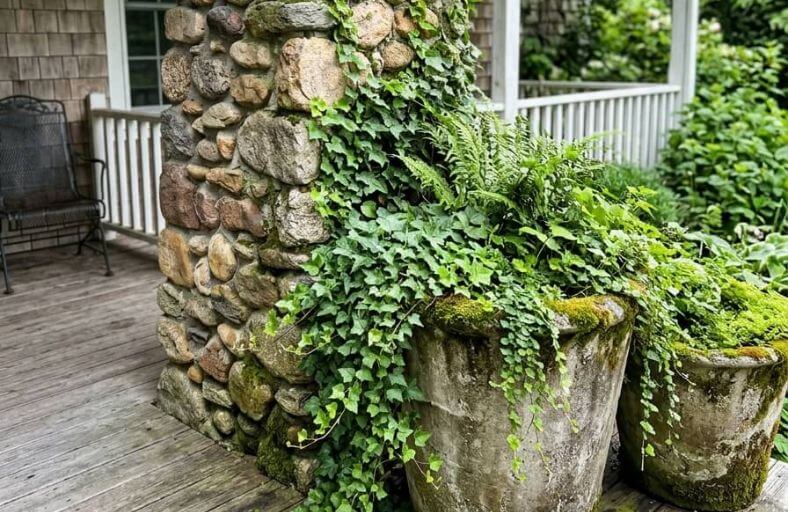
Start by introducing “layered natural textures” through your choice of accessories. Use oversized ceramic or cement planters in oatmeal or putty tones to house a variety of greenery.
Incorporating natural stone wraps around porch columns or using reclaimed wood for benches adds a sense of permanence and architectural “pop”. For a finishing touch, use tactile textiles like linen or cotton throws on your seating.
These materials not only stand up well to transitional weather but also provide a breathable, organic comfort that encourages you to linger and enjoy the fresh air.
Sustainable Seasonal Decorating using Layered Minimalism
The era of disposable, plastic-heavy seasonal decor is being replaced by sustainable, long-term curation.
Instead of a complete overhaul every few months, adopt a “layered” approach by keeping a neutral foundation and adding organic, seasonal garnishes.
This strategy reduces waste and ensures your porch remains sophisticated year-round without the clutter of “seasonal overload”.
Focus on “hardy” elements that offer a long “runway” of beauty. For example, use uncarved pumpkins and sculptural gourds, which last much longer than carved versions and maintain a high-end look.
Pair them with frost-tolerant plants like ornamental kale or pansies that can survive for 8 to 12 weeks.
- Year-Round Wreaths: Use a high-quality base of faux boxwood or magnolia foliage and simply swap out small accents like berries for winter or dried wheat for autumn.
- Chaos Gardening: Embrace a more relaxed, naturalistic planting style that reflects the “Terra Futura” trend, prioritizing self-sufficient and eco-friendly garden aesthetics.
By maintaining this minimalist discipline and conducting regular “maintenance audits” to remove dust or dead foliage, you ensure your porch always looks “magical” rather than messy.