A single coffee-colored smudge near the light switch or the faint, gray ghost of furniture long since moved can turn a supposed sleep sanctuary into a visual catalog of domestic neglect.
In the high-end design world, the bedroom has evolved from a simple sleeping area into a high-performance environment for psychological restoration.
Achieving that magazine-worthy, hue-drenched look requires more than just a bucket of paint; it demands a strategic architectural approach to color and surface chemistry.
Moving away from the clinical millennial gray, we are now embracing deep, restorative tones that cocoon the soul and ground the mind.
Select Your Emotional Palette
The selection of a bedroom color has moved beyond simple preference into the realm of environmental psychology. The trend shifts toward emotional signifiers that prioritize restoration over stark minimalism.
Designers are utilizing a technique called hue drenching, where walls, trim, and ceilings are painted in the same saturated shade to eliminate visual boundaries and create a cocooning effect.
| Color Trend | Psychological Impact | Design Application |
| Jade | Grounded serenity and restorative balance | Pairs with natural fibers and warm woods |
| Plum Noir | Dramatic intimacy and narrative depth | Enveloping, sensual suites |
| Cool Blue | Cognitive calm and mental clarity | Feature walls or full immersion |
| Persimmon | Optimistic warmth and vitality | Guest suites and communal spaces |
Earth tones like terracotta and chocolate brown are also returning as new neutrals, providing stability and a sense of self that clinical whites often lack.
Calculate and Gather Professional-Grade Tools
A successful project begins with mathematical precision. To avoid color inconsistency, calculate your surface area using the formula: Total Area = (Perimeter x Height) – (WindowArea + DoorArea).
Typically, one gallon covers 250 to 300 square feet.
Your toolkit must match your chosen finish. For the modern bedroom, high-quality synthetic filaments like nylon/polyester blends are superior for water-based paints because they maintain their shape and produce a smooth finish.
- Brushes: Use a 2 to 2.5-inch angled sash brush (chisel trim) for precise “cutting in” at the ceiling and trim.
- Rollers: Select a 3/8-inch nap roller for standard drywall to achieve a professional stipple. Woven covers are preferred for semi-gloss finishes as they are shed-resistant.
Master the Art of Surface Preparation
Preparation is the engine of a professional finish; skipping this phase leads to peeling or visible imperfections that no topcoat can hide.
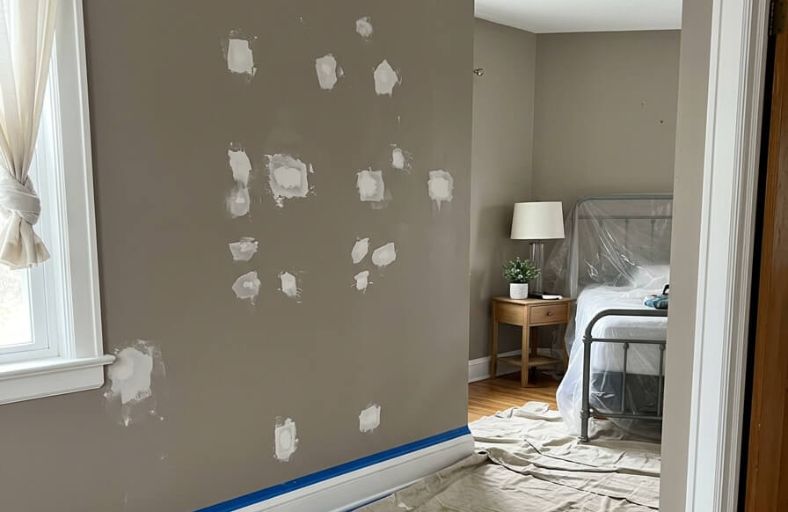
Start by clearing the room of small items and moving large furniture to the center, covering everything with canvas drop cloths to absorb drips.
Inspect the walls for cracks or nail holes. Fill these with a lightweight spackling compound, then sand the areas flush using 220-grit sandpaper once dry.
A critical but often ignored step is cleansing: wipe the walls with a damp sponge and mild detergent to remove skin oils and dust that interfere with paint adhesion.
Finally, remove all outlet covers and switch plates, labeling them for easy re-installation.
Strategic Priming for High Humidity
In regions with variable climates, environmental factors like humidity significantly impact paint performance.
For the most durable results, aim to paint when humidity is below 50%; however, levels up to 70-80% are workable if you adjust your timing.
Priming is not just a base coat; it is a chemical interface that seals porous surfaces and prevents bleeding from old colors.
In humid conditions, a mold-resistant primer is essential to prevent fungal growth behind the paint film.
If you are painting during humid months, use a dehumidifier to pull moisture from the air and extend your drying times by at least 50% between coats. Ensure the surface is cool and dry to the touch before moving to the topcoat.
Execute the Vertical Sequence
Professional order of operations starts from the top down to manage gravity and drips. Always paint the ceiling first.
This allows you to work quickly without worrying about splatters hitting the walls.
Use an extension pole to maintain a consistent angle and reduce physical strain. For a perfect finish, apply the second coat in a direction perpendicular to the first.
Once the ceiling is dry, move to the trim, window casings, and baseboards. Applying paint to the trim before the walls is a designer secret: it is significantly easier to tape off a small piece of trim than to tape a large expanse of wall.
Use your angled sash brush to apply a durable satin finish, which frames the room with a crisp, reflective edge.
The “W” Pattern for Flawless Wall Coverage
When you finally reach the walls, the “W” pattern is your best defense against “lap marks” (those unsightly bands of darker color caused by uneven drying).
Start by loading your roller until it is fully saturated, then roll a large “W” shape about 24 to 32 inches wide.
Without lifting the roller, fill in the empty spaces of the “W” with vertical, top-to-bottom strokes. This ensures the paint is distributed evenly.
Always maintain a wet edge by working from the unpainted area back into the wet paint.
If you must take a break, always stop at a natural break in the wall, such as a corner, to prevent visible seams.
Post-Paint Curation and Documentation
The final touch of a professional job is the removal of the painter’s tape while the paint is still wet to ensure a razor-sharp line.
Once the room has cured, remember to replace your HVAC filters, as sanding dust can clog them quickly.
To document your transformation, turn off all overhead artificial lights to avoid an unflattering yellow glare. Natural morning light is the gold standard for interior photography.
Use your smartphone’s grid feature and the rule of thirds to keep your vertical lines perfectly straight.
Capture vignettes (close-ups of linen textures against your new walls) to tell the story of your restorative sanctuary.