Walking into a guest room should never feel like entering a furniture graveyard where mismatched dressers and rickety chairs go to spend their final days.
Many homeowners treat the spare room as a dumping ground for items that no longer fit their personal style, creating a space that feels more like a cluttered storage unit than a sanctuary.
True hospitality is about crafting an environment that anticipates every physiological and psychological need before your guest even feels it.
By blending science-backed sleep principles with boutique hotel aesthetics, you can transform that forgotten corner into a restorative haven that your loved ones will never want to leave.
Circadian-Responsive Illumination
Lighting is the primary cue for the brain’s internal clock. Relying solely on a single, harsh overhead light creates a sterile atmosphere that hinders relaxation.
The goal is to implement layered lighting that supports the natural production of melatonin.
By using different color temperatures throughout the day, you can help your guests adjust to a new environment and reduce the effects of jet lag.
| Time of Day | Color Temperature | Physiological Purpose |
| Morning | 2700K – 3000K | Mimics sunrise to support wakefulness |
| Daytime | 4000K – 5000K | High alertness if the room is used for work |
| Evening | 2200K – 2700K | Melatonin support: dim to 10-30% brightness |
| Night | Amber Tones | Motion-activated safety without disrupting sleep |
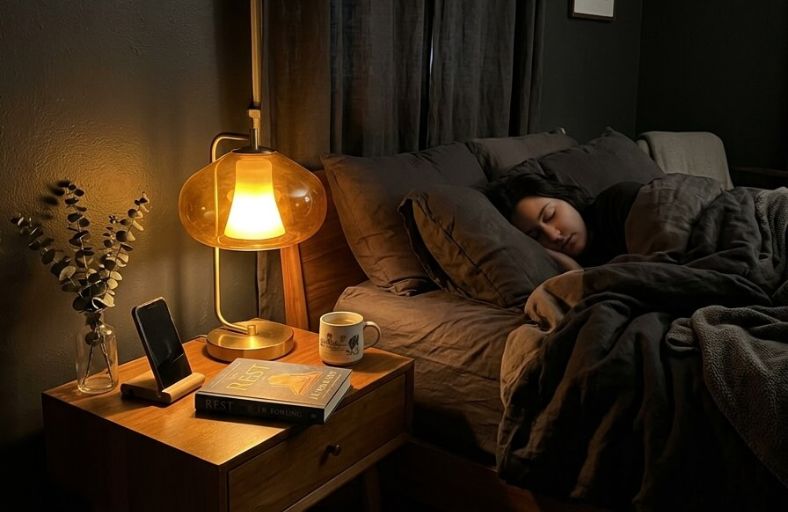
Always provide easily accessible bedside lamps or wall-mounted sconces. This gives guests the autonomy to control their environment and wind down comfortably without having to get out of bed to flip a switch.
Investing in the Mattress Ecosystem
The centerpiece of any great hospitality experience is the bed. Research shows that 74 percent of travelers prioritize sleep quality above all else when staying with friends. To deliver this, you must view the mattress as a thermal ecosystem.
Traditional memory foam often traps heat, which can scramble the body’s natural sleep signals.
Instead, consider a hybrid mattress or open-cell foam that allows for 400 percent better airflow, helping the body drop its core temperature by the 1°C required for deep REM sleep.
For multi-functional spaces like a home office, a Murphy bed or a modular sleep system is a total game-changer.
These solutions provide the support of a real mattress without the permanent footprint of a standard frame.
Complete the foundation with a padded headboard to enhance ergonomic comfort for guests who enjoy reading in bed before lights out.
Thermal Ecosystems and Sensory Materiality
In 2026, interior design is moving toward sensory-rich environments that emphasize tactility over loud patterns. For a guest room, this means choosing fabrics that feel as good as they look.
Materials like bouclé and velvet are trending for their ability to add immediate warmth and depth to a room. However, the real secret to a “hotel-feel” lies in natural fibers.
Cotton, linen, and wool are superior for thermal regulation compared to synthetic blends.
They absorb moisture and allow the skin to breathe, preventing the micro-awakenings caused by overheating during the night.
Layering is also essential: provide a crisp duvet alongside a textured throw or a medium-weight quilt at the foot of the bed.
This allows guests to customize their warmth level based on their own internal thermostat.
Spatial Planning and Architectural Illusions
If your guest room has a small footprint, you can use professional design tricks to make it feel expansive.
A common mistake is the overstuffed tomb effect, where oversized furniture swallows the space and makes it feel claustrophobic.
Instead, scale your furniture proportionally and try floating pieces by pulling them just an inch away from the wall to create a sense of airiness.
Architectural interventions can also change the perception of space:
- Oversized Mirrors: A large leaner mirror not only helps guests check their outfits but also reflects natural light to double the visual square footage.
- Vertical Lines: Extending wood paneling to the ceiling or hanging curtains “high and wide” draws the eye upward, making low ceilings feel taller.
- Mural Wallpaper: Botanical or landscape murals can create a sense of expansiveness, turning a cramped wall into a window to a distant horizon.
Boutique Bathroom Experience
A guest bathroom should feel less like a shared utility and more like a private spa retreat. Providing high-quality textiles is the first step in signaling that your visitors are truly valued.
Aim for plush 600gsm Egyptian cotton towels or oversized bath sheets, which offer a tactile luxury that guests rarely splurge on for themselves. One professional secret is to include dedicated black makeup washcloths.
This small addition prevents foundation and mascara from permanently staining your pristine white linens while making guests feel more comfortable during their evening routine without the fear of ruining your towels.
| Item Category | Essential Selection | Purpose |
| Linens | 600gsm cotton towels, black washcloths | Luxury feel and practical maintenance |
| Personal Care | Travel-size toothbrushes, razors, hair ties | Anticipating forgotten essentials |
| Maintenance | Extra TP in a basket, discreet plunger | Preventing awkward midnight conversations |
| Extra Touch | Plush spa robe, lavender bath salts | Creating a hotel-level pampering session |
Beyond the textiles, a well-stocked amenity basket can prevent minor meltdowns over forgotten items.
Fill a chic tray or drawer with travel-sized essentials like toothpaste, disposable razors, and even hair ties. It is also critical to handle the unspoken needs with grace.
Ensure extra toilet paper is visible in a decorative woven basket and keep a plunger discreetly available near the toilet.
This foresight prevents guests from having to initiate uncomfortable conversations about bathroom maintenance in the middle of the night.
Connectivity and Comfort
Modern hospitality is defined by how well you anticipate a guest’s need for connectivity and hydration. Nothing says “I have thought of everything” quite like a dedicated amenity station.
Start with the basics of the digital age: a clearly visible WiFi password card in a small, elegant frame.
This simple gesture removes the friction of having to ask for credentials immediately upon arrival.
Pair this with a universal charging station and extra cords on the nightstand so your guests never have to crawl behind heavy furniture to find an outlet for their devices.
Hydration and nutrition are equally important for a comfortable, stress-free stay. A bedside water carafe and matching glasses are essential for preventing thirsty midnight trips to an unfamiliar kitchen.
If you want to go the extra mile, create a snack basket tailored to your guest’s known preferences.
Whether they love salty treats or have a sweet tooth, having a few curated options on a dresser tray makes the room feel like a personalized sanctuary.
For guests who are early risers, a mini coffee station with a small brewer, pods, and creamers allows them to enjoy their first cup of caffeine in peace before the rest of the house wakes up.
These small, thoughtful provisions create a self-sufficient ecosystem where guests feel cared for without feeling like a burden to their host.
Balance and Personality
The final step in mastering guest room design is finding the perfect balance between professional style and domestic warmth.
While you want the room to reflect your home’s personality, it should not feel like a museum of your personal life.
Interior experts recommend avoiding the Furniture Graveyard effect, where mismatched or unwanted pieces from other rooms are dumped into the guest space without a cohesive plan.
Instead, embrace the Ultimate Muse trend by using muddier tones like mocha, terracotta, or sage green.
These earthy, grounded colors are visually soothing and appeal to a wide variety of tastes while creating a sophisticated backdrop.
To create a truly restful environment, practice Biophilic Minimalism. This involves choosing a few high-quality natural elements, such as a single vibrant potted plant or a textured linen headboard, rather than cluttering the space with decorative abundance.
A common design mistake is leaving too many personal items, such as family photos or sentimental trinkets, in the guest room. These can unintentionally make visitors feel like they are intruding on a private family sanctuary.
Instead, use ironic or playful decor like cherry-themed textiles or interesting coffee table books about local history to provide character.
By keeping the surfaces clear and the palette cohesive, you allow your guest’s nervous system to downregulate, facilitating a much faster transition into a state of deep, restorative rest.