Dividing a kids bedroom between two children is as much about psychology as it is about interior design.
Every child needs a space they feel is genuinely theirs, somewhere they can display their personality, retreat when they need quiet, and feel a sense of pride in their surroundings.
Getting that balance right in a shared room requires creative thinking about how space, light, color, and furniture can be used to create two distinct zones within a single room.
Whether you are working with a generous floor plan or a more compact space, these ideas offer flexible, imaginative solutions that make sharing a bedroom feel like an advantage rather than a compromise.
Curved White Shelving Unit Creates Perfect Twin Bedroom Dividers
A floor-to-ceiling bookshelf acts as a smart room divider in this shared bedroom, establishing distinct sleeping zones while maintaining an open, airy atmosphere through its white finish.
Its curved, integrated design offers generous storage for books and keepsakes, though the open shelving lacks privacy and allows sound to travel easily between sides.
Soft neutral bedding and bedside lamps contribute to a serene, cohesive aesthetic that works well for siblings.
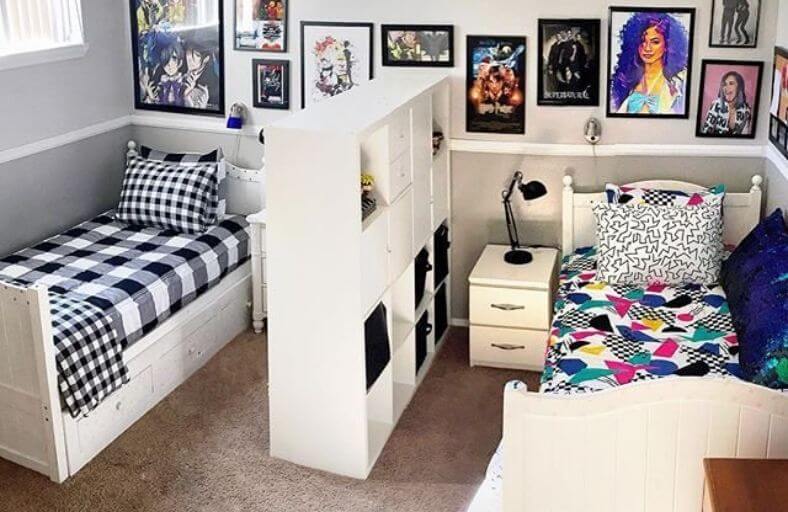
Modern White Cube Divider Defining Distinct Personal Shared Zones
A central cubby shelf serves as a clever room divider, offering both children a sense of personal territory while maintaining an open, airy feel in a shared bedroom.
The white wooden furniture keeps the aesthetic clean and bright, allowing the distinct bedding patterns and vibrant gallery wall art to define each side’s unique personality.
While this configuration provides excellent storage and visual separation, the shelving unit can feel a bit bulky, potentially blocking natural light from reaching the interior corners of the room.
To successfully implement this design, choose a double-sided bookcase that remains open, ensuring airflow and light pass through, and anchor the piece securely to the floor for safety.
Layering personal decor on the surrounding walls further distinguishes each sleeping zone without requiring permanent room modifications.
Dual Pastel Hues Defining Symmetry in Shared Minimalist Spaces
A central bunk bed unit acts as a clever room divider, effectively carving out two symmetrical, private workstations for siblings while maintaining an open, airy feel.
The design balances soft pastel hues of blue and pink with warm, light-toned wood, resulting in a cohesive yet distinctively personalized space on each side.
While this arrangement expertly maximizes square footage, the primary drawback is the potential for unequal natural light distribution, as the central structure may block the view from the windows for one or both occupants.
Modern Beige Curtain Dividers For A Shared Neutral Bedroom
Curtain dividers offer a soft, flexible way to provide siblings with a sense of individual territory within a shared bedroom.
Warm beige panels drape elegantly from ceiling tracks, successfully partitioning the sleeping zones while maintaining an airy, open feel when pulled back.
While this method effectively creates visual privacy, sound isolation remains minimal, meaning light sleepers might still be disturbed by activity on the other side.
Opt for heavy, light-blocking fabrics to ensure better privacy and install sturdy ceiling-mounted hardware for a sleek, permanent appearance that tucks away neatly during the day.
Modern Slatted Timber Partition Creates Symmetrical Shared Bedroom Harmony
A floor-to-ceiling slatted wood partition serves as a clever room divider, offering both privacy and visual interest in this shared bedroom.
The light oak tones and neutral fabrics cultivate a serene, Scandinavian-inspired mood that feels airy despite the compact footprint.
While this vertical screen effectively separates the sleeping zones, it does limit natural light reaching the bed tucked deeper into the room, potentially making that side feel slightly enclosed.
To build a similar structure, ensure you secure the central divider firmly to the ceiling and floor for safety, and consider using thin, evenly spaced battens to maintain an open, breathable aesthetic.
Coordinating bedside lighting and integrated desk surfaces on either side of the partition helps maintain symmetry while maximizing every square inch of functional floor space.
Custom White Partition Adds Functional Privacy To Shared Quarters
A white wooden partition creates a clean, intentional division between two twin beds in this lavender-walled shared room, offering each child their own cozy nook.
The design feels whimsical and bright, bolstered by playful bedding patterns, string lights, and cheerful wall art that fosters a sense of individual personality.
While this vertical divider provides excellent visual privacy, its fixed placement can make the room feel cramped or restrict movement in smaller quarters.
To build a similar custom divider, use sturdy MDF boards or plywood anchored securely to the floor and the headboard area for stability, and consider adding a small shelf or hooks on the side to maximize functional storage space for books or nightlights.
Natural Wood Slat Divider Creating Stylish Shared Kid Quarters
Vertical wood slats offer a sophisticated way to divide a shared bedroom, providing distinct zones for siblings while maintaining an airy, light-filled atmosphere.
The soft pastel pink accents and sage green bedding harmonize perfectly with the natural warmth of the light oak partition, fostering a peaceful and cozy mood.
While this architectural element excels at visual separation, it does little to block sound, meaning children might still hear one another during bedtime routines or play.
You might consider adding integrated lighting or small shelves onto the central wood panel to maximize utility without cluttering the floor area.
Vibrant Velvet Drapes Define Separate Zones in Shared Spaces
Dividing a shared bedroom with floor-to-ceiling curtain panels and a central open shelving unit offers a brilliant way to grant each child a sense of privacy while maintaining an airy, cohesive aesthetic.
The muted palette of dusty rose and deep teal creates a sophisticated yet playful mood, perfectly complemented by the warmth of natural wood textures and cozy circular woven rugs.
While this layout maximizes functionality by integrating study nooks and storage, the primary weakness lies in the lack of soundproofing between the two zones.
When designing a similar layout, ensure your shelving unit is securely anchored to both the floor and ceiling for safety, and consider installing double-sided curtain tracks to allow for full closure on both sides of the divider.
Custom Built-in Bunk Nooks Featuring Rustic Wood and Curtains
Semi-private alcoves offer a brilliant solution for shared bedrooms by providing each child with a cozy, individual sanctuary.
These built-in nooks feature warm wooden storage drawers beneath twin mattresses, flanked by floor-to-ceiling bookshelves that maximize every inch of vertical space.
Soft, patterned curtains mounted on black industrial rods grant kids control over their personal privacy, while the neutral color palette and plush carpeting cultivate a serene, library-like atmosphere.
While these partitioned spaces excel at organization and quiet study, the dense furniture placement can restrict natural light and impede overall airflow within smaller footprints.
Natural Wood Partition Creates Functional Zones In Shared Bedroom
Natural light flows effortlessly through this dual-purpose bedroom, where a floor-to-ceiling plywood partition serves as a clever room divider and functional desk area.
The soft palette of sage, mustard, and warm wood tones fosters a calm, Scandinavian-inspired atmosphere that feels both airy and grounded.
While this permanent wall provides excellent privacy for homework and sleep, it lacks the flexibility of moveable furniture and might restrict airflow between the two zones.
Installing a custom wood panel requires careful planning for electrical outlets, but it effectively transforms one large room into two distinct, personal retreats for siblings.
Keep the design cohesive by using matching linens and rugs on both sides of the divider to maintain a sense of harmony throughout the shared space.
Dual Theme Zoning Featuring Contrasting Celestial And Jungle Decor
Deep space blue and lush jungle green create a vivid, split-personality room that perfectly separates two distinct hobbies through color blocking.
A central climbing wall acts as both a playful physical barrier and a shared structural element, grounding the high-loft beds and individual study nooks on either side.
While this design is undeniably imaginative and maximizes vertical floor area, the open loft structure offers little acoustic or visual privacy, which might prove difficult for children needing quiet study time.
To balance shared space effectively, define personal zones with contrasting wall murals and matching area rugs, but be mindful that such custom built-ins are often permanent and difficult to modify as children grow older.
Striped Curtain Dividers Creating Chic Monochrome Shared Sleep Spaces
Bold black accent walls paired with monochromatic striped bedding establish a sophisticated, modern aesthetic that feels both cohesive and playful for siblings.
A central fabric curtain suspended from the ceiling serves as a clever, soft partition that offers individual privacy while maintaining the room’s airy flow.
String lights lining the edge of the divider add a warm, whimsical glow, though the dark color scheme could make a small room feel slightly enclosed or dim.
Utilize lightweight, patterned fabric for your partition to keep the barrier feeling intentional rather than heavy.
Ensure your curtain rod is securely mounted to support the fabric’s weight, and balance the dramatic dark walls with reflective elements like metallic gold accents or mirrors to bounce light back into the sleeping areas.
Neutral Wooden Cubbies and Curtains Define Shared Bedroom Zones
Soft neutral tones and light oak wood textures define this calming shared bedroom, where floor-to-ceiling curtains provide a soft, adjustable barrier between sleeping zones.
A central shelving unit acts as a functional divider, offering accessible storage for books and personal treasures while maintaining a cohesive aesthetic.
Although this design is visually harmonious, the lack of complete soundproofing means siblings may still struggle with privacy during late-night reading or study sessions.
Build your own version by mounting ceiling tracks for drapery and selecting a modular bookcase that bridges the gap between beds to ground the arrangement.
Curtain Partitioned Bohemian Shared Bedroom With Warm String Lights
Flowing white curtains suspended from string lights provide a soft, bohemian partition that grants each child a private nook without sacrificing the room’s airy feel.
The combination of rich terracotta rugs, warm wood flooring, and lush greenery fosters a cozy, inviting atmosphere that feels both grounded and whimsical.
While this configuration offers excellent visual separation, the lack of soundproofing means siblings might still struggle with privacy during focused activities or sleep.
To recreate this aesthetic, hang lightweight fabric panels from sturdy ceiling hooks or tension wires, ensuring you use sheer materials to maintain natural light flow across the entire bedroom.
Keep shelves and storage tucked close to the beds to minimize clutter while utilizing floor space for shared play areas.