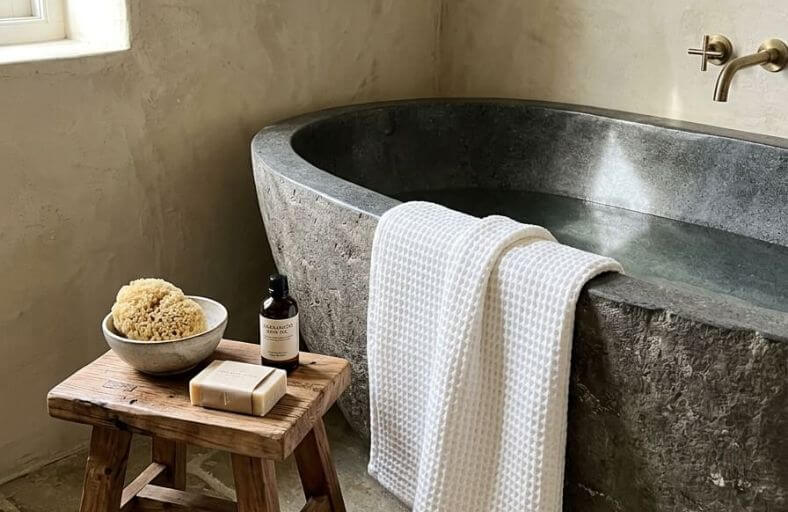
The area around your bathtub holds more decorating potential than most homeowners ever fully use.
This is a space where beauty and function need to work together seamlessly, where the accessories you choose not only look good but also enhance the experience of actually using the tub and spending time in the bathroom.
A few thoughtfully chosen additions can take a plain, utilitarian bathtub area and turn it into something that feels genuinely retreat-like and worth coming home to at the end of a long day.
These tips walk you through every aspect of bathtub decorating, from surface styling and surrounding wall treatments to lighting and plant placement that elevates the whole space.
Botanical Microclimate
The bathroom’s inherent humidity and warmth create a unique vi-climate perfect for specific botanical species.
Integrating greenery is not just about aesthetics; plants like the Boston Fern and Peace Lily act as natural dehumidifiers and air purifiers, making the air feel crisp and fresh.
| Plant Species | Ideal Conditions | Functional Benefit |
| Boston Fern | High humidity, indirect light | Absorbs moisture efficiently |
| Snake Plant | Varied light, low water | Filters toxins and purifies air |
| Peace Lily | High humidity, low/med light | Absorbs pollutants, adds elegance |
| Air Plants | High humidity, no soil | Absorbs nutrients from moist air |
For a true “jungle” vibe, use trailing plants like Pothos or Philodendron to soften the hard architectural lines of the tub.
Ultimate Bathtub Caddy
A wooden bathtub tray is the quintessential accessory for a wellness-focused soak. Beyond holding your book or a glass of wine, it acts as a decorative bridge that breaks up the expansive white surface of the tub.
For those on a budget, a simple DIY project using a 1×12 pine or cedar plank can be completed for under 10.
To ensure longevity, always seal the wood with a water-protective polyurethane to prevent warping in the steamy environment.
Tactile Layering with Natural Elements
Modern trends emphasize “organic modernism,” moving away from sterile synthetics toward raw, tactile materials.
Introducing a small teak stool or a stone-textured side table near the tub adds a “wabi-sabi” charm that celebrates natural imperfection.
Using matte-finish accessories or stone-look tiles can also ground the space, as these textures send sensory signals to the brain that promote calm and safety compared to high-gloss, slippery surfaces.
Sculptural and Ambient Lighting
Lighting is no longer just functional; it is a key decorative layer that influences your circadian rhythm.
A sculptural pendant light hanging over a freestanding tub serves as a visual focal point, while perimeter LED strips under cabinets or around the tub base create a soft, floating glow.
This “layered” approach allows you to switch from bright “task” lighting for cleaning to a dim, warm amber glow that encourages melatonin production for a restorative evening soak.
Smart Wellness Integration
In the upcoming seasons, smart technology is evolving from a futuristic luxury into a core component of domestic wellness.
Integrating chromotherapy (color-changing LED lighting) and aromatherapy diffusers directly into the bathing environment can significantly influence the limbic system, which is the brain’s emotional center.
If your tub is equipped with jets, use them frequently; whirlpool systems are clinically linked to decreased anxiety levels.
Many modern designs now feature built-in Bluetooth audio, allowing you to immerse yourself in “sonic wellness” through nature sounds or calming music, which helps the mind disconnect from daily stressors.
Curated Moisture-Safe Art
Transforming your bathroom into a gallery-like space is a powerful way to shift the mood from functional to effortlessly chic.
The “moody gallery layering” trend involves placing a striking vintage portrait or a set of botanical prints above the tub to anchor the design.
To ensure your art survives the humidity, choose moisture-resistant prints or use high-quality sealed frames.
Matching your frames to the bathroom hardware, such as brushed gold or matte black, provides a cohesive “wow factor” that makes the bathtub feel like a curated sanctuary rather than just a place to wash.
Mineral Color Drenching
“Mineral drenching” involves the immersive use of a single, deep, earthy tone across all surfaces, including walls, ceilings, and floors.
| Color Category | Psychological Impact | Recommended Tones |
| Deep Earth Tones | Grounding, safety, and warmth | Charcoal slate, smoky quartz, or terracotta |
| Oceanic Blues/Greens | Calm, restorative, and cooling | Muted fog blue or sage green |
| Warm Neutrals | Familiarity and inviting comfort | Beige travertine, ivory, or warm taupe |
This technique creates a “cocoon effect” that envelops the bather in a consistent chromatic experience, which is especially effective for making small bathrooms feel more luxurious and focused.
This approach uses colors inspired by the natural world to signal the brain to move from a “fight or flight” state to one of deep rest.