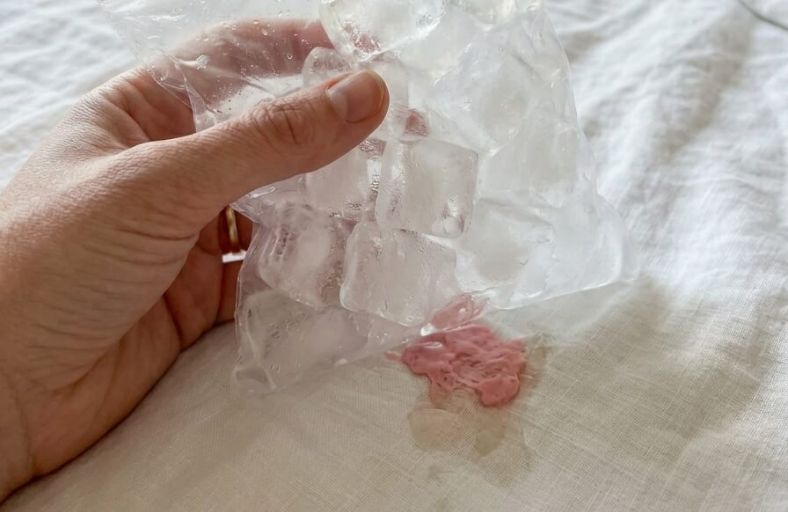
Finding gum stuck to your bed sheets is one of those frustrating household discoveries that can send even the calmest person into a mild panic.
The sticky, stretchy nature of chewing gum makes it feel like the kind of problem that only ends one way, with ruined bedding.
But the good news is that gum is actually very removable from fabric when you know the right techniques to use.
These tips walk you through the most effective methods for getting gum out of bed sheets safely and completely, using simple household items you most likely already have sitting in your kitchen or bathroom right now.
Cryogenic Solidification
Freezing is the gold standard for gum removal because it requires zero chemicals and works on almost any fabric type, from heavy flannel to breathable linen.
When you lower the temperature of the gum to near freezing, its molecular structure changes from a flexible, sticky rubber to a brittle, glassy solid. This contraction causes the gum to pull away from the textile fibers naturally.
To begin, place several ice cubes in a sealed plastic bag to prevent the sheet from getting wet. Press this pack directly onto the gum for 15 to 20 minutes. Once the glob is rock-hard, use a blunt tool like a credit card or a butter knife held at a 45-degree angle.
Gently flick the edges of the gum toward the center. This mechanical fracturing technique allows the mass to pop off in large chunks rather than smearing deeper into the weave. If the gum begins to soften during the process, simply reapply the ice for another few minutes before continuing.
Warm White Vinegar
Warm distilled white vinegar is a secret weapon for smeared or flattened gum that has already bonded with the fabric.
The acetic acid in the vinegar acts as a mild solvent, breaking down the chemical bonds that make the gum so incredibly tacky.
This method is particularly effective for natural fibers like cotton, where the gum might have penetrated the lumen of the individual threads.
Heat a small bowl of vinegar in the microwave for about 15 to 20 seconds until it is warm but not boiling.
Dip a clean, soft-bristled toothbrush into the liquid and saturate the gum-affected area. Work the vinegar into the fibers using gentle, circular motions.
Within minutes, the gum will begin to congeal and lose its grip, allowing you to lift it away with your fingers or a plastic scraper.
Because vinegar is acidic, it also helps neutralize odors and light stains left behind by the gum’s flavoring agents. Always rinse the area thoroughly with fresh water afterward to remove any lingering vinegar scent.
Ironing and Cardboard
When a large area of your sheet is covered in a thin, sticky film, the ironing method offers a clean and efficient transfer solution.
This technique uses heat to mobilize the gum resins, encouraging them to migrate from your sheet to a more porous, absorbent surface like cardboard. It is the perfect choice for durable cotton or linen sheets that can handle moderate heat.
| Item | Specification |
| Iron Setting | Medium (No Steam) |
| Surface | Uncoated Cardboard |
| Duration | 15–30 Seconds |
Place a piece of clean, non-corrugated cardboard on your ironing board. Lay the sheet gum-side down directly onto the cardboard. Set your iron to medium heat and press the back of the fabric, moving in small, steady circles over the affected spot.
The heat softens the gum, making it stickier to the cardboard than to the fabric fibers. After about 30 seconds, slowly peel the sheet away.
You should find the bulk of the gum has stuck to the cardboard, leaving your bedding significantly cleaner and ready for a final wash.
Rubbing Alcohol
Isopropyl alcohol, commonly known as rubbing alcohol, is a powerful ally for saving durable bed sheets from deep-set gum.
This clear liquid acts as a solvent that penetrates the gum base, dissolving the resins that create that frustrating “stick.”
Because it evaporates quickly and doesn’t typically leave a greasy residue, it is a favorite for many home restoration experts.
To use this method, soak a cotton ball in 70% isopropyl alcohol and dab it directly onto the gum and the fabric immediately surrounding it. Allow the alcohol to sit for about one to two minutes to saturate the fibers and weaken the adhesive bond.
Once the gum feels loose, use a plastic spoon or a dull knife to lift it away. You will notice the gum begins to lose its elasticity, making it much easier to peel off without stretching the fabric.
Always perform a spot test on an inconspicuous corner of your sheet first to ensure the alcohol does not affect the dye or finish of the textile.
Vegetable Oils
If you prefer a gentler, chemical-free approach, look no further than your kitchen pantry. Oils like coconut, olive, or even baby oil work on the “like dissolves like” principle.
The non-polar fats in these oils interact with the hydrophobic polymers in the chewing gum, effectively “lubricating” the fabric fibers so the gum can no longer hold on.
| Oil Type | Best For | Benefit |
| Coconut Oil | Natural Fibers | Stays solid until applied; easy to control. |
| Baby Oil | Silk and Delicates | Very gentle and unlikely to damage fibers. |
| Olive Oil | Most Fabrics | Readily available in most kitchens. |
Apply a small amount of your chosen oil directly to the gum using a cotton swab. Gently massage the oil into the edges where the gum meets the fabric and let it sit for 10 to 15 minutes. As the gum softens and loses its grip, you can slide it right off the sheet.
The key to success here is the cleanup: immediately apply a concentrated dish soap or a pre-wash stain remover to the area to break down the oil before laundering, ensuring no grease spots are left behind.
Instant Hardening
When you don’t have an ice pack handy, a can of aerosol hair spray can serve as a surprisingly effective “quick freeze” substitute.
The chemicals and alcohol content in the spray work together to rapidly harden the gum, turning a gooey mess into a solid mass that is much easier to manage.
This method is particularly useful for localized spots on thicker bedding materials.
Spray a generous amount of hair spray directly onto the gum until it feels cold and begins to stiffen. Wait a minute or two for the spray to dry and the gum to reach a rock-solid state. Once it is hard to the touch, use a dull spatula or your fingernail to flick the gum off the surface.
It should break away in brittle pieces rather than stretching out. Since hair spray can leave a stiff residue on the fabric, be sure to wash the sheets in a regular cycle afterward to restore their characteristic softness and comfort.
Deep Fiber Penetration
For those who own a handheld garment steamer, this method is a professional-grade shortcut to a gum-free bed.
Unlike traditional steam which can leave your sheets soaked, “dry steam” uses high-velocity thermal energy to penetrate deep into the fabric’s weave without over-saturating the material.
The heat gently persuades the gum’s “gluey heart” to detach from the fibers, making it a “persuasive” alternative to aggressive scrubbing that could tear the threads.
To implement this, hold the steamer nozzle approximately 6 inches away from the gum and apply several short bursts of heat. As the gum begins to glisten and soften, use a plastic spatula or a dull tool to lift the mass away.
This method is particularly effective for high-tech cooling sheets or textured comforters where gum can get trapped in tiny, microscopic grooves.
It not only removes the debris but also sanitizes the area, killing 99.9% of bacteria that might be trapped within the old gum residue.
Duct Tape
Even after the main mass of gum is gone, you might notice tiny, microscopic fragments clinging to the fabric nap.
These stubborn remnants are often too small for a knife to catch but large enough to feel like grit when you are trying to sleep. This is where the duct tape technique shines as the ultimate finishing tool to ensure your sheets are 100% restored.
| Step | Action | Tool |
| Preparation | Dab the spot with rubbing alcohol | Cotton ball |
| Application | Press tape firmly over residue | Duct tape |
| Extraction | Pull away in a sharp upward motion | Quick hand movement |
Take a strip of heavy-duty duct tape and press it firmly onto the affected area. For maximum efficacy, dabbing the spot with a tiny bit of rubbing alcohol first will further weaken the gum’s grip on the individual fibers. Pull the tape away in one sharp, quick motion.
The high-tack adhesive will pluck the remaining particles straight out of the fabric weave, leaving no trace behind. This is the perfect “secret weapon” for cotton and microfiber sheets that tend to hold onto small debris.