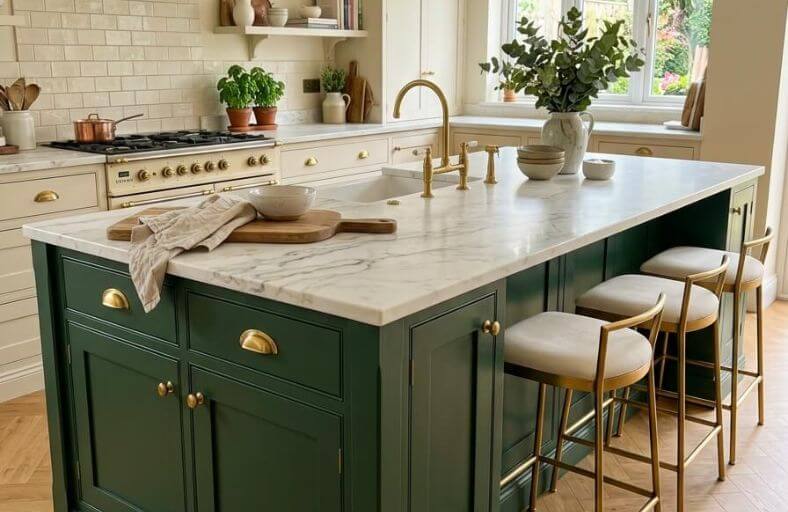
The shift in domestic architecture toward open-concept floor plans has fundamentally altered the role of the kitchen island. No longer a mere secondary preparation surface, the 2026 island functions as the primary command center for the modern household.
Designers are increasingly moving away from the farmhouse table look of previous years in favor of sprawling, multi-purpose designs that integrate every aspect of domestic life.
These massive units are engineered to serve as cooking zones, homework stations, social bars and administrative hubs simultaneously.
This architectural evolution is driven by a lifestyle requirement for a “one-stop-shop” within the home.
Research indicates that when an island is properly configured to handle multiple activities, the efficiency of the entire kitchen increases by providing a traditional triangular layout that optimizes access to major appliances.
However, this utility must be balanced against the physical flow of the space. Maintaining a movement zone of 36 to 48 inches around the perimeter is essential to prevent the island from becoming a bulky obstacle that disrupts the fluidity of the home.
| Island Configuration Type | Primary Targeted Lifestyle | Key Design Feature |
| The Culinary Hub | Professional-grade home cooking | Integrated induction cooktops and prep sinks. |
| The Social Connector | Frequent entertaining and hosting | Multi-level surfaces with bar-height seating. |
| The Administrative Anchor | Remote work and family management | Pop-up charging stations and hidden storage for documents. |
| The Minimalist Table-Style | Casual, light meals and open feel | Tapered legs and open shelving for a furniture-like aesthetic. |
Master the Art of Mixed-Material Countertops
One of the most profound trends is the abandonment of the one-size-fits-all surface. Designers are now utilizing mixed-material countertops to subtly define different activity zones within the island structure.
By combining stone with timber or other textures, the island becomes a workhorse that visually signals its varied functions.
For example, using a durable stone like quartz or marble for the food preparation area ensures longevity and hygiene, while transitioning to a warm timber or butcher block for the seating area creates a more inviting, tactile experience for guests.
The psychological impact of these material shifts cannot be overstated. Harder surfaces like stone evoke a sense of precision and cleanliness, which is ideal for culinary tasks.
In contrast, wood triggers the release of stress-reducing hormones and fosters a connection to nature, making the dining portion of the island feel more grounded and comfortable.
| Material Combination | Recommended Zone Usage | Practical Benefit |
| Marble + Dark Walnut | Prep Zone + Dining Extension | High-end luxury paired with organic warmth. |
| Matte Quartz + Scalloped Wood | Heavy Cooking + Social Bar | Durable surface contrasted with tactile, textured panels. |
| Stainless Steel + Reclaimed Oak | Industrial Prep + Rustic Dining | Professional efficiency meets country-style comfort. |
| Glossy Solid Surface + Matte Black Stone | Modern Prep + Minimalist Seating | High-contrast visual interest with easy-clean properties. |
When implementing this design, experts recommend keeping the seams intentional, allowing the material change to be a deliberate design feature rather than a hidden joint.
Architectural Sophistication through Waterfall Edges
The waterfall countertop continues to be a dominant design choice for those seeking a bold, sculptural aesthetic.
This technique involves extending the horizontal countertop material vertically down the sides of the island, creating a seamless flow that anchors the piece to the floor.
Waterfall edges are particularly effective for showcasing premium materials like heavily veined marble or high-quality quartz, as they provide a larger canvas for the material’s natural patterns.
Beyond the visual impact, waterfall edges serve a practical purpose by protecting the side panels of the island from the wear and tear of daily traffic.
They also simplify the kitchen’s lines, contributing to a minimalist appeal that works exceptionally well in open-concept homes.
For homeowners on a budget, high-quality vinyl wraps can now achieve a similar look, allowing for a luxury transformation without the capital-intensive cost of a full stone slab.
Tactile Engagement with Fluting and Reeded Panels
Texture is having a major moment in island design. Designers are moving away from flat, painted cabinet doors toward sculptural surfaces like fluted or reeded wood panels.
These textures play with light and shadow, adding a layer of depth that makes the island feel like a high-end furniture piece rather than a standard cabinet unit.
The width of the fluting can be customized to suit the home’s personality. Tighter, vertical fluting offers a more masculine, pinstripe-like effect that feels modern and precise.
Wider, lozenge-like flutes provide a softer, more traditional aesthetic that emphasizes the curves of the island.
This tactile approach helps to break up the vast expanses of hard surfaces in the kitchen, adding much-needed warmth and materiality to the space.
Strategic Appliance Integration and The Hidden Kitchen
The modern kitchen island is increasingly being treated as a control room, where appliances are hidden in plain sight to maintain a streamlined aesthetic.
Integrating dishwashers, under-counter refrigeration drawers, and induction cooktops directly into the island reduces the need for wall cabinets and keeps the primary workspace centralized.
For families who prioritize organization, appliance-fitted islands often include dedicated “small appliance garages” or pull-out drawers for mixers and toasters, ensuring that the main countertop remains clear for preparation and social interaction.
| Appliance Integration | Design Goal | Expert Tip |
| Induction Cooktop | Minimalist Profile | Ensure a flush-mount installation for a seamless prep surface. |
| Microwave Drawer | Accessibility | Install at a height that is safe for children but easy for adults to reach. |
| Wine Cooler | Entertaining Ease | Position at the end of the island to keep guests out of the main work zone. |
| Integrated Trash/Compost | Hygiene | Use pull-out bins with odor-sealing lids for a discrete look. |
This decentralization of technology also improves the social flow of the room, as the host can face guests while performing tasks that would traditionally require turning their back to the living area.
Island Base Color Selection
Choosing a color for the island base is the biggest psychological lever in the kitchen because it is often the most visible surface in the room’s central field of vision.
While matching the island to the perimeter cabinets creates a cohesive look, using a contrasting color turns the island into a deliberate focal point.
The colors you choose set the emotional baseline for the entire home. Warm shades like terracotta, warm clay, and cinnamon create an inviting, social atmosphere that stimulates the appetite.
Conversely, cooler tones like deep navy, forest green, or crisp white promote focus, clarity, and a sense of calm.
There is a marked shift toward these bold, earthy tones as homeowners move away from the sterile, all-white kitchens of the past.
| Island Base Color | Emotional Response | Recommended Context |
| Deep Forest Green | Grounded, sophisticated | Large, open-plan kitchens with plenty of natural light. |
| Rich Navy Blue | Confident, serene | Health-focused kitchens; helps to suppress overeating. |
| Warm Terracotta | Social, energetic | Busy family kitchens where gathering is the priority. |
| Soft Greige | Approachable, elegant | Smaller kitchens where light reflection is key for spatial perception. |
Ergonomic Seating and the Sit-to-Perch Concept
Seating is perhaps the most requested feature for any kitchen island, yet it is often the most poorly executed.
To create a functional social hub, designers recommend providing at least 24 inches of space between each seat to ensure guests do not feel cramped.
The height of the seating should also be a deliberate choice based on the intended use. While standard 36-inch countertop height is classic, adding a 42-inch bar-height portion creates a sit-to-perch surface that is psychologically more welcoming for guests who want to stay engaged without fully committing to a seat.
In 2026, casual island seating is being redefined through the use of banquette-style benches or upholstered seating built directly into the island structure.
This living-room-meets-kitchen approach encourages lingering and long conversations, transforming the island from a transient spot for a quick snack into a cozy nook for meaningful connection.
Mastering the Knee Space Aesthetic
The area underneath the countertop, known as the knee space, is frequently overlooked in kitchen design. However, current trends suggest treating this space as a decorative opportunity rather than a hidden void.
Options for elevating this area include the use of bespoke metallics, colorful textured tiles, or architectural trim that complements the island’s base.
For homeowners who require more utility than decoration, the knee space can also house additional storage.
Shallow cabinets or drawers on the guest side of the island are perfect for stashing holiday platters, board games, or other items that are not needed for daily cooking but still require a home.
This double-sided storage maximizes every square inch of the island’s footprint without compromising the clean lines of the design.
Layered Lighting as a Silent Design Partner
Lighting is the element that can make or break a kitchen island’s functionality and atmosphere.
A common mistake is relying solely on a single source of light, which often leaves the island feeling dim or cast in harsh shadows.
Behavioral design principles advocate for layered lighting, which combines three distinct types of illumination to enhance both performance and satisfaction.
| Lighting Layer | Fixture Example | Primary Benefit |
| Task Lighting | Under-cabinet LEDs or Pendant Lights | Provides focused brightness for chopping and reading recipes. |
| Ambient Lighting | Recessed Can Lights | Ensures general brightness and makes the room feel airy. |
| Accent Lighting | Dimmable Pendants or Toe-kick LEDs | Adds personality and creates a cozy evening ambiance. |
For 2026, statement lighting is trending toward oversized pendant lights with metallic or matte finishes that act as jewelry for the room.
Designers also recommend the use of dimmer switches, allowing you to adjust the brightness based on the activity, whether you are hosting a lively dinner party or enjoying a quiet morning coffee.
The Art of the Tiered Tray Vignette
When it comes to the actual surface of the island, the goal is to create a “layered, lived-in look” without descending into clutter. One of the most effective tools for this is the tiered tray.
A tiered tray allows you to add height and personality while occupying a minimal footprint on the counter.
The formula for a professionally styled tiered tray starts with choosing a theme or color scheme that complements the rest of the kitchen.
Start by placing a larger anchor piece on the bottom tier to create a visual foundation, this could be a mini sign, a small pitcher, or a decorative canister.
Fill in the gaps with medium-sized accents and small details like beaded garlands, mini potted plants, or seasonal icons. The result is a curated display that feels intentional and helps draw the eye upward.
Organic Elements and Seasonal Styling
Integrating natural elements onto the kitchen island provides an organic warmth that hard surfaces cannot replicate.
A simple bowl of seasonal fruit is both practical and beautiful, serving as an easy snack for the family while adding a pop of color to the counter.
Similarly, a vase filled with fresh flowers or a cluster of eucalyptus stems adds life and a natural aroma to the heart of the home.
For a more functional approach to greenery, consider a small potted herb garden. Potted basil, mint, or rosemary not only look vibrant but are incredibly convenient for the home cook.
To keep the display fresh, designers recommend rotating these elements seasonally, using tulips and pastels in the spring, and transitioning to rich-toned runners, pumpkins, or pinecones during the colder months.