A favorite bean bag chair often becomes the soul of a living room, but it also acts as a magnet for dust, pet hair, and the occasional coffee spill.
Seeing your cozy retreat lose its spark to grime or a musty smell is a common homeowner headache.
Transforming a flattened, stained bag back into a plush sanctuary is easier than it looks. With a few professional tricks involving material science and basic household items, you can restore that brand-new feel.
This guide covers everything from managing static beads to deep cleaning delicate fabrics.
Identify Your Fabric Type
The first step to a successful clean is knowing exactly what you are working with.
Different textiles react uniquely to moisture and heat, so identifying the shell material prevents permanent damage like shrinking or cracking.
Always check the care label first to see if the cover is removable or machine washable.
| Fabric Category | Recommended Cleaning Method | Machine Washable? |
|---|---|---|
| Cotton / Hemp | Cold water with mild detergent | Yes |
| Polyester / Nylon | Spot clean or gentle cycle | Yes |
| Vinyl / Leather | Wipe with damp cloth and mild soap | No |
| Velvet / Microsuede | Soft brush and very light dabbing | Sometimes |
For fabrics like vinyl or faux leather, avoid soaking the material entirely, as this can lead to water seeping into the filling.
If you have a luxury material like velvet, you must be careful not to crush the nap or the direction of the fibers while cleaning.
Master the Anti-Static Prep
If you need to empty your bean bag to wash the cover or replace the filling, you will quickly encounter the static nightmare.
Polystyrene beads are notorious for sticking to everything due to triboelectric charging.
To prevent a snowstorm of beads in your living room, you must neutralize the static charge before opening the zipper.
The most effective DIY solution is a fine mist of water. Moisture increases the air’s conductivity, allowing the static charge to dissipate quickly.
Alternatively, you can mix a capful of liquid fabric softener with water in a spray bottle.
Spray this lightly over the beads from about ~12 inches (30cm) away and wait a minute for it to settle.
This simple trick ensures the beads remain manageable and slide easily into your storage container instead of clinging to your arms and walls.
The Controlled Transfer Strategy
Emptying a bean bag is best handled as a two-person operation to maintain control over the aperture.
Many high-quality chairs feature safety zippers that lack a pull-tab to protect children. You can easily bypass this by inserting a paper clip into the locking mechanism to slide it open.
Have one person hold the bean bag upright while the second person manages a large containment vessel, such as a garden waste bag or a large bin.
Transfer the beads in slow, deliberate handfuls or by tilting the bag carefully to avoid creating air currents that might blow the beads away.
If you have a bean bag with an inner liner, your job is much easier because you can simply remove the entire liner without ever touching the loose beads.
Working in a bathtub is another great pro tip, as it provides a contained space that makes any accidental spills much easier to vacuum up later.
Surface Deodorizing & Refreshing
A bean bag often smells musty simply because it traps dust and skin oils. To refresh it without a full wash, utilize the power of baking soda. This amphoteric compound neutralizes both acidic and alkaline odor molecules.
Sprinkle a generous, even layer over the surface and let it sit for at least 30 minutes, longer is better for deep-set odors.
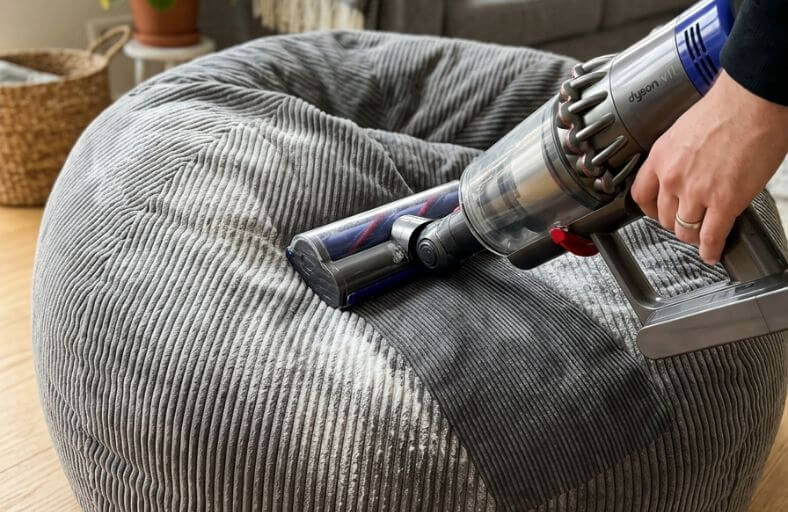
Use a vacuum with a soft brush attachment to clear the powder, ensuring you get into the seams where dust accumulates.
For an environmental boost, place your bean bag in direct sunlight for a few hours once a month.
The UV radiation naturally disinfects the fabric and the filling, killing bacteria and mold spores without chemicals.
If the smell persists, a light mist of 1:1 water and white vinegar can help, as the vinegar breaks down organic odors before evaporating completely.
Precision Spot Cleaning for Stubborn Stains
When a spill happens, the golden rule is to blot, never scrub. Scrubbing pushes the contaminant deeper into the fibers, making it nearly impossible to remove.
Act fast and use specific chemical agents based on the type of stain you are facing to avoid damaging the textile.
| Stain Type | Recommended Agent | Action |
|---|---|---|
| Grease / Oil | Baking Soda or Cornstarch | Absorbs oil |
| Pet Urine | Vinegar Solution + Enzyme Cleaner | Neutralizes and digests proteins |
| Ink / Dye | Isopropyl Alcohol | Dissolves solvent |
| Water-Based | Mild Soap + Warm Water | Lifts debris gently |
For pet accidents, specifically, you must use an enzymatic cleaner after neutralizing with vinegar.
Uric acid crystals in urine are not water-soluble; enzymes are required to digest them to ensure the smell doesn’t return on humid days.
Machine Washing Protocols
If your cover is removable and the care label allows it, a machine wash is the most efficient deep-clean method.
Always turn the cover inside out before placing it in the drum to protect the outer texture and any decorative zippers.
Use cold water, typically below 86°F (30°C), and a gentle or delicate cycle. High heat is a bean bag’s enemy; it can warp synthetic fibers and lead to significant shrinkage in natural materials like cotton.
Avoid harsh detergents, bleach, or fabric softeners, as these chemicals can strip away water-resistant coatings or damage the fabric’s integrity.
For an extra clean feel, you can add a small amount of mild liquid detergent or even baby shampoo for very soft fabrics.
Ensure the machine is not overloaded, allowing the bulky cover enough space to move and rinse thoroughly.
The Safety-First Drying Process
Drying is the most overlooked step, but it is where most maintenance accidents happen.
High heat can melt synthetic fibers or shrink natural cotton beyond repair. Air drying in a well-ventilated, shaded area is the gold standard for preserving your cover.
Avoid leaving the cover in direct, harsh sunlight for more than a few hours, as this can lead to color fading.
If the care label explicitly permits tumble drying, always use the lowest heat setting available. A great pro tip is to toss a few wool dryer balls or clean tennis balls into the drum.
These help the bulky fabric stay separated and soft while preventing it from clumping into a ball, which often traps moisture in the center. Never reassemble your chair until the cover is 100% dry.
Even a tiny amount of trapped moisture can create a humid micro-climate for mold and mildew to thrive against the filling.
Maintenance & Ergonomic Refilling
To keep your bean bag feeling like a cozy cloud rather than a flat pancake, regular maintenance is necessary.
Polystyrene beads naturally compress over time, so you will likely need to top up the filling every year or two.
When refilling, remember to use the water mist trick from Solution 2 to keep those new beads under control.
Weekly vacuuming with a soft brush attachment is the best way to prevent dirt from becoming embedded in the fabric weave.
Finally, make fluffing a weekly habit. Give the bag a vigorous shake and knead it to redistribute the filling and maintain its ergonomic shape.
Rotating your sitting position also ensures the wear and tear is distributed evenly, preventing flat spots and extending the overall lifespan of your favorite relaxation spot.