There is something deeply satisfying about a well-styled outdoor living space, and an outdoor rug is often the finishing touch that pulls the whole look together.
The frustration comes when that rug refuses to cooperate with the wind, lifting at the corners, rolling up along the edges, or disappearing entirely on a particularly breezy afternoon.
This is a problem that affects virtually every outdoor rug owner at some point, and it is one that deserves a proper, lasting solution rather than a temporary fix that fails the moment conditions change.
These tips will show you exactly how to keep your outdoor rug in place through whatever the weather throws at it.
Strategic Furniture Placement
One of the most straightforward and cost-effective ways to keep your rug in place is by using what you already have: your furniture. However, the secret lies in where exactly you place that weight.
Simply putting a dining table in the middle of a large rug is often insufficient because the wind can still catch the loose edges and flip them over.
For maximum stability, ensure that the legs of your heaviest pieces are sitting directly on the corners or along the perimeter of the rug.
| Furniture Type | Best Placement |
|---|---|
| Dining Table | Center or over edges |
| Sectional Sofa | Along the back and corners |
| Heavy Bench | Securely over one full edge |
This method effectively increases the “normal force” pressing the rug against the deck, making it much harder for a gust of wind to generate enough lift to move it.
It is a double-duty solution that secures your floor textile while defining your conversation nook or dining area.
Heavy-Duty Outdoor Mounting Tape
For those who want a completely invisible solution on hard surfaces like concrete or tile, industrial-grade mounting tape is a game-changer.
Standard indoor carpet tape will not cut it here; you need something weatherproof that can withstand heat, rain, and UV rays.
Brands like 3M VHB or Gorilla Tough & Clear are designed to replace screws and rivets, offering a bond that can hold significant weight even in extreme temperatures.
Before applying, it is crucial to clean both the underside of the rug and the patio surface with isopropyl alcohol to remove any dust or oils that might weaken the bond.
Apply the tape liberally to the corners and along the edges, then press down firmly to set the adhesive.
While this provides a permanent-style hold, high-quality acrylic tapes like Gorilla can often be removed later without leaving a sticky residue on your beautiful stone or composite decking.
High-Performance Rug Pads
An outdoor-specific rug pad is often the unsung hero of patio maintenance. Unlike indoor versions, these are typically made of woven polyester coated with high-grade vinyl or natural rubber, featuring an “open-weave” design.
This structure is essential because it allows rainwater to drain through and air to circulate, preventing the rug from trapping moisture and breeding mold or mildew on your wood deck.
Beyond hygiene, the pad adds a significant amount of friction between the rug and the ground. For concrete surfaces, look for pads like “Anchor Grip” or “RugPro” that provide maximum traction to prevent the rug from sliding or bunching underfoot.
If you live in an exceptionally windy area, you can even use a “Super Lock” method by applying a thin layer of silicone adhesive to bond the pad directly to the back of the rug, adding enough ballast to keep the whole assembly grounded.
Heavy Decorative Planters and Accents
If you prefer a non-invasive approach that enhances your patio’s beauty, look no further than your garden center.
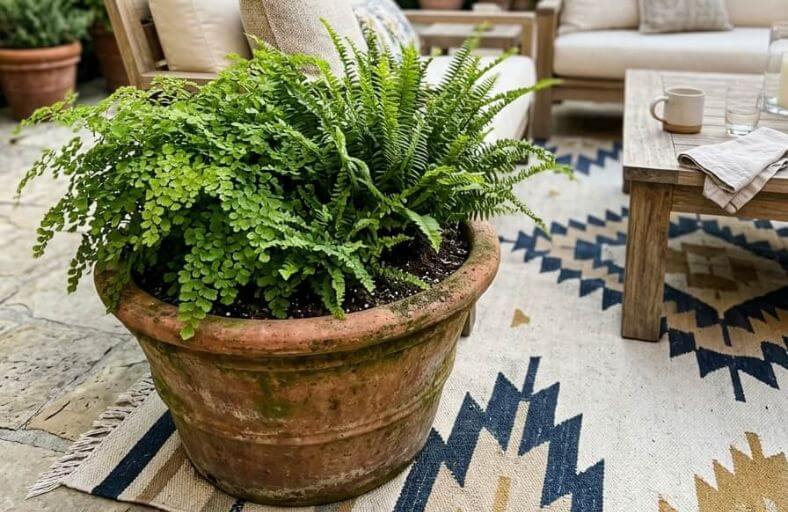
Large ceramic or stone planters filled with damp soil are among the best functional weights available for anchoring a rug.
| Decor Item | Best Use Case | Stability Level |
|---|---|---|
| Stone Planters | Corner anchoring | High |
| Garden Statues | Center or side weights | Moderate |
| Decorative River Rocks | Small rug perimeters | Moderate |
The key to success is strategic distribution. Since the wind most easily catches the edges and corners, you should position your heaviest decor pieces directly on these vulnerable points rather than in the center.
Beyond planters, you can use heavy statues or even large, smooth river stones to create a zen-inspired border. These items add significant downward force while making your outdoor space feel more curated and high-end.
Just ensure that any decor used is heavy enough to resist being tipped over by the same gusts you are trying to fight.
Grommets and Ground Stakes for Lawns
For rugs placed on grass or soil, such as during a backyard party or a camping trip, traditional adhesives and furniture weight might not be enough.
The “fail-safe” expert method involves installing metal grommets into the rug corners and securing them with heavy-duty ground stakes.
This creates a mechanical lock that physically prevents the textile from lifting, no matter how strong the wind.
To do this, you will need a basic grommet kit from a hardware store. After marking your corners, you punch a clean hole, insert the “male” and “female” metal pieces, and hammer them together with a setting tool.
Once the grommets are in place, drive metal or plastic tent stakes through the holes and into the ground at a 45-degree angle.
This tension-based setup is perfect for picnics and temporary summer lounges where you need maximum security on soft surfaces.
Specialized Outdoor Rug Clips
Wooden and composite decks offer a unique anchoring opportunity because of the natural gaps between the boards.
Specialized outdoor rug clips are designed to capitalize on this by clamping onto the edge of your rug and hooking directly into the deck’s spacing.
This method is particularly popular because it requires no permanent modifications to your expensive decking or the rug itself.
These clips often feature a spring-loaded or screw-tightening mechanism that provides a firm grip without tearing the fibers. They are virtually invisible from a distance and are incredibly easy to install or remove if you need to take the rug in for the winter.
For those with composite decks who are wary of using adhesives that might leave a residue, these mechanical clips offer a clean and professional-looking alternative that keeps your rug flush against the floor.
Industrial Hook-and-Loop Fasteners
For homeowners who want a semi-permanent solution that allows for easy rug removal during cleaning or bad weather, industrial-strength Velcro is an excellent choice.
This hook-and-loop system provides high shear strength, preventing the rug from sliding horizontally while still allowing you to peel it up vertically when needed.
- Clean the Surface: Wipe the deck or concrete with isopropyl alcohol to ensure a strong bond.
- Apply to Rug: Attach the “hook” side to the corners or edges of the rug backing.
- Secure to Floor: Align and stick the “loop” side to the patio surface.
- Press Firmly: Walk over the corners to engage the fasteners.
This method is ideal for larger rugs that might need frequent adjustments or for those living in humid climates where you want to occasionally lift the rug to check for moisture buildup.
Using weather-resistant Velcro ensures the adhesive won’t degrade when exposed to the elements.
Bungee Cords for Railing Support
If your rug is situated on a balcony or near a fence, bungee cords offer a flexible anchoring solution that works with the wind rather than against it.
This method requires your rug to have built-in grommets or small loops sewn into the corners.
You simply hook one end of a weather-resistant bungee cord to the rug and the other end to a fixed anchor point like a railing post or a heavy deck joist.
| Connection Point | Benefit | Visibility |
|---|---|---|
| Balcony Railing | Prevents “sail effect” | Moderate |
| Fence Post | High-tension security | Low |
| Deck Frame | Invisible hold | Invisible |
The elasticity of the bungee cord is its greatest strength. Unlike rigid anchors, the cord absorbs the energy of sudden gusts, allowing the rug to shift slightly without tearing or coming loose.
This is a perfect strategy for high-rise apartment balconies or coastal decks where wind speeds can reach dangerous levels.
DIY Weighted Edges
For a sleek and completely invisible DIY fix, you can add weight directly into the hem of your rug. This is highly effective for lightweight synthetic rugs that lack the mass to stay grounded on their own.
The process involves using 1-inch PVC pipes filled with dry sand. Once the pipes are filled using a funnel, they are sealed with end caps to create a custom “weighted bar.”
These weighted pipes are then tucked into the folded edges of the rug. You can secure them in place using a strong outdoor adhesive or by sewing a simple fabric sleeve onto the back of the rug.
This distributed weight system ensures that the entire edge of the rug stays flush with the ground, making it nearly impossible for the wind to get underneath and lift the textile. It is a professional-grade solution that costs only a few dollars in materials.
Routine Maintenance and Seasonal Care
Even the most secure rug requires periodic attention to remain in top condition. Outdoor environments are brutal, and over time, dirt can accumulate between the rug and the floor, acting like sandpaper that wears down both surfaces.
It is essential to lift the corners of your rug after heavy rain to ensure the area is drying properly, which prevents the growth of “rancid” mold or mildew.
When the summer season ends, do not leave your rug exposed to the winter elements. Experts recommend cleaning the rug thoroughly, letting it air dry in the sun, and then rolling it tightly for storage.
Always roll the rug with the right side facing out and secure it with bungee cords or rope before placing it in a dry garage or shed. A little seasonal care ensures your investment stays beautiful and ready for next year’s patio season.