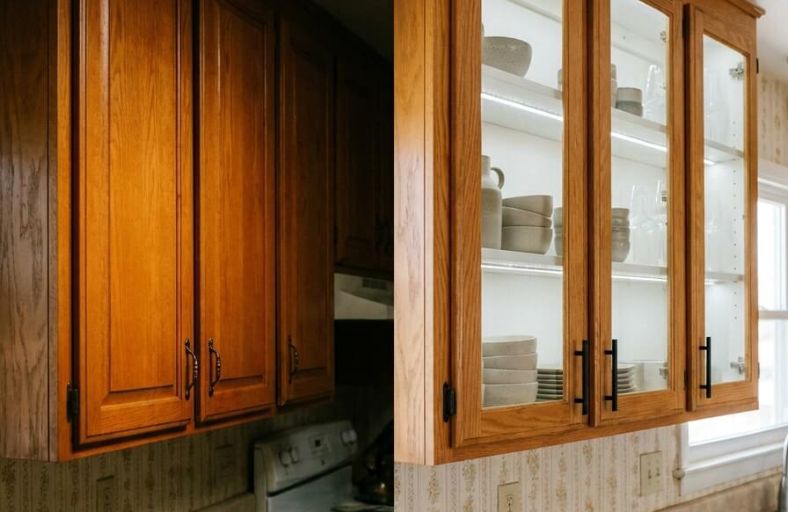
Dark orange oak cabinetry casting a heavy, pumpkin-like glow over the entire kitchen is a classic design nightmare from the late nineties.
It feels like stepping into a dated time capsule every time you want to make coffee.
While painting is the standard advice, it often ruins the wood’s beautiful natural character and leaves you with textured, bumpy doors. Fortunately, you can bypass the paint can entirely.
By embracing clever architectural tweaks, smart lighting, and modern color theory, you can easily transform those dated oak cabinets into a fresh, contemporary masterpiece that feels completely intentional.
Apply a Translucent Gel Stain for Rich Depth
Unlike traditional wood stains that must soak into raw wood, gel stains sit on top of the existing finish like a translucent glaze.
This makes them incredibly user-friendly because you do not have to strip your cabinets down to bare timber.
To do this, remove the doors and clean them thoroughly with a degreaser like TSP. Lightly scuff-sand the surface with a 220-grit sanding block to help the stain stick.
For a highly professional look, apply a thin “paint wash” of black mineral paint mixed 1:1 with water first, wiping it away immediately so it settles deep into the oak’s heavy grain.
Once dry, brush on a high-quality espresso or walnut gel stain and smooth it out with a clean, dry foam roller to prevent streaks. This layered technique adds incredible, modern depth while preserving the gorgeous organic grain.
Use a Two-Part Chemical Bleach for a Raw Scandinavian Look
If you love the light, airy Scandinavian aesthetic, you can strip away the dated amber tones using a powerful two-part A/B wood bleach.
Standard household bleach will not alter the wood’s natural pigment, but a professional two-part system made of sodium hydroxide and hydrogen peroxide will.
After stripping off the old finish, apply Part A (sodium hydroxide) to the raw wood, let it sit for a few minutes, and follow up with Part B (hydrogen peroxide).
This triggers an active foaming reaction that oxidizes the wood’s natural pigment, pulling out the stubborn orange tones and leaving behind a beautiful raw tan color.
| Bleach Method | Active Ingredients | Best For |
| Two-Part A/B | Sodium Hydroxide & Hydrogen Peroxide | Deep lightening of raw wood pigment |
| Oxalic Acid | Oxalic Acid crystals in hot water | Spot-treating dark water and rust stains |
Once fully dry, rinse the wood, neutralize with a mild acid solution like vinegar, and sand lightly before sealing with a non-yellowing, matte water-based polyurethane topcoat.
Convert Solid Center Panels to Glass Inserts
Breaking up a heavy wall of solid wood is a brilliant way to make a small kitchen feel instantly brighter and more open. Instead of buying entirely new cabinets, you can convert your existing door frames to hold gorgeous glass panels.
Remove your cabinet doors and use a circular saw set to the exact depth of the back groove lip to cut along the inner frame.
Use a wood chisel to free the solid wood center panel, revealing a flat inset ledge.
Next, order custom-cut glass panels (ideally 3/16 inch to 1/4 inch thick for durability).
You can secure the glass using rubber glass-molding stoppers, which are non-destructive and highly reusable. For a super sleek look, try textured or bronze-tinted glass to elevate the modern aesthetic.
Swap Selected Upper Doors for Open Shelving
For a highly modern, lived-in aesthetic, consider converting one or two upper cabinets into styled open shelving.
Removing the doors entirely reduces visual weight, catches more natural light, and keeps your daily coffee mugs or beautiful bowls within arm’s reach.
Simply unscrew the doors and hinges, and fill any remaining holes with a paintable wood filler. Sand the frame smooth and wipe away the dust with a damp sponge.
To make your display look intentional rather than unfinished, paint the cabinet interior a contrasting color, like a deep, moody charcoal or a crisp, warm white.
This simple structural change breaks up the monotony of the oak grain and turns your everyday dishware into part of the decor.
Shift to Daylight Lighting Temperatures (3500K to 4500K)
Your lighting heavily dictates how orange your cabinets look. Old incandescent bulbs or warm LEDs (usually 2700K) emit heavy yellow-orange wavelengths that amplify the brassiness of golden oak.
By simply swapping your bulbs for cool daylight or neutral white ranges (between 3500K and 4500K), you introduce balancing cool wavelengths.
This subtle color-correcting filter neutralizes the yellow-orange cast of aging clear coats and makes the wood tones look cleaner.
To enhance this effect, layer your lighting with statement pendant lights, under-cabinet LED strips, or wall lamps to disperse light evenly across the room.
Neutralize Warm Wood with Strategic Wall Paint
Choosing a wall color is all about understanding color theory. While you might think blue, the complement of orange, would tone it down, placing them side-by-side actually triggers simultaneous contrast, making the cabinets pop even more dramatically.
To make the wood recede, use desaturated, analogous warm neutrals that share soft undertones.
If you prefer cool tones, avoid primary blues and choose a soft, earthy gray-green or a muted greige, which calm the orange without clashing.
| Color Family | Paint Name & Code | Role with Oak |
| Warm Neutral | BM Soft Chamois | Leans into warmth, minimizes contrast |
| Cool Greige | SW Mindful Gray (SW 7016) | Cool gray contrast that tones down orange |
| Earthy Green | SW Sea Salt (SW 6204) | Calming organic contrast, absorbs brassiness |
Upgrade Countertops and Remove the 4-Inch Lip
Changing your countertops can completely transform the visual field of your kitchen. Avoid speckly granite with yellow or gold granulations, as this will only blend in and date the oak.
Instead, opt for cool white engineered quartz with subtle gray veining (like Carrara marble), which reflects light and makes the space feel larger.
When installing new countertops, it is critical to remove the old 4-inch countertop lip before tiling your backsplash.
Running a clean, stacked ceramic or glass subway tile directly from the flat countertop to the cabinets eliminates the double-backsplash look and instantly modernizes the room’s proportions.
Dress Cabinets in Modern Hardware and Contrast Accents
Cabinet hardware acts as the “jewelry” of the kitchen, and swapping old, ornate handles for sleek profiles is highly effective.
Matte black T-bar pulls create a striking, modern contrast that grounds the warmth of the oak.
Alternatively, lean into the wood’s warmth with champagne bronze, unlacquered brass, or copper hardware in minimalist silhouettes.
To break up wood overload, bring in contrasting textures like rattan light fixtures, simple farmhouse signs, and displayed stoneware rather than adding more wood decor.
A striped indoor-outdoor rug or a vintage Turkish runner can also beautifully pull the entire color palette together underfoot.