The crisp scent of a newly unrolled carpet remnant often precedes a slow-motion disaster as the raw, exposed edges begin their inevitable surrender to the laws of entropy.
A beautifully textured wool offcut, perfect for a hallway runner, can quickly dissolve into a chaotic mess of loose threads and unraveled backing because the perimeter was left unprotected.
This visual nightmare is a common reality for homeowners who overlook the critical science of edge finishing.
Properly securing these edges is not just about looks; it is an essential preservation act that transforms a discarded piece of flooring into a durable, functional piece of home art.
Standard Fabric and Polyester Binding Tape
Standard carpet binding is the most common method for finishing remnants, involving wrapping a strip of fabric or synthetic material around the raw edge and securing it with stitches or high-grade adhesive.
In professional settings, this is done with an industrial sewing machine to ensure consistent tension and a straight finish.
The choice of material is crucial for both durability and style. Cotton binding tape offers a natural look, often used for wool or high-end rugs, and is available in various patterns like herringbone.
For high-traffic areas, polyester binding tape is recommended due to its superior colorfastness and resistance to abrasion. When selecting a color, you can match the tape to the carpet for a seamless look or choose a contrasting shade to create a bold design statement.
Proper binding doesn’t just prevent fraying; it extends the carpet’s lifespan significantly.
Instabind Adhesive-Based DIY Binding
For those seeking a do-it-yourself solution without specialized machinery, Instabind is a game-changer. This product features a pressure-sensitive adhesive backing that allows you to “peel and stick” a professional-looking border onto your remnant.
The process starts by trimming the carpet edges straight with a utility knife and using a lighter to seal any loose fibers.
Navigation of corners is the most technical part of this method. Rather than cutting the strip, you should snip a small slit into the flat tape portion at each corner to allow the material to overlap neatly without bunching.
While the adhesive provides initial placement, reinforcing the bond with a thin bead of hot glue in the gap between the carpet edge and the binding piping is essential for long-term durability. This dual-bond approach ensures the rug remains secure under the stress of regular vacuuming.
Professional Serging (Overlock Yarn Method)
Professional serging, also known as whipping, provides an upscale, decorative appearance by wrapping continuous yarn around the carpet’s edge.
This method mimics the look of a traditional hand-stitched finish, creating a refined and seamless perimeter that is perfect for luxury rugs or oriental restorations.
| Feature | Carpet Binding | Carpet Serging |
| Material | Fabric or synthetic tape | Continuous yarn |
| Appearance | Tailored, clean border | Hand-stitched, elegant |
| Durability | High (tape protects edge) | High (yarn wraps edge) |
| Cost | Generally more affordable | Mid-to-high range |
The process uses specialized machinery to apply the yarn in a tight, overlocked stitch. While the yarn color is typically matched to the carpet for a streamlined look, modern trends increasingly utilize contrasting tones to add visual interest.
Serging is highly durable and resists wear effectively in high-traffic zones, making it a favorite for statement pieces in interior designs.
Liquid Latex Seam Sealer
Liquid latex seam sealer is a powerful chemical tool designed to lock carpet fibers in place from the inside out. This clear-drying adhesive is formulated to seal raw edges and strengthen worn backings, preventing tufts from pulling out.
It is an ideal foundational step before applying other decorative finishes like binding or fringing.
Application is straightforward: run a thin bead of the sealer along the primary backing where the fibers meet the edge. Many of these products are powered by antimicrobial protection to fight the growth of odor-causing bacteria.
The working time is approximately 15 minutes, with a full cure time of 12 to 24 hours. Beyond fray prevention, applying a thin layer to the underside of the edges can increase slip resistance on hard floors, making your DIY rug safer.
Metal Edge Strips and Transition Bars
When a carpet remnant meets a different flooring surface, such as tile or hardwood, metal edge strips are the gold standard for protection.
These mechanical transition bars clamp down on the carpet’s raw edge, hiding the severed fibers beneath a protective metal shield. This prevents the common “catch point” where shoes or vacuum cleaners snag loose threads.
Installing these strips is essential for safety, as they eliminate tripping hazards caused by curling carpet edges in high-traffic doorways. There are various styles available, including Z-bars for carpet-to-tile transitions and T-moldings for floors of equal height.
By redirecting the pressure of foot traffic away from the vulnerable perimeter, these bars ensure that your custom-cut rug remains flat and intact for years.
Precision Hot Glue Method
For a quick and budget-friendly fix, the precision hot glue method is remarkably effective at stopping minor frays.
This technique is perfect for small remnants used in closets or as temporary mats. The key to success is working in small, manageable 6-inch sections to ensure the adhesive stays molten enough to penetrate the backing.
To achieve a professional result, apply a thin bead of glue directly along the cut line of the secondary backing. While the glue is still warm, use a small wood block or a brick to press the edge firmly for 10 to 15 seconds.
This creates a tight, synthetic seal that prevents the tufts from unspooling. This method is often used to secure the endpoints of binding tape, ensuring a seamless and durable finish for any DIY project.
Easybind Rope Edging
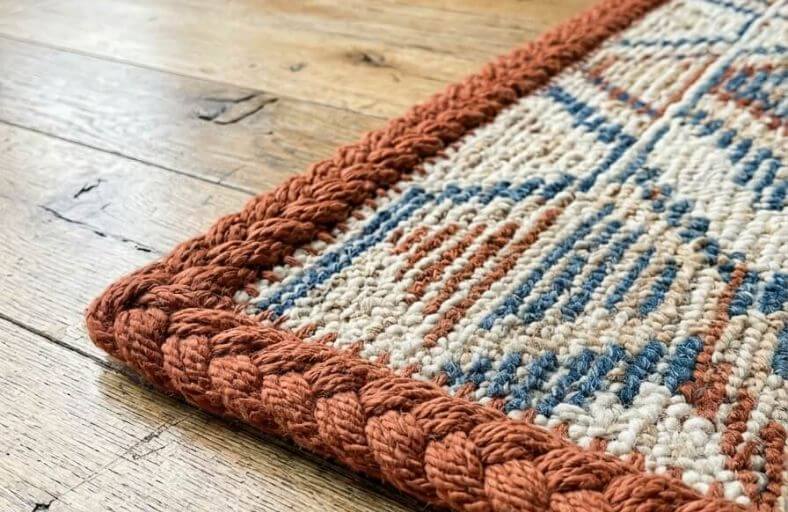
Easybind Rope Edging is the luxury alternative for the DIY enthusiast who wants a boutique look without the need for industrial sewing.
This product creates a thick, decorative rope-like border that adds weight and style to any remnant. It is available in a vast array of colors, from earthy tones like “Cinnamon & Gold” to modern shades like “Wulf Grey”.
The application is user-friendly and involves adhering the rope strip to the underside of the carpet edge before sealing the gap with hot glue.
Because the rope material is flexible, it is particularly well-suited for remnants with organic or curved shapes, such as oval entry rugs.
This high-quality finish mimics professional workmanship and provides a substantial physical barrier against mechanical wear.
Traditional Overcast Stitch
For those who appreciate traditional craftsmanship, hand-whipping offers a bespoke and durable way to stabilize rug edges.
This method involves using a heavy-duty needle and upholstery thread that matches the rug’s color to sew a tight overcast stitch along the entire perimeter.
It is a time-consuming but highly rewarding process that adds structural integrity to the weave.
To ensure a professional look, space your stitches evenly and keep them at a consistent depth from the edge. This technique is especially useful for repairing antique rugs or small sections where a machine cannot reach.
Hand-whipping creates a polished, modern perimeter that celebrates the handmade nature of your floor covering, providing a lasting solution that resists unraveling even in busy areas of the home.
Thermal Sealing
Thermal sealing is a specialized method that uses controlled heat to melt and fuse the tips of synthetic carpet fibers.
This technique is strictly for materials like nylon, polyester, and polypropylene, which are essentially plastic-based. Natural fibers like wool will burn rather than melt, so caution is required during material identification.
Using a precision heat tool or even a simple lighter, you can singe the loose fibers along a cut edge to create a tiny, hardened bead that locks the yarn in place. This “fusing” action prevents the weave from unspooling further.
Thermal sealing is often used as a pre-treatment before applying binding tape, ensuring that the core structure of the remnant is stable before the decorative layer is added. Always perform this in a well-ventilated area to avoid inhaling synthetic fumes.
Iron-On Seam Tape
Iron-on seam tape, also known as heat-bond tape, provides a high-strength bond that is ideal for reinforcing remnant edges or joining two pieces of carpet together.
This tape features a solid adhesive that melts when heat is applied with a standard clothes iron or a specialized seaming iron.
To apply, place the tape under the carpet edge with the adhesive side facing up. Passing a hot iron over the carpet transfers heat through the backing, fusing the tape and carpet into a single, fray-proof unit.
For DIYers using a domestic iron, it is crucial to use a heat shield or a thin towel to protect the carpet fibers from scorching.
This method is particularly popular for creating custom rugs because it results in flat, nearly invisible seams that withstand heavy foot traffic.
Fringing (Decorative and Functional)
Adding a fringe to a carpet remnant is a classic way to hide raw edges while introducing traditional elegance. While often associated with Oriental rugs, modern fringing kits allow you to add this detail to any piece.
The fringe acts as a sacrificial edge; as it wears down over time, it can be replaced without damaging the main body of the rug.
Most fringing for remnants comes in a tape format that can be sewn or glued to the underside of the carpet.
Fringe is seeing a resurgence as designers embrace “Cultural Revival” trends that celebrate traditional craftsmanship.
However, remember that long fringes can be a challenge for robot vacuums, so choose your fringe length based on your household’s cleaning technology.
Pressure-Sensitive Seaming Tape
Pressure-sensitive seaming tape is the “no-heat” alternative for a quick and mess-free edge stabilization.
This industrial-strength adhesive tape bonds instantly upon contact and is perfect for tight areas where a bulky iron or glue gun won’t fit, such as inside closets or behind furniture.
Application is as simple as peeling the backing, laying the tape on the floor, and pressing the carpet edge firmly on top.
Products like Roberts Indoor Pressure Sensitive Tape are designed to bond to most carpet backings and offer a “step-on” application.
While this is an excellent temporary fix or solution for low-traffic areas, it may not provide the same permanent durability as heat-bond or latex methods in high-traffic hallways.