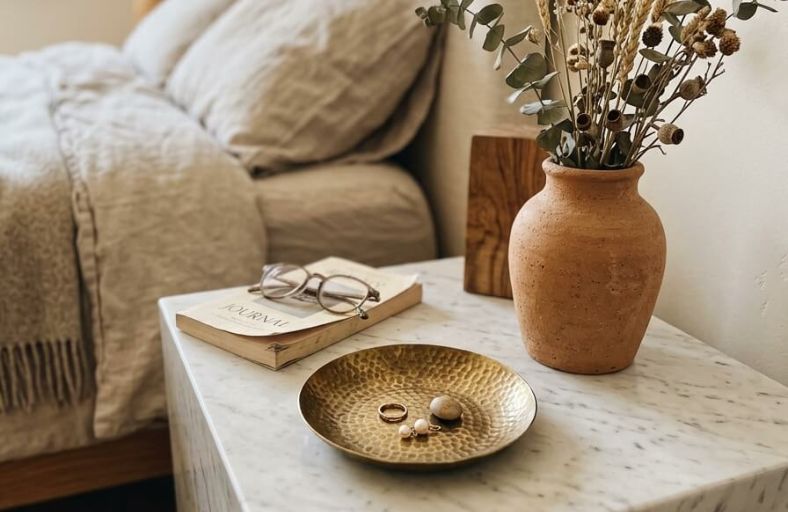
A leaning tower of half-read magazines and a tangled nest of charging cables isn’t exactly the “zen retreat” Pinterest promised.
This visual chaos acts like a silent alarm clock for your brain, keeping cortisol levels high right when you need to wind down. Your nightstand is the last thing you see before closing your eyes and the first thing that greets you in the morning.
Transforming this small surface into a curated sanctuary is about more than just aesthetics; it is about engineering the perfect environment for restorative rest.
Precision Scaling and Ergonomics
The foundation of a beautiful bedside setup starts with the “Golden Ratio” of furniture. A common mistake is choosing a table that is drastically higher or lower than your mattress, which creates an awkward reach and disrupts the visual flow of the room.
For the best ergonomics, the top of your nightstand should sit roughly level with the top of your mattress, or within a variance of 2 to 6 inches.
| Bed Size | Recommended Table Width | Walking Space Needed |
| Twin / Full | 15 – 20 inches | 18 – 24 inches |
| Queen | 20 – 28 inches | 24 – 30 inches |
| King | 28 – 36+ inches | 30 – 36 inches |
Beyond height, width matters. A tiny table next to a King bed looks isolated, while a massive dresser next to a Twin bed feels claustrophobic.
Ensuring you have at least 24 inches of “breathing room” around a Queen bed allows the nightstand to feel like a focal point rather than an obstacle.
Light Engineering and Circadian Support
Lighting is the most powerful tool for setting a mood, but it also plays a vital role in your health. Research shows that even dim light can interfere with your circadian rhythm, while blue light from screens and cool-white LEDs is a major melatonin-killer.
To create a sleep-friendly environment, prioritize warm-toned or amber bulbs which are less likely to suppress sleep hormones.
Professional stylists recommend “Layered Lighting.” Instead of relying on a harsh overhead fixture, pair a primary bedside lamp with secondary sources like a small candle or a dimmable accent light. If you are tight on space, consider wall-mounted sconces.
This keeps the tabletop clear while providing the perfect glow for late-night reading without signaling your brain to stay awake.
Material Synthesis and Tactile Texturing
What differentiates a “staged” room from a “designer” one is the intentional mix of materials. Using only one texture, such as all polished wood, can make a space feel flat and uninspired.
By synthesizing different textures, you add visual depth and a sense of luxury.
Try the “Contrast Rule”: if you have a rustic wooden table with a heavy grain, pair it with a smooth ceramic lamp or a sleek metallic clock. In 2025, designers are leaning heavily into organic stone like marble or travertine paired with matte black steel or warm brass.
These tactile differences prevent the room from feeling clinical. Balance these hard surfaces with soft textiles, such as a linen table runner or a woven basket underneath, to ground the space in comfort.
The “Tray Method” and Organizational Systems
Clutter is the enemy of a calm mind. When disparate items like glasses, jewelry, and a water glass are scattered, the brain perceives it as “unfinished business,” which can spike cortisol levels. The easiest fix? The “Tray Method.”
A decorative tray acts as a visual boundary, instantly turning a mess of random objects into a curated vignette. Use a marble or rattan tray to group your essentials.
For items you don’t want to see, such as lip balm or medication, use a lidded box. This maintains a “clean eye-line,” meaning your brain doesn’t have to process “visual noise” while you are trying to drift off.
| Organizing Tool | Best Use | Material Tip |
| Decorative Tray | Groups loose items into one focal point | Marble, Rattan, or Brass |
| Trinket Dish | “Catch-all” for rings and earrings | Ceramic or Crystal |
| Lidded Box | Conceals private or unattractive items | Wood or Leather |
Biophilic Enhancement and Air Quality
Bringing nature into your bedroom is a major design trend for 2025, but it is also a win for your health. Adding greenery like a small potted plant or a vase of fresh flowers instantly introduces life and softness to the rigid lines of your furniture.
Beyond the aesthetic boost, specific plants are “sleep superstars” because they help purify the indoor air while you rest.
For low-maintenance options, consider a snake plant, aloe vera, or a peace lily. These varieties are famous for releasing oxygen at night and filtering out common household toxins.
If you prefer a temporary touch, a simple glass vase with a single stem of eucalyptus or lavender can provide aromatherapeutic benefits, helping to lower your heart rate and prepare your body for deep sleep.
Curated Personal Narratives
Your bedside table should be a reflection of who you are, but it requires a “stylist’s eye” to keep it from looking like a junk drawer. Personal touches such as a framed photograph, a small piece of abstract art, or a meaningful travel memento make the space feel uniquely yours.
Designer books are also a classic styling tool. Instead of keeping your entire “to-read” pile by the bed (which can feel like a daunting to-do list), select two or three favorites to stack horizontally.
This stack creates a platform to elevate smaller items, like a candle or a trinket dish, adding the varying heights that experts recommend for a dynamic look.
For a super-clean aesthetic, some designers even recommend flipping the books so the page-side faces out, creating a neutral, calming color palette.
Architectural Anchoring and Focal Points
Every successful nightstand arrangement needs an “anchor”, a single piece that draws the eye and grounds the rest of the decor. Usually, the bedside lamp serves as this anchor because of its height and visual weight.
If you aren’t using a lamp, you must replace it with another tall, striking object like a large vase or a piece of leaning artwork to prevent the table from looking flat.
A good rule of thumb is the “One-Third Rule”: your focal piece should take up roughly one-third of the table’s surface. This ensures the piece is substantial enough to lead the design without overcrowding your functional space.
By establishing this structural grounding, the other smaller items on your table will look like an intentional collection rather than a random assembly.
Digital Sanctuary Protocols
The presence of technology is often the biggest disruptor of a peaceful bedroom. Blue light from smartphones and tablets tricks your brain into thinking it is daytime, suppressing melatonin and making it much harder to reach restorative REM sleep.
To truly optimize your nightstand, you need to turn it into a digital-free zone.
If you must charge your phone nearby, use a nightstand with integrated cable management or a lidded box to hide the “visual noise” of cords.
Better yet, replace your phone with an analog alarm clock and a paper journal. This simple shift signals to your nervous system that the day’s cognitive demands are over, giving you the psychological permission to detach and rest.
| Item to Remove | Sleep-Friendly Alternative | Benefit |
| Smartphone / Tablet | Analog Alarm Clock | Prevents blue light exposure and “doomscrolling” |
| Laptop / Work Files | Paper Journal or Book | Separates work stress from the sleep zone |
| Messy Charging Cords | Lidded Box or Hidden Dock | Reduces visual clutter and mental fatigue |
Geometric Symmetry and Visual Balance
The human brain is naturally wired to seek order and symmetry. When bedside furniture is mismatched or disjointed, your mind stays active trying to “map” the space, which can keep you in a state of subtle alert.
Utilizing a cohesive suite, such as matching nightstands and twin lamps, creates a continuous visual path that lowers cortisol and eases the nervous system into sleep.
If you prefer a more eclectic look, you can achieve “Subtle Symmetry.” Instead of identical items, use a consistent color palette or material theme. For example, you might have different lamps on each side but ensure they are the same height and made of the same brushed brass finish.
This frames the bed with poise and creates a “mirror image” effect that is inherently pleasing to the eye.
Seasonal Curation and Atmospheric Rotation
A nightstand should never feel static. Adapting your decor to the seasons can refresh the room’s energy and support better rest based on the climate.
In the summer, keep the surface light and open by removing excess items and adding coastal touches like coral accents or woven textures.
As the weather cools, transition to “Autumnal Warmth” or “Winter Comfort.” This is the time to introduce cozy textures like fabric-covered trays or ceramic pieces in earthy tones. Seasonal scent rotation is also a powerful tool for mood management.
Use floral or citrus notes in the spring to boost morning alertness, and switch to sandalwood or spiced scents in the winter to enhance coziness. Regularly resetting your surface also ensures that “visual noise” from old receipts or empty cups doesn’t accumulate.
Sleep-Science Accessories and Wellness Integration
Your nightstand is the perfect platform for science-backed tools that improve sleep hygiene. Small additions like a compact humidifier can prevent dry air from irritating your sinuses, while a small air purifier helps remove allergens that might disrupt your breathing.
These aren’t just gadgets; they are “Environmental Optimizers” that facilitate a restorative atmosphere.
| Wellness Accessory | Primary Benefit | Expert Tip |
| Small Humidifier | Prevents dry skin and irritated sinuses | Choose a quiet, ultrasonic model |
| Worry Journal | Clears mental space of racing thoughts | Keep a dedicated pen nearby |
| Water Carafe | Ensures hydration without leaving bed | Use an elegant glass or ceramic set |
If you struggle with “night worries,” keep a notepad and pen handy. Writing down racing thoughts or tomorrow’s to-do list before bed can help clear your mental space, preventing the tossing and turning associated with anxiety.
Storage as a Design Language
Nowadays, storage is no longer just a hidden necessity; it is a core part of the design aesthetic. A functional bedside table should offer ample space to keep essentials organized and out of sight.
Solid wood construction, like oak or walnut, is preferred for daily use because it handles the wear and tear of opening and closing drawers for years without losing structural integrity.
If your table lacks drawers, you can add “Stylish Storage” using woven baskets or decorative lidded boxes. These containers are perfect for tucking away medications, glasses, or charging cables, maintaining that vital “clean eye-line”.
By ensuring every item has a designated home, you prevent the surface from becoming a dumping ground, allowing you to focus on the beautiful, curated elements of your bedroom.