In the early 20th century, families gathered around ornate mahogany radios as if they were crackling fireplaces.
Today, the television has taken that crown, yet it often sits as a cold, static black rectangle that disrupts the harmony of a carefully curated home.
Transforming this technological necessity into a design asset requires more than just a mount and a cord cover. It is an exercise in visual ergonomics and material synthesis.
By layering textures, managing light, and applying architectural principles, you can turn your black hole into a sophisticated focal point that complements your lifestyle rather than dominating it.
Artful Gallery Wall
Treating your television like a prominent painting is the most effective way to blend technology with personal expression.
Instead of letting the screen sit in isolation, surround it with a curated collection of framed art, photography, or large-scale prints.
This technique transforms the wall into a sophisticated focal point that draws the eye upward and outward, rather than fixating on the dark void of the screen.
When styling your gallery, experts recommend leaving a breathing room buffer of 6 to 12 inches between the edge of the TV and the nearest frames.
This prevents the arrangement from feeling cramped. For a cohesive look, choose frames that coordinate with your room’s existing fixtures, such as matte black or warm wood.
By mixing various sizes and textures, the television becomes just another layer in a rich, visual story.
Dark Mode Camouflage
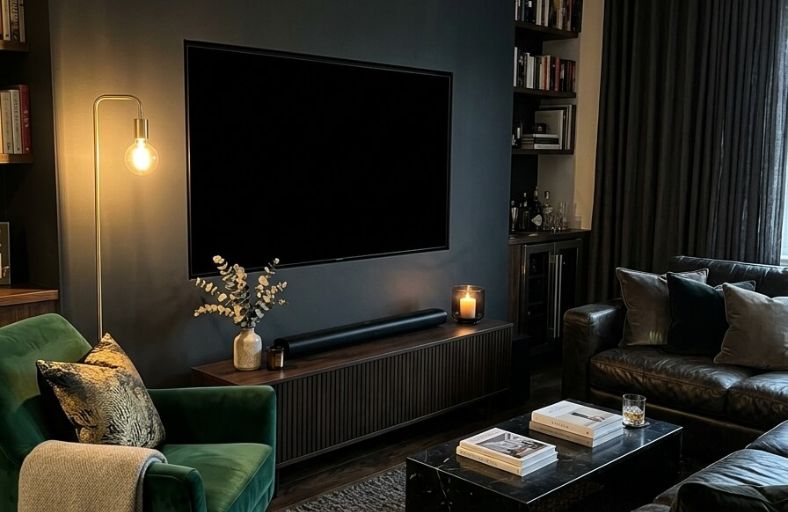
One of the most strategic ways to make a massive screen disappear is to lean into the dark mode design aesthetic.
Painting the wall behind your television in deep, moody hues like charcoal, navy, or forest green allows the black rectangle to recede into the backdrop when deactivated.
Beyond camouflage, this choice significantly enhances your viewing experience. Darker backgrounds absorb excess light, reducing glare and causing the colors on your screen to appear more vivid and crisp.
To keep the room from feeling too heavy, designers suggest balancing the dark accent wall with lighter furniture or vibrant textiles elsewhere.
This creates a high-contrast environment that feels intimate and sophisticated rather than dark and cramped.
If you are not ready to commit to paint, bold textured wallpapers in dark tones can achieve the same grounding effect while adding an extra layer of tactile interest.
Linear Wood Slats
For a high-end, architectural feel, linear wood slats are the dominant trend. These vertical or horizontal panels do more than just provide a beautiful, organic contrast to the smooth screen; they add rhythm and depth to a flat wall.
A major benefit of slatted walls is their ability to conceal unsightly wires and cables within the structure itself.
From a technical standpoint, mounting these 20 to 25 mm wood slats over black acoustic felt can improve your room’s sound quality by absorbing echoes.
| Material | Vibe | Best For |
| Walnut Slats | Moody, Luxury | Traditional or Mid-Century |
| White Oak | Airy, Modern | Scandinavian or Coastal |
| Black Felt Base | Deep Contrast | Dedicated Media Zones |
This material synthesis ensures your TV zone feels warm and lived-in rather than sterile and tech-heavy.
Minimalist Floating Shelves
Floating shelves offer a sleek, bracket-free solution that utilizes vertical space without adding the bulk of a traditional bookcase.
To master this look, follow the Rule of Odds by arranging decorative objects in groups of three or five.
Mixing items of varying heights, like a tall ceramic vase alongside a horizontal stack of coffee table books, creates the necessary depth to distract from the screen’s flat surface. The most critical element here is breathing room.
Leaving intentional gaps, or negative space, prevents the wall from looking cluttered and allows each curated piece to stand out as a design choice.
For small apartments, floating a long unit beneath the TV keeps the floor area clear, making the entire room appear larger while providing a home for your soundbar and remotes.
The Proportional Anchor
Selecting the right furniture beneath your TV is critical for creating a grounded, stable look.
A common design mistake is choosing a console that is too narrow, which makes the television appear top-heavy and visually unstable.
As a professional rule of thumb, your console should be at least 4 to 8 inches wider than the TV on both sides to provide the necessary visual weight.
This grounding effect allows the eye to settle on the furniture rather than just the glowing screen.
| TV Diagonal Size | Recommended Console Width | Ideal Mounting Height (Center) |
| 42-50 inches | 50-60 inches | 56 inches from floor |
| 55-60 inches | 65-70 inches | 61 inches from floor |
| 65-75 inches | 75-85 inches | 67 inches from floor |
Beyond size, consider the style of the unit. A sideboard or credenza can offer a more furniture-forward look compared to a standard tech stand, allowing you to layer in books and low-height decorative objects that draw the eye away from the electronics.
Biophilic Softening
Bringing the outdoors in is one of the most effective ways to counteract the cold, industrial feel of modern technology.
Plants add organic textures, movement, and a lived-in warmth that balances the hard lines of a television.
Low-maintenance varieties like Snake plants or ZZ plants are ideal because they can thrive in the slightly dimmer corners often preferred for TV viewing to avoid glare.
For a dynamic look, vary the growth habits of your greenery. Place an upright Bird of Paradise in a large floor pot next to the console to add height, while a trailing
Pothos or Philodendron on a shelf above can soften the screen’s sharp upper corners.
This biophilic synthesis not only improves air quality but also creates a psychological sense of calm, making your media zone feel more like a sanctuary and less like a showroom .
Custom Built-in Media Walls
For the ultimate high-end integration, custom built-in cabinetry transforms your TV wall into a permanent architectural feature.
Unlike freestanding furniture, built-ins can stretch from floor to ceiling, providing a seamless look that incorporates storage, lighting, and technology in one cohesive design.
This approach is particularly effective for large walls, where a standard TV might otherwise look lost.
Modern media walls often combine luxurious materials like honed stone slabs with fluted wood panels to add depth and tactile interest.
By building recessed niches specifically for the screen and soundbar, you ensure that technology feels like a deliberate part of the home’s structure.
This media wall strategy allows you to hide cables, game consoles, and even the TV itself behind motorized panels or art-inspired sliding doors when the entertainment is over.