A silent, microscopic ecosystem is currently thriving beneath your favorite lounging spot, fueled by the 40,000 skin cells the average person sheds every single hour.
This biological buildup transforms cozy seat cushions into a high-density metropolis for millions of dust mites and pathogenic bacteria that a standard vacuum simply cannot reach.
While a dirty sofa might look like a mere aesthetic frustration, it actually functions as a massive air filter, trapping allergens and pollutants that compromise your home’s air quality.
Reclaiming your sanctuary requires moving beyond surface-level cleaning and adopting a technical, material-first restoration strategy.
Before you begin, always identify your furniture’s cleaning code to avoid permanent damage:
| Code | Meaning | Cleaning Agent |
| W | Water-based | Mild soap and water |
| S | Solvent-based | Dry-cleaning solvents (no water) |
| WS | Both | Water or solvent-based |
| X | Vacuum only | No liquids allowed |
Precision Crevice Extraction
The foundation of a professional-grade clean starts with removing the “dry soil” that acts like sandpaper against fabric fibers.
Most people run a vacuum over the surface and call it a day, but the real danger lies in the seams and deep crevices where food crumbs, pet dander, and hair accumulate. These hidden pockets are breeding grounds for carpet beetles and bacteria.
Using a vacuum equipped with a HEPA filter is non-negotiable to ensure microscopic allergens aren’t just recirculated into the air.
Attach a slim crevice tool to reach deep into the folds of the frame and the undersides of the cushions.
Work in a methodical grid pattern, first moving vertically and then horizontally. This multi-directional approach ensures the suction lifts debris trapped at various angles within the weave.
For stubborn pet hair that resists suction, wear a damp rubber glove and sweep your hand across the fabric. The friction creates a static charge that clumps the hair together, making it easy to vacuum up in seconds.
Biological Remediation via Enzymatic Treatment
Organic stains from food, sweat, or pet accidents are complex chemical structures that standard detergents often fail to break down.
Instead of using aggressive chemicals that can bleach your fabric, professional-grade enzymatic cleaners use biological catalysts to digest the stain at a molecular level.
Different enzymes target specific types of messes, ensuring the source of the odor is eliminated rather than just masked.
| Enzyme Type | Targeted Stain |
| Protease | Blood, sweat, dairy, and grass |
| Lipase | Body oils, makeup, and grease |
| Amylase | Starches like pasta sauce or chocolate |
To apply this properly, mist the stained area lightly and allow for a “dwell time” of at least 15 to 30 minutes.
This gives the enzymes time to perform hydrolysis, breaking down the organic matter into water-soluble fragments.
For deep-set odors, cover the area with a damp white cloth during the wait to keep the enzymes active. Once the time is up, gently blot the spot with a clean microfiber cloth.
Never rub the stain, as this can fray the delicate textile fibers and push the residue deeper into the cushion core.
Leather Grain Conditioning and Protection
Leather cushions require a completely different philosophy of care compared to fabric because they are made of natural collagen fibers that need to stay hydrated.
Over time, dust acts as an abrasive that creates microscopic scratches, while body oils can break down the leather’s protective finish.
Cleaning leather without following up with a conditioner is like washing your face and never applying moisturizer; eventually, it will crack and lose its supple texture.
Start by dusting the surface with a dry microfiber cloth to prevent the sandpaper effect.
Use a pH-balanced leather cleaner applied to a cloth, wiping in gentle circular motions.
Once the surface is clean and dry, apply a high-quality leather conditioner containing natural lipids. This step replenishes the oils that have evaporated due to sunlight or indoor heating.
Allow the conditioner to penetrate the pores for at least an hour before buffing away any excess with a soft rag to restore a healthy, low-luster sheen.
Positioning your leather sofa away from direct UV light will further prevent the polymers from becoming brittle and yellowing over time.
Foam Core Immersion
Sometimes the cover is not the only thing that needs a refresh. If your sofa has suffered a major spill or years of heavy use, the internal polyurethane foam core acts like a sponge for bacteria and skin cells.
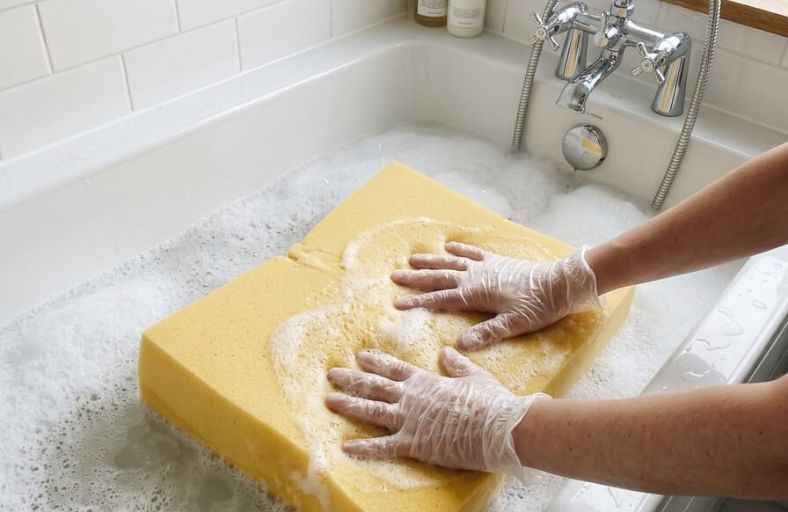
To perform a deep rescue, fill a clean bathtub with warm water and a capful of clear, mild laundry detergent.
Submerge the foam insert and use your hands or clean feet to gently massage the soapy water through the material.
This physical compression flushes out trapped dust and biological debris that a surface clean simply cannot reach.
Rinse the foam several times in fresh water until it no longer produces bubbles. The drying phase is the most critical part of this process.
Compress the foam between thick, dry towels to squeeze out excess moisture rather than wringing it.
Set the cushion in a well ventilated room with a high velocity fan to accelerate evaporation.
Never place polyurethane foam in direct sunlight, as UV rays can cause the chemical structure to become brittle and crumble over time.
Microfiber Nap Restoration
Microfiber is a popular choice for busy homes because it is incredibly resilient, yet it often develops a stiff, crunchy texture after a deep clean.
This happens because the dense synthetic fibers get matted together during the drying process.
If your microfiber is Code S, use rubbing alcohol in a spray bottle instead of water. Alcohol evaporates much faster than water, which significantly reduces the risk of leaving behind unsightly water rings or permanent structural stiffening.
Once the fabric is completely dry, you must “refresh the nap” to bring back that signature suede-like softness.
Use a soft-bristled brush or a clean, dry sponge to rub the surface in gentle circular motions.
This mechanical action breaks the surface tension between the fibers and stands them back up.
For the best results, work in small sections and follow a grid pattern across the entire cushion to ensure every inch feels as soft as the day you bought it.
Steam Sanitization for Delicates
Velvet cushions are the peak of home luxury, but they are notoriously sensitive to moisture and pressure.
If you sit in the same spot for too long, the nap (the raised fibers) can become crushed and dull.
Steam sanitization is a professional secret for rejuvenating these delicate pieces without the risk of soaking the fabric.
Use a handheld steamer held at a distance of at least 5 to 10 centimeters from the surface to avoid wetting the delicate textile.
| Cushion Problem | Solution Method | Critical Caution |
| Deep bacteria in foam | Bathtub immersion | Avoid direct sunlight while drying |
| “Crunchy” fabric feel | Circular brushing | Ensure fabric is 100% dry first |
| Flattened velvet nap | Steam rejuvenation | Keep steamer 5 to 10 cm away |
Move the steamer in a slow, steady motion. The heat and light moisture will relax the fibers, allowing them to stand upright again.
While the fabric is still slightly warm, use a velvet brush to groom the fibers in the direction of the natural grain.
This process restores the visual luster and kills surface bacteria or dust mites hiding in the dense pile. Always ensure your steamer is clean and not spitting large drops of water, as even pure water can leave a permanent mark on luxury velvet.