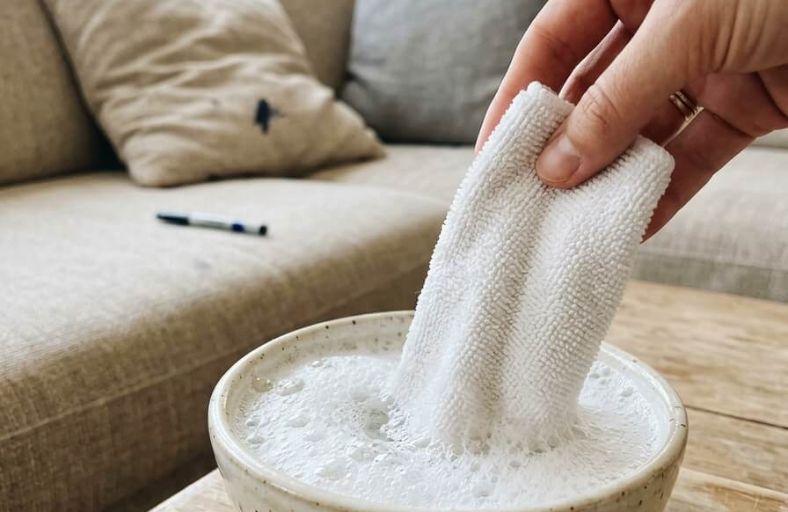
Finding a pen mark on your couch is the kind of discovery that immediately ruins your afternoon.
Whether it is a ballpoint scribble from a child doing homework or an accidental ink leak from a pocket, pen marks on upholstery feel alarmingly permanent. But in most cases, they are not.
The right removal method depends on two things, the type of ink and the type of fabric. Get those two factors right and the stain is very treatable.
These tips walk you through the most effective approaches for removing pen marks from common couch fabrics, using products that are safe, accessible, and genuinely proven to work without causing additional damage to your sofa.
Decoding the Care Tag
Before you reach for any cleaning bottle, you must find your sofa’s law tag. This small label is usually tucked under the seat cushions or attached to the bottom of the frame.
It contains a specific letter code that tells you exactly which chemicals are safe for your fabric.
Ignoring this code is the fastest way to turn a small ink mark into a permanent water ring or a patch of dissolved upholstery.
| Code | Meaning | Recommended Cleaning Agent |
| W | Water-based | Mild soap and water or water-based upholstery shampoo |
| S | Solvent-only | Anhydrous solvents like 70% isopropyl alcohol |
| WS | Water or Solvent | Most flexible; can use soap or alcohol-based cleaners |
| X | Vacuum Only | Professional cleaning required; do not use liquids |
If your tag says “S,” using water will likely leave a permanent stain. If it says “X,” stop immediately and call a professional.
For “W” or “WS” fabrics, you have more options, but always perform a spot test on a hidden area first to ensure the color does not bleed.
Isopropyl Alcohol Method
For the most common household culprit, the ballpoint pen, isopropyl alcohol (C3H8O) is your absolute best friend. Because ballpoint ink is oil-based, water alone will only cause the stain to spread.
Alcohol works by breaking down the ink’s oily resins, allowing the pigment to lift away from the fibers.
To use this method, dampen a clean white cloth or a cotton ball with 70% isopropyl alcohol. Never pour the liquid directly onto the couch, as over-saturating the fabric can damage the internal foam.
Start dabbing from the outside edges of the stain and move toward the center; this prevents the ink from wicking outward into clean fabric.
As the ink transfers to your cloth, rotate to a clean section so you aren’t just rubbing the ink back in.
Continue this patient blotting until the mark vanishes, then rinse the area with a damp cloth and let it air dry.
Vinegar and Dish Soap Power Duo
If you are dealing with water-based inks, such as those from felt-tip markers or fountain pens, a gentler approach often works wonders.
A mixture of white vinegar and clear dish soap is highly effective at destabilizing the ink’s suspension.
Vinegar acts as a mild acid to help loosen the bond between the ink and the fiber, while the surfactants in the soap emulsify the pigment so it can be blotted away.
Mix one tablespoon of liquid dish soap and one tablespoon of white vinegar with two cups of warm water.
Dip a clean cloth into the solution and gently dab the stain. Let the mixture sit for about ten minutes to allow the chemistry to work.
Afterward, use a separate dry white cloth to blot up the moisture. You should see the ink begin to transfer to the dry cloth.
Repeat this process until the stain is gone, then rinse the spot by blotting with plain distilled water to remove any soapy residue that might attract future dirt.
Warm Glycerin Treatment
Old, set-in stains that have already dried into the fibers require a bit of molecular lubrication. This is where vegetable glycerin becomes a secret weapon.
Glycerin is a natural solvent that rehydrates dried-on ink, making it mobile again and significantly easier to wash away. It is especially useful for delicate fabrics or older marks that other methods failed to shift.
To apply this treatment, slightly warm the glycerin by placing the bottle in a bowl of warm water. Apply the warm glycerin generously to the ink mark and let it sit for at least 30 minutes.
For very stubborn stains, you can even leave it for up to an hour, provided you keep the area moist.
Once the ink has softened, mix equal parts white vinegar and water, then dab this solution onto the treated area.
The combination will lift the rehydrated ink from the fibers, which you can then blot away with a clean towel.
Cornstarch Sponge Technique
If you catch the ink while it is still a wet puddle, your first goal is volume control. Cornstarch or talcum powder acts as a literal sponge for liquid ink, using capillary action to pull the pigment out of the fibers before it can bond.
This is especially effective for large spills from leaking pens where the ink is still visible on the surface.
To use this method, sprinkle a generous amount of cornstarch directly over the wet mark. Do not press it in; simply let the powder sit for several minutes as it absorbs the liquid.
You will see the powder begin to change color as it draws the ink upward. Once the powder has fully absorbed the moisture, gently brush it away or use a vacuum to lift the residue.
While this may not remove the stain 100% on its own, it drastically reduces the amount of solvent needed in the next steps and prevents the ink from spreading deeper into the sofa’s internal padding.
Hairspray Hack
Hairspray has earned a reputation as a legendary stain remover because of its high alcohol content. However, not all hairsprays are created equal.
Modern formulas often replace alcohol with oils and conditioners that can leave a permanent, sticky residue on your upholstery.
To use this hack successfully, you must ensure you are using a cheap, aerosol, alcohol-based spray; pump sprays usually do not have the concentration needed to dissolve ink.
This method is a magic eraser for delicate textures like velvet because the aerosol mist delivers the solvent without crushing the fabric’s pile.
Lightly spray the hairspray directly onto the ink mark and wait about 30 to 60 seconds for the alcohol to liquefy the resins.
Once the ink begins to blur, gently wipe it away with a damp cloth. Always rinse the area with a fresh, damp towel afterward to remove the sticky polymers found in the spray, which can attract dirt over time if left behind.
Commercial Stain Removers
Sometimes a set-in permanent marker or a deep ink explosion requires professional-grade chemistry.
Commercial cleaners often contain specialized surfactants and enzymes that target the molecular bonds of ink pigments.
For high-end upholstery, especially leather, investing in a dedicated kit is much safer than experimenting with household chemicals that might strip the material’s finish.
| Product | Best For | Key Advantage |
| Furniture Clinic Leather Care Kit | Leather and Suede | Cleans and conditions to prevent cracking |
| Carbona Laundry Stain Scrubber | Heavy Fabric/Microfiber | Specifically rated for 100% ink removal in lab tests |
| Woolite INSTAclean | “W” Coded Fabrics | Uses hydrogen peroxide to dissolve colored stains on contact |
| Amodex Ink & Stain Remover | Permanent Marker | Soap-based formula safe for nearly all surfaces |
When using these products, always follow the manufacturer’s dwell time precisely. For leather, it is critical to follow up with a protection cream.
This creates a microscopic barrier that makes future pen marks significantly easier to wipe away without needing aggressive scrubbing.