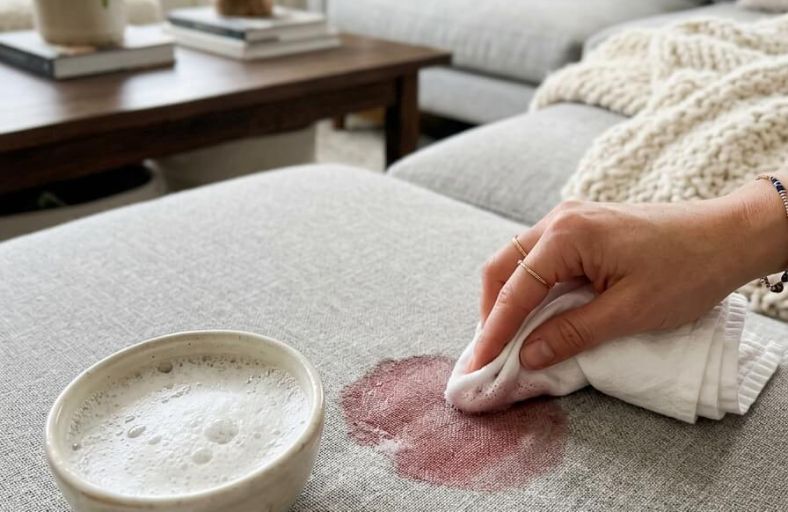
A red wine spill on the couch does not have to become a permanent stain, even if it has already dried.
The key is understanding how red wine behaves on fabric and choosing a removal method that works with that chemistry rather than against it.
Cold water, not hot. Blotting, not scrubbing. Neutralizing agents that lift the pigment rather than pushing it deeper.
These are the principles that separate a successful stain removal from one that leaves a faded pink ghost behind.
These tips give you a clear, friendly guide to removing red wine from any couch fabric, covering both fresh spills and older stains with equal confidence and practical detail.
The Golden Rule of Vertical Blotting
Time is your biggest enemy when wine hits upholstery. You have about 60 seconds to start damage control before the pigments bond chemically with the fibers. Reach for a clean, white, lint-free cloth or paper towel immediately.
The white part is crucial so you can see the pigment transfer clearly. Press down firmly and lift straight up.
This uses capillary action to pull the liquid out of the cushion instead of pushing it deeper into the foam.
Whatever you do, never scrub or rub the area. Scrubbing frays the delicate textile weave and forces the dye into the microscopic valleys of the fabric, making it nearly impossible to lift later.
If the couch has a nap like velvet, rubbing can permanently distort the fiber direction. Stick to purely vertical pressure until no more red liquid transfers to your cloth.
Controlled Dilution with Club Soda
Once you have blotted up the bulk of the liquid, the remaining residue needs to be diluted to prevent it from drying.
Club soda or sparkling water is a classic choice because of its effervescent lifting power.
The carbon dioxide bubbles work at a microscopic level to physically nudge the pigment particles away from the fibers so they can be lifted during the next round of blotting.
Pour a small amount of club soda directly onto the stain, but avoid over-saturating the couch. Too much water can lead to wick-back or mildew in the underlying padding.
Blot again with a fresh section of your white cloth. If the club soda removes the visual surface color, keep going until the cloth comes back clean.
This method is safest for delicate fabrics and acts as a vital bridge while you prepare stronger cleaning solutions.
Surfactant Action with Clear Dish Soap
When water alone isn’t enough, you need surfactants to break the bond between the wine’s tannins and your couch.
Mix one teaspoon of mild, clear dish soap with one cup of cool water. It is vital to use clear soap to avoid adding any new synthetic dyes to your upholstery.
Dab this solution onto the stain using a clean cloth, always working from the outside edge toward the center.
This professional technique prevents the wine from spreading outward and creating a permanent ring mark as it dries.
If the fabric is sturdy, you can gently tamp the solution with a soft-bristled brush to create a foam that lifts the pigment without soaking the cushion core.
Finish by rinsing the area with a damp cloth to remove any sticky soap residue that might attract dirt later.
The Dry Powder Barrier
While the stain is still damp, applying a dry powder can act like a micro-sponge to draw out lingering moisture.
Baking soda is often preferred because it is safer for most delicate weaves and helps neutralize odors. Sprinkle a generous layer over the area and let it sit for at least five minutes.
While some suggest table salt, many modern experts warn against it for certain fabrics.
Salt acts as a mordant in the textile world, meaning it can actually help the wine’s dye fix permanently into cotton or linen fibers.
Use the table below to choose the right powder for your specific couch material:
| Powder Type | Best For | Primary Benefit |
| Baking Soda | Most fabric upholstery | Safe, absorbs wine and odors |
| Table Salt | Synthetic/Durable carpets | High absorbency for fresh spills |
| Cornstarch | Suede or sensitive nap | Gentle lifting without abrasion |
Acidic Power of White Vinegar
White vinegar is a household superstar for red wine because its acetic acid content helps break down the tannins that make the pigment stick to your sofa.
For a safe and effective treatment, mix one part white vinegar with two parts cool water.
Using a clean cloth, gently dab the solution onto the stain, always working from the outer edges toward the center to prevent the wine from spreading.
The vinegar shifts the chemical state of the wine, often turning it from a bright red to a light blue or gray, which is a sign the pigment is loosening.
After dabbing, blot the area with a dry towel to lift the residue. Because vinegar is acidic, finish by dabbing the spot with plain water to rinse the fibers.
This is a fantastic middle-ground solution that is safe for most synthetic and cotton-blend upholstery.
The Bubbling Lift of Baking Soda and Vinegar
When a stain is particularly stubborn, you can call on a classic science experiment: the baking soda and vinegar reaction.
This combination creates a rapid, fizzy bubbling action that occurs deep inside the upholstery weave.
As the CO₂ gas expands, it physically pushes wine particles back up to the surface where you can easily blot them away.
Start by sprinkling a thin layer of baking soda over the damp stain. Then, lightly mist it with white vinegar using a spray bottle. Watch as it fizzes and lifts the deep-seated color.
Let it work its magic for a few minutes before rinsing the area with a damp cloth. This method is especially effective for thick fabrics like chenille or boucle where liquids like to hide deep between the yarns.
Just remember to vacuum any dried soda residue once the spot is completely dry.
Hydrogen Peroxide Golden Ticket
For white or very light-colored sofas, hydrogen peroxide is often the ultimate solution.
As an oxidizing agent, it doesn’t just move the stain; it chemically breaks the color bonds, making the wine invisible.
The most effective recipe is a mix of two parts 3% hydrogen peroxide and one part clear dish soap.
Before you dive in, a patch test is non-negotiable because peroxide can bleach colored fabrics. Apply the mixture with a cloth and let it sit for about 20 to 30 minutes.
You will see the red fade away like a magic trick. Once the color is gone, rinse the area thoroughly with cold water to stop the chemical reaction.
This is the go-to method for saving a light-colored couch that other cleaners couldn’t touch.
Protein Binding with Whole Milk
It might sound like an old wives’ tale, but whole milk is a surprisingly scientific way to treat wine spills. Red wine tannins have a natural affinity for proteins.
When you apply milk to a stain, the tannins prefer to bond with the casein and whey proteins in the milk rather than the fibers of your couch.
Pour a small amount of whole milk over the stain and let it sit for a few minutes to allow the protein-tannin complexes to form. As the milk absorbs the wine, it will turn a pinkish-purple color.
Blot the area thoroughly with a clean cloth. The biggest warning here is the potential for odors.
You must follow this treatment with a thorough cleaning using dish soap and water to ensure no dairy residue is left behind in the cushion foam.
To help you decide which of these to try next, here is a quick compatibility guide:
| Solution | Fabric Compatibility | Best For | Risk Level |
| White Vinegar | Most synthetics and cotton | Neutralizing tannins | Low |
| Baking Soda Paste | Sturdy weaves (Boucle/Chenille) | Lifting deep pigments | Low |
| Hydrogen Peroxide | White or light fabrics only | Erasing stubborn stains | High (Bleaching risk) |
| Whole Milk | Washable natural fibers | Binding tannins | Medium (Odor risk) |
Molecular Lubrication with Liquid Glycerin
Old, dried wine stains are notoriously difficult because the pigments have become dehydrated and locked into the fabric architecture.
Liquid glycerin is a specialized natural solvent that acts as a powerful humectant and lubricant.
It works by surrounding the hardened wine particles, rehydrating them, and effectively loosening their grip on the textile fibers.
To use this method, apply a small amount of vegetable glycerin directly to the set-in stain. Gently work it into the weave using your finger or a soft-bristled toothbrush.
Let it sit for about 15 to 30 minutes; you will notice the stain looking “wet” or darker again as the pigments dissolve back into the solvent.
Once the glycerin has done its job, you must wash the area with a clear dish soap solution to remove the sticky residue.
This is a favorite technique for professional restorers when dealing with vintage finds or mystery wine marks.
Chemical Solubility via Rubbing Alcohol
Isopropyl alcohol, commonly known as rubbing alcohol, is an aggressive but effective solvent for the alcohol-soluble components of a red wine stain.
It works by disrupting the bonds of the tannins, making it easier to carry the pigment out of the yarn.
This is particularly useful for removing that stubborn “pink shadow” that often remains after other water-based methods have been tried.
Dampen a clean white cloth with rubbing alcohol and gently dab it onto the stain. Never pour it directly onto your sofa, as it can dissolve construction adhesives or damage delicate leather finishes.
This method is best suited for durable synthetic fabrics like polyester or nylon. Always ensure the room is well-ventilated and keep the alcohol away from any open flames, as it is highly flammable.
Finish by rinsing the spot with cold water to ensure no solvent remains to dry out the upholstery fibers.
Thermal Agitation with Boiling Water
For heavy, colorfast fabrics like cotton or linen covers that are removable, boiling water offers extreme thermal agitation.
While most stain removal advice suggests cold water, red wine anthocyanins are actually highly soluble in heat.
The physical force of falling water combined with the high temperature helps to “blast” the pigments through the weave of the fabric.
If your cushion cover is removable, stretch it tautly over a large bowl in your sink. Pour boiling water from a height of about twelve inches directly through the stain.
This “wet heat” is very different from “dry heat” (like a hair dryer), which would set the stain permanently.
Warning: Do not use this method on wool, silk, or fixed cushions, as it can damage the foam and drive the wine deeper into the couch’s interior structure.
Surfactant Foam with Shaving Cream
White, foaming shaving cream is an unexpected but highly effective emergency cleaner for red wine mishaps on upholstery. Shaving cream is essentially a concentrated, aerated surfactant with added lubricants.
Its thick foam structure is ideal for sofa cushions because it provides a high surface area of cleaning agents without the risk of over-saturating the internal foam core.
Apply a dollop of plain white shaving foam (not gel) to the stain and gently work it in with a soft cloth. Let it sit for several minutes, allowing the foam to encapsulate the wine particles.
Finally, blot the area with a damp cloth to lift the cream and the suspended pigment. While perhaps less powerful than industrial enzyme cleaners, this is a perfect partyhack for when standard supplies are out of reach.
| Solution | Primary Mechanism | Best Fabric Type | Sitting Time |
| Liquid Glycerin | Rehydration & Lubrication | Dried/Old stains on most fabrics | 15-30 Minutes |
| Rubbing Alcohol | Solvent Solubility | Durable synthetics | 1-2 Minutes |
| Boiling Water | Thermal Agitation | Removable cotton/linen covers | Instant |
| Shaving Cream | Aerated Surfactant | Emergency spills on sturdy fabrics | 5-10 Minutes |
Specialized Commercial Enzymes and Oxygen Cleaners
When DIY methods feel like they are falling short, it is time to bring in the heavy hitters specifically engineered for wine molecules.
Commercial products like Wine Away are formulated with fruit and vegetable extracts to target the chemical bonds of red wine without using harsh bleach or phosphates.
These are incredibly effective on both fresh spills and older, dried marks. Another expert favorite is oxygen-based cleaners like OxiClean, which use sodium percarbonate to release oxygen bubbles that lift the pigment out of the fibers from the inside out.
When using these products, always saturate the area and allow the solution to sit for at least 5 to 10 minutes to let the enzymes work their magic.
For set-in stains, some sprays can even be left on for up to a week depending on the fabric type. Always follow the manufacturer’s label to ensure you don’t damage the textile’s finish.
| Product Type | Active Power | Best For | Safety Note |
| Wine Away | Fruit/Vegetable extracts | Quick removal of red pigments | Bleach-free and non-toxic |
| OxiClean Spray | Oxygen-based (OXY) | Organic stains like wine or juice | Test for colorfastness first |
| Carbona | Laundry surfactants | Multi-surface fabric cleaning | Follow specific instructions |
Mechanical Vacuum Extraction and Professional Care
If the wine has deeply saturated the cushion to the point where “wick-back” is likely, manual blotting may not be enough.
Wick-back happens when the surface looks clean, but liquid trapped in the foam padding migrates back to the top as it dries, causing the stain to reappear.
This is when a portable upholstery cleaner, like a Bissell Little Green, becomes your best friend.
These machines use a motorized pump to spray cleaning solution deep into the weave and a powerful vacuum to pull the liquid out immediately.
For luxury sofas made of delicate silk, high-end velvet, or vintage leather, the safest route is to call an IICRC-certified professional.
Professionals have access to truck-mounted extraction systems and specialized chemical reducers that can save a piece of furniture you thought was ruined for good.
Remember: if you see color transferring to your cloth immediately or the fabric feels fragile, stop and call a pro to avoid permanent texture damage.