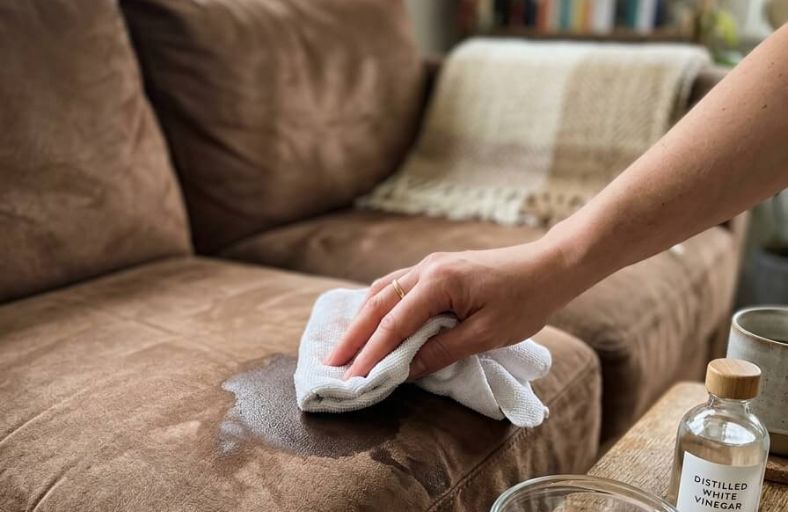
A gorgeous suede sofa is the centerpiece of a stylish home, but it can quickly become a source of stress when reality hits.
Whether it is a stray coffee drip or muddy paw prints, these delicate fibers are notorious for trapping every bit of life’s messes.
Maintaining that signature velvety texture does not require a degree in chemistry, just a few expert techniques and a bit of patience.
This guide strips away the confusion and focuses on the most effective ways to keep your investment looking brand new for years to come.
Natural Hide vs. Synthetic Microsuede
The first step in any restoration project is a forensic analysis of the material itself because natural suede and synthetic microsuede have vastly different chemical thresholds.
Natural suede is crafted from the delicate underside of animal hides, featuring a porous, organic structure that is highly sensitive to pH changes and moisture.
In contrast, microsuede is a high performance synthetic fabric engineered from polyester and polyurethane fibers that are often less than one denier in diameter.
You can typically distinguish between the two by observing the nap shift when you run your hand across the surface.
Natural suede will show dramatic, irregular changes in color and texture, whereas synthetic versions tend to feel smoother and more uniform.
Understanding this distinction is vital because natural suede can become brittle or shrink if exposed to excessive heat or alkaline cleaners.
Decoding the AFMA Standard Care Codes
Before applying any cleaning agent, you must locate and interpret the manufacturer care tag, which serves as the legal and technical roadmap for the piece.
These codes (W, S, WS, and X) are standardized across the furniture industry to prevent catastrophic cleaning errors.
| Code | Permissible Cleaning Agents | Primary Risk Factors |
| W | Water based solutions only (mild soap and water) | Low risk, but avoid over saturation |
| S | Water free solvents only (dry cleaning agents) | Water will cause permanent rings and shrinkage |
| WS | Both water based and solvent based agents | Test in a hidden area as dyes may still be sensitive |
| X | Vacuum or brush only | No liquids of any kind allowed |
Ignoring these codes is the most common cause of water rings, which occur when liquid moves soil and dyes to the perimeter of a damp spot, creating a permanent tide mark.
Weekly Vacuuming
Routine maintenance begins with the mechanical extraction of dry particulates, which act as micro abrasives against the delicate fibers.
Dust, skin cells, and pet dander settle deep into the nap, and if left untreated, they grind into the fibers during normal use, eventually leading to bald spots or graying.
You should always use a soft brush attachment to prevent bruising the material with high power suction heads.
Focus specifically on the crevices and seams where sharp crumbs can accumulate and cause structural wear.
Vacuuming should be performed in the direction of the grain to lift the fibers and expose the deep seated dust. Regular vacuuming once a week prevents build up and keeps the suede looking clean.
Strategic Nap Brushing
Brushing is not just for aesthetics; it is a mechanical grooming process that prevents the nap from matting and pilling.
A dedicated suede brush, often featuring soft brass bristles or crepe rubber, is designed to tease the fibers back into an upright position.
Use gentle, short strokes in one direction for general maintenance, and a circular motion for stubborn flattened areas.
This simple act restores the light refractive properties of the fabric, which is what gives suede its characteristic shimmering depth.
Regular weekly brushing can extend the life of your sofa by years by preventing the fibers from becoming permanently bonded by ambient humidity and oils.
Suede Eraser Technique
For dry, non greasy marks like scuffs or pencil lines, a suede eraser is a professional secret weapon.
These specialized erasers are friable, meaning they crumble as you use them, trapping dirt particles within the crumbs and lifting them away without the need for moisture.
For nubuck style leathers, a specific leather eraser is required, while standard suede can handle a coarser suede stone.
Work in small, controlled circles to lift the mark, and then use your suede brush to sweep away the debris and realign the nap.
This dry approach is always the safest first step for any unknown mark on Code S furniture, as it respects the material integrity while effectively lifting dry stains.
Household Solvent Strategies
When dry methods fail, common household liquids like distilled white vinegar and rubbing alcohol can act as highly effective, low moisture cleaners.
For natural suede, a solution of 70% water and 30% white vinegar is recommended to help lift stains while stabilizing the fabric dyes.
Synthetic microsuede labeled with an “S” code responds best to 70% isopropyl alcohol, which dissolves organic compounds and evaporates rapidly to prevent water rings. The key is the application: never pour liquid directly onto the sofa.
Instead, lightly dampen a white microfiber cloth and gently dab the stain, working from the outside in. This technique ensures the surface is cleaned without soaking the internal padding.
Lipophilic Contaminant Extraction
Oil and grease stains from food or skin oils are particularly treacherous because they bond to suede fibers at a molecular level. Water based cleaners will often spread these stains rather than remove them.
The most effective professional strategy is to use absorbent powders like cornstarch or talcum powder to wick the oil out of the fabric. Sprinkle a generous layer over the grease spot and pat it gently into the nap.
Let the powder sit for at least 6 to 12 hours (or overnight) to allow the capillary action to occur.
Afterward, simply vacuum the residue away using the brush attachment and perform a final grooming with your suede brush to restore the texture.
Neutralizing Water Rings
Water rings occur when a spill dries unevenly, concentrating minerals and soil at the edges. Counter intuitively, the best way to fix a water ring is to re-wet the area.
Use a fine mist of distilled water to dampen the entire stained panel, ensuring even moisture distribution rather than a localized spot.
Gently blot the moisture with a clean, colorfast cloth, working from the center of the ring outward to feather the edges so no hard drying lines form. Allow the panel to air dry naturally away from direct heat or sunlight.
Once bone dry, use a suede brush to realign the fibers and erase any remaining tide marks.
Odor Management
Suede is porous and can easily trap unpleasant smells from pets, food, or smoke. Instead of using scented sprays that only mask the problem, use baking soda to neutralize odors at the source.
Sprinkle a light, even layer of baking soda across the surface of the sofa and let it sit for approximately 15 to 20 minutes.
The alkaline nature of baking soda helps neutralize acidic odor molecules trapped in the nap.
For deep seated odors, you may leave it on for several hours before vacuuming it up thoroughly with a brush attachment.
This dry method refreshes the sofa without introducing moisture that could cause matting or staining.
Cryogenic Removal of Wax and Gum
Sticky substances like candle wax or chewing gum should never be scraped while soft, as this pushes the adhesive deeper into the fibers.
The thermal shock method involves placing ice cubes in a sealed plastic bag and resting it directly on the residue until it becomes frozen and brittle.
Once the substance has hardened, use a dull scraper or even a fingernail to gently chip it away from the surface.
For any remaining sticky film, a cotton bud dipped in a small amount of rubbing alcohol can dissolve the bond without damaging the suede. Always finish by brushing the area to reset the nap.
Judicial Steam Application for Matting
Compressed fibers or “seat marks” where the nap has been crushed by long term use often require gentle heat to relax.
For W or WS fabrics, hold a handheld steamer or iron approximately 6 to 8 inches away from the material.
Never allow the tool to touch the suede directly. Once the fibers are slightly warm and damp, use a suede brush to tease the nap back into an upright position.
This technique provides the necessary moisture to soften the fibers, making them pliable enough to be realigned without the risk of water damage.
Precision Abrasive Sanding for Scuffs
Truly stubborn scuffs or areas where the nap has become shiny and grimy may need ultra fine 1200 grit sandpaper or a clean emery board.
Using an extremely light hand, gently sand the affected spot in small, circular motions.
This mechanical action carefully removes a minute layer of damaged or flattened fiber, revealing the soft, fresh nap hidden underneath.
Because this method is abrasive, it should be reserved as a last resort for dry marks that erasers cannot lift.
Always finish by vacuuming away the dust and brushing the area to restore a uniform texture.
Enzyme Remediation for Biological Stains
Pet accidents involve proteins and enzymes that can permanently bond to organic fibers if treated with standard soaps.
For these spills, blotting immediately without rubbing is the first priority to prevent the liquid from soaking into the padding.
Professionals recommend using an enzyme cleaner specifically labeled as safe for upholstery to break down the biological matter and eliminate lingering odors at the source.
After the enzyme treatment, dab the area with a cloth dampened with distilled water to remove any chemical residue that might otherwise attract dirt.
Pigment Suspension for Ink and Glue
Ink and adhesive marks are among the most difficult to remove from porous suede.
While a white eraser can often lift dry ink, fresh or deep set stains require a solvent like isopropyl alcohol applied with extreme precision.
Dip a cotton bud in the alcohol and dab the spot directly, working from the outer edge inward to prevent the pigment from spreading.
Switch to a clean bud as soon as color transfers to ensure you are lifting the pigment out of the nap. This suspension technique prevents the ink from setting into the hide.
pH Stabilization
Maintaining the technical integrity of natural suede requires understanding its chemical balance.
Natural hide is naturally slightly acidic, typically between pH 4.5 and pH 5.5. Introducing highly alkaline cleaners (such as most laundry detergents) can break the chemical bonds of the internal oils, known as fatliquors, leaving the leather stiff or brittle once dry.
If a high pH cleaner must be used for a tough stain, professionals often follow up with a low pH acidifier (around pH 2.0) to neutralize the fibers and stabilize the dyes, ensuring the fabric remains soft and vibrant.
Fluoropolymer Fabric Protection Application
After completing a deep clean, applying a protective shield is the best way to prevent future stains.
A high quality suede protector spray creates an invisible barrier that causes liquids to bead on the surface rather than soaking in.
This gives you the precious seconds needed to blot up a spill before it becomes a permanent mark.
When applying the protector, hold the can approximately 8 to 12 inches away from the fabric and spray in a continuous, even motion.
It is best to apply two to three light coats, allowing each layer to dry completely before adding the next. Always perform a spot test on a hidden area first to ensure the spray does not alter the color.
Sanitizing Brushes and Microfiber
Your cleaning tools can actually become a source of contamination if they are not properly maintained. Suede brushes can trap skin oils and old dirt deep within their bristles over time.
You should periodically comb out your suede brush with a metal comb to remove trapped fibers and dust particles.
For microfiber cloths, ensure they are laundered without fabric softener, as softeners leave behind a waxy residue that can transfer to your suede and cause it to attract more dirt later.
Always use white or light colored cloths to ensure there is no dye transfer from the cleaning tool to the sofa itself.
Puckering and Delamination
When cleaning, keep an eye out for “puckering,” which is a rippled appearance in the fabric. This is often a sign that the glue holding the suede to its backing has failed because of over saturation.
In synthetic microsuedes, this is known as delamination. If you notice this happening, stop cleaning immediately and allow the area to dry naturally. Using heat to dry a puckered area will only make the damage permanent.
This is a clear indicator that the material has reached its moisture threshold and that any further cleaning should be strictly dry or handled by a professional using specialized low moisture equipment.
Identifying Code X Risks
There are times when the best DIY move is to do nothing at all. If your sofa is labeled with an X care code, it is extremely delicate and cannot tolerate any form of liquid or foam cleaning.
Any attempt to clean an X sofa at home will likely result in permanent damage, dye migration, or texture loss.
For these pieces, and for very large or deep set stains on any suede, the threshold for professional intervention has been met.
Professionals use specialized dry solvents and controlled atmosphere equipment that home tools simply cannot replicate safely.
Achieving the Showroom Look
To get that final showroom look, pay close attention to the small details. After the final nap alignment, ensure the cushions are properly fluffed and seated.
If your sofa has loose back cushions, rotate them periodically to ensure even wear across the entire piece.
Use a lint roller for a final pass to remove any tiny eraser crumbs or loose fibers that the vacuum might have missed during the cleaning process.
This attention to detail is what makes a freshly cleaned sofa truly pop and restores that feeling of luxury to your living space.