A single, jagged crack spidering across your kitchen island can turn your morning coffee into a moment of pure frustration.
That countertop, once the gleaming centerpiece of your home, now serves as a constant reminder of wear and tear.
Replacing these essential surfaces is the quickest way to breathe new life into your space, yet the price tag often feels like a moving target.
Navigating the costs of stone, labor, and fabrication requires more than just a Pinterest pin. It takes a strategic eye to balance your design dreams with a realistic renovation budget.
| Material Type | Installed Cost (per sq. ft.) | Best For | Maintenance Level |
| Laminate | $20 – $60 | Budget-friendly updates | Very Low |
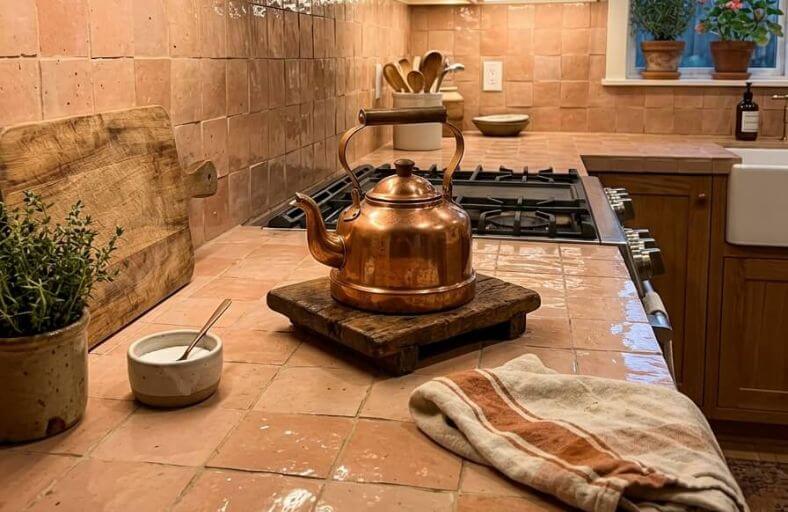
| Ceramic/Porcelain Tile | $30 – $100 | DIY and custom patterns | High (Grout cleaning) |
| Wood / Butcher Block | $30 – $120 | Warmth and food prep | Moderate (Oiling) |
| Natural Granite | $40 – $150 | Durability and heat resistance | Moderate (Sealing) |
Laminate Surfaces (The Budget-Friendly Champion)
Laminate is the undisputed budget champion of 2026. While older versions felt like plastic, modern high-pressure laminates utilize advanced printing to mimic the depth of natural stone or wood grain with surprising accuracy.
You can expect to spend between $20 and $60 per square foot installed. This makes it a perfect choice for rental properties or starter homes where you want a fresh look without a five-figure investment.
Premium lines, such as Wilsonart HD or Formica 180fx, offer enhanced textures that reduce the repetitive visual look often associated with cheaper products. It is highly resistant to stains and impacts, though it lacks heat resistance.
If you place a hot pan directly on the surface, you risk permanent scorching or delamination.
For homeowners on a strict budget, laminate offers the highest visual impact for the lowest financial investment.
Ceramic and Porcelain Tile (Customizable Artistry)
Tile countertops offer a unique blend of affordability and extreme customization that appeals to creative homeowners.
With material costs starting as low as $1 to $30 per square foot, tile is one of the most budget-friendly options available, particularly for those willing to attempt a DIY installation.
When factoring in professional labor, total installed costs generally fall between $1,049 and $3,846 for a standard project.
The primary functional benefit of ceramic and porcelain tile is exceptional resistance to heat and scratching.
You can generally place hot cookware directly on the surface without fear of damage. However, the trade-off is the grout lines.
Even with modern stain-resistant epoxy grouts, these crevices require more maintenance than a seamless slab.
If a single tile cracks, it can be replaced individually, providing a level of long-term repairability that expensive stone slabs cannot match.
Wood and Butcher Block (Natural Warmth and Utility)
Wood introduces a textural warmth that stone simply cannot replicate. In 2026, the shift toward Quiet Luxury has made walnut and maple butcher blocks a top choice for kitchen islands.
Typical installed costs range from $30 to $120 per square foot. While wood is naturally gentler on knife blades and can be fully restored by sanding down scratches or dents, it is a high-maintenance partner.
You must oil the surface regularly, typically every few months, to prevent the wood from drying, cracking, or absorbing moisture.
It is also sensitive to standing water, requiring extra care and sealing around sink areas to prevent warping.
For serious home chefs, a dedicated butcher block section provides a professional prep station that develops a beautiful patina over time, adding character to farmhouse or transitional kitchen designs.
Natural Granite (The Timeless Stone Powerhouse)
Granite remains the undisputed heavyweight of the natural stone world, prized for its extreme durability and one-of-a-kind character. In 2026, the average cost to install granite ranges from $40 to $150 per square foot.
Each slab is unique, featuring crystalline structures and mineral flecks formed from cooled magma, ensuring no two kitchens look exactly alike.
Granite is exceptionally hard and heat-resistant, making it one of the few materials where you can safely place hot pans directly off the stove.
The main trade-off for this natural beauty is the requirement for periodic maintenance. Because granite is naturally porous, it must be sealed annually to prevent liquids and bacteria from seeping into the stone.
Despite this requirement, its resistance to scratches and longevity makes it a premier choice for active households looking to increase their home’s resale value.
Engineered Quartz (The Modern Standard for Ease)
Quartz has officially claimed the top spot in the 2026 market, primarily due to its incredible performance-to-maintenance ratio.
Unlike natural stone, quartz is an engineered product composed of roughly 90% to 95% crushed natural quartz bound together with high-performance polymer resins.
This creates a surface that is entirely non-porous, meaning it never requires sealing and is naturally resistant to the bacteria and mold that can plague porous stones. You can expect quartz installation to range from 50 to 160 per square foot installed.
Design versatility is the major factor in its dominance. Manufacturers can now create jumbo slabs that are nearly indistinguishable from rare marble or deep soapstone.
It is the perfect “set it and forget it” solution: you can spill red wine or lemon juice on a white quartz surface and simply wipe it away. However, you must be careful with heat.
The resins used in the engineering process can discolor or melt if exposed to high temperatures, making the use of trivets a non-negotiable requirement for every quartz owner.
Marble (The Ultimate Luxury Statement)
Marble remains the quintessential symbol of timeless elegance, appearing as the centerpiece of high-end kitchen renovations.
Its characteristic soft veining and luminous surface have made it a favorite for centuries, especially for those who love to bake, as the stone stays naturally cool.
Marble installation typically costs between 45 and 250 per square foot, with rare varieties from Italy reaching even higher.
While visually stunning, marble is a softer, more porous stone. It is highly susceptible to etching, which happens when acidic substances like vinegar or citrus juice react with the stone, leaving behind dull spots.
For some, this inevitable wear is a desired patina that tells the story of a well-loved home, but it requires a commitment to frequent sealing and immediate clean-up.
To balance beauty and budget, many designs use marble for a dedicated baking station or a dramatic island while using more durable materials for heavy-use perimeter counters.
| Feature | Engineered Quartz | Natural Quartzite |
|---|---|---|
| Core Composition | Quartz + 7% Resin | 100% Metamorphic Rock |
| Heat Resistance | Moderate (Needs Trivet) | High (Stove-Safe) |
| Porosity Level | Non-Porous (No Sealing) | Porous (Needs Sealing) |
| Maintenance | Very Low | Moderate |
Natural Quartzite (The High-Performance Natural Stone)
If you find yourself torn between the delicate beauty of marble and the rugged durability of granite, natural quartzite is the super-material for you.
This metamorphic rock was forged from pure quartz sandstone under intense heat and pressure.
The result is a stone that features elegant, flowing veins but possesses a hardness that actually exceeds that of granite.
This performance comes with a premium price tag, often ranging from 60 to 200 per square foot installed.
Quartzite has become a major trend for 2026, particularly varieties like Taj Mahal, which offer warm, creamy tones that fit the Quiet Luxury aesthetic.
Because it is a natural stone, it handles heat exceptionally well, making it a safe choice for use near cooktops.
While it is incredibly hard, it is still a natural stone and does require periodic sealing to prevent staining.
When properly sourced and installed, quartzite represents the pinnacle of natural stone technology for the modern kitchen.
Concrete and Industrial Metals (The Artisanal Choice)
For those who crave a modern or highly personalized look, concrete and stainless steel countertops offer unmatched design freedom.
Concrete countertops are typically cast-to-order, allowing for integrated features like built-in drainboards or custom shapes.
Stainless steel, long the standard in professional kitchens, is prized for its absolute hygiene and heatproof nature.
Concrete costs typically range from 50 to 200 per square foot, while stainless steel can climb between 50 and 300 per square foot depending on the gauge and fabrication.
Both materials are living surfaces that show wear over time. Stainless steel will develop a network of small scratches that eventually blend into a beautiful, dull patina, while concrete will shift in tone and texture.
Concrete is incredibly durable but prone to hairline cracks as it settles, requiring frequent sealing to prevent staining.
These materials are best suited for homeowners who appreciate the beauty of imperfection and want a kitchen that feels more like a professional studio than a traditional home.
Porcelain Slabs and Ultra-Compact Surfaces (The Cutting Edge)
Large-format porcelain slabs have officially revolutionized the 2026 market by offering a stone-look surface with none of the natural stone vulnerabilities.
Fired at temperatures exceeding 2100 degrees Fahrenheit, these slabs are essentially glass-hard and entirely non-porous.
You can expect to pay between $55 and $120 per square foot installed. Because they are manufactured in massive sizes up to 10 feet long, porcelain allows for a seamless, sleek look that is perfect for modern, European-inspired kitchens.
The technical performance of porcelain is unmatched. It is UV-stable, meaning it won’t fade in direct sunlight, and it is so heat-resistant that you can use it for outdoor kitchens or as a full-height backsplash behind professional ranges.
However, the fabrication requires specialized diamond tools, and the material can be prone to edge chipping if struck with heavy objects.
For homeowners seeking the ultimate marriage of thin-profile aesthetics and high-octane durability, porcelain is the cutting-edge choice.
Solid Surface Materials (Seamless and Repairable)
Solid surface countertops, popularized by brands like Corian, remain a highly practical choice for homeowners who prioritize hygiene and ease of maintenance.
These man-made surfaces are composed of acrylic or polyester resins mixed with minerals, resulting in a completely non-porous finish.
Pricing typically ranges from $35 to $130 per square foot installed. The standout feature of solid surface is its ability to create entirely invisible seams, making the countertop and even an integrated sink appear as one continuous, monolithic piece.
While solid surface is more sensitive to heat and sharp objects than stone or quartz, it has a unique advantage: it is fully repairable.
Minor scratches, stains, or even small burns can often be sanded out and polished by the homeowner, restoring the surface to its original condition without the need for a full replacement.
This forever fresh quality makes it an excellent choice for high-traffic family kitchens where daily life involves a bit of mess. It provides a warm, soft-touch alternative to the colder feel of natural stone.
Strategic Sourcing (Remnants and Prefabricated Slabs)
If you are dreaming of a luxury kitchen on a modest budget, 2026 offers two powerful sourcing hacks. First, remnants are high-quality leftover pieces from larger projects.
For small kitchens, bathroom vanities, or even an island, using a remnant can save you 50% to 70% compared to buying a full slab.
You get the same premium granite or marble quality for a fraction of the price because the material was already paid for by a previous client.
Second, prefabricated slabs are stones that come pre-cut to standard kitchen depths with a pre-finished edge. By eliminating custom fabrication time, a prefab slab can cost around $300 for a 108-inch run, whereas a custom slab could exceed $1,000.
| Sourcing Strategy | Typical Savings | Best Use Case |
| Stone Remnants | 50% – 70% | Small islands, bars, vanities |
| Prefabricated Slabs | 40% – 60% | Standard straight-run counters |
| DIY Demolition | $50 – $300 (total) | Reducing labor line items |
These strategies require a bit more legwork, you will need to visit stone yards and be flexible with colors, but they allow you to secure a high-end finish without the premium invoice.