Most people clean their bedroom in a way that feels thorough but leaves a surprising amount of dust, allergens, and clutter behind.
That is not a criticism. It is simply what happens when you clean without a clear system in place.
A good bedroom cleaning routine works in a logical order, addresses every surface and zone in the room, and builds in the habits that keep the space looking clean between deeper cleaning sessions.
These practical tips give you exactly that, a clear, ordered approach to bedroom cleaning that is efficient, thorough, and genuinely satisfying to follow.
Professional Staging and the One-Pass Protocol
Efficiency is the secret weapon of professional cleaners. To clean like a pro, you must stay staged by gathering all your specialized tools in a portable caddy before you begin.
This approach follows the One-Pass Rule: you move around the room in one continuous circle, addressing every surface in your path without ever backtracking to find a forgotten cloth or spray.
| Essential Cleaning Arsenal | Primary Function |
| Microfiber Cloths | Traps dust particles without spreading them. |
| HEPA-Rated Vacuum | Captures 99.97% of microscopic allergens. |
| Extendable Duster | Reaches high zones like ceiling fans and molding. |
| pH-Neutral Cleaners | Safely sanitizes various furniture surfaces. |
This method can reduce your total cleaning time by thirty percent while ensuring no corner is overlooked.
By staying organized from the start, you maintain momentum and turn a daunting task into a manageable, rhythmic process.
High-Temperature Linen Sanitization
Your bed is the primary repository for biological debris, including sweat and skin cells that feed microscopic dust mites
To achieve true hygiene, you must strip the bed completely, including mattress protectors and decorative shams.
Professional-grade results require laundering these textiles in water that reaches at least 130°F (54.4°C). This specific thermal threshold is necessary to neutralize allergens and eliminate mite populations.
Finishing the process with a high-heat drying cycle for at least fifteen minutes provides a secondary strike against pathogens, leaving your linens crisp, safe, and fresh.
Strategic Surface Decluttering
A clean room is fundamentally tied to its organizational density. Before wiping any surface, you must manage the visual noise by removing items that do not serve a daily purpose.
Professionals recommend the 90/90 rule: if you have not used an item in ninety days and do not plan to in the next ninety, it should be stored or donated.
Clearing nightstands and dressers of excess knickknacks prevents dust traps and makes the actual cleaning process much faster.
Group your essential daily items onto small trays or into drawer organizers to maintain a minimalist, hotel-like aesthetic that promotes psychological tranquility.
High-Zone Decontamination
Following the vertical zoning protocol, always begin cleaning at the highest structural points of the room.
Ceiling fans and light fixtures are notorious for collecting heavy dust, which is then redistributed every time the fan is turned on.
A clever pro tip involves using a microfiber sleeve or even a discarded pillowcase to wipe fan blades, capturing the debris inside the fabric rather than letting it fall onto your bed.
Use an extendable duster to sweep crown molding and wall corners for hidden cobwebs.
Starting at the top ensures that any falling particles will be captured during your middle and lower cleaning passes.
Mid-Zone Disinfection and High-Touch Sanitization
The Mid-Zone contains the highest concentration of high-touch surfaces, which act as primary vectors for bacterial transmission.
Light switches, door handles, and drawer pulls require rigorous disinfection using a hospital-grade or high-potency natural cleaner.
These small surfaces are often overlooked in routine cleaning, yet they harbor complex biofilms from frequent skin contact.
Wiping these areas with a microfiber cloth dampened with a tea tree or lemon oil solution ensures a broad-spectrum kill of common household pathogens.
| High-Touch Mid-Zone Targets | Recommended Action |
| Light Switches & Plates | Wipe with disinfectant cloth. |
| Door Knobs & Handles | Sanitize to remove skin oils and germs. |
| Electronics & Remotes | Use anti-static wipes or dry microfiber. |
| Bedside Lamps | Dust the base and clean the switch. |
By targeting these invisible germ hotspots, you significantly improve the biological safety of your sleeping environment.
Mattress Remediation and Allergen Protection
The mattress is the most critical element of bedroom hygiene, acting as a massive filter for skin flakes and moisture.
A professional deep clean involves vacuuming the entire surface, including seams and tufts, using a HEPA-rated device for at least two minutes per side.
For odor neutralization, apply a thin layer of baking soda across the surface and let it dwell for twenty minutes before vacuuming it away.
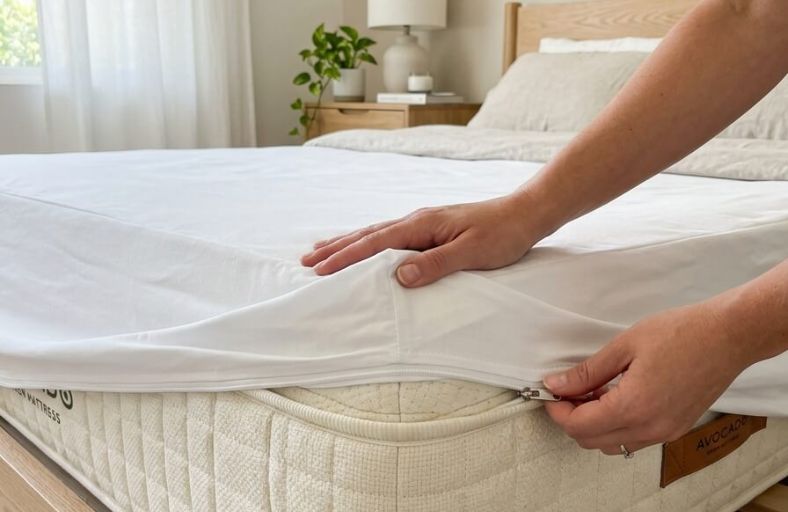
Finally, encasing your mattress and pillows in zippered, allergen-proof covers creates a micro-porous barrier that dust mites cannot penetrate. This step is essential for anyone suffering from respiratory sensitivities or allergies.
Window Clarity and Track Maintenance
Sparkling windows do more than enhance the room’s aesthetic; they maximize natural light, which is vital for regulating your circadian rhythm.
Use a streak-free solution made of water, white vinegar, and isopropyl alcohol to dissolve greasy fingerprints and atmospheric film. Work from the top of the glass downward in a Z-pattern to ensure complete coverage.
Do not forget the window tracks and sills, where mold and mildew can proliferate due to condensation.
A small brush or crevice tool can remove the deep-seated grime in these tracks, preventing the growth of fungal spores that compromise air quality.
Low-Zone Detailing and Baseboard Restoration
As the cleaning process reaches the Low-Zone, focus shifts to the baseboards and the often-ignored areas beneath furniture. Baseboards serve as a ledge for falling dust and are prone to scuffs from footwear.
Wiping them with a damp microfiber cloth restores their crisp appearance and removes significant quantities of settled allergens.
Decontaminating the area under the bed is one of the most impactful steps, as this “dead air” space is a primary habitat for dust bunnies.
Moving light furniture or using a vacuum extension ensures that no hidden reservoirs of dust remain to circulate through the room’s HVAC system.
Closet Interior Sanitization
A clean bedroom is incomplete without an organized closet, which often acts as a hidden reservoir for dust and textile fibers.
Deep cleaning this area requires removing all items from shelves and the floor to ensure every inch is vacuumed and wiped down.
Dust the top of clothing rods and wipe shelving units with a damp microfiber cloth to capture the “invisible” lint that settles on garments.
Organizing your clothes by color or type using uniform hangers not only creates a viral-worthy aesthetic but also reduces the time you spend searching for outfits.
For long-term hygiene, store seasonal items in sealed boxes to prevent them from becoming dust collectors during their off-season.
Deep Floor Decontamination
The floor is the final catch-all for all particles released during the cleaning process. For carpeted rooms, a HEPA-rated vacuum is mandatory because it traps 99.97% of particles as small as 0.3 microns.
Professionals recommend vacuuming in multiple directions to agitate the fibers and release deep-seated debris.
If you have hardwood or tile floors, use a damp mop with a pH-neutral cleaner to sanitize the surface without damaging the substrate.
To ensure a truly professional finish, start at the farthest corner of the room and work your way toward the door so you do not leave footprints on your freshly cleaned floor.
Natural Chemical Engineering for the Bedroom
Shifting to non-toxic cleaners minimizes the volatile organic compounds (VOCs) you breathe while you sleep.
You can engineer powerful, eco-friendly cleaning agents using simple household staples like white vinegar and baking soda.
Vinegar acts as a mild acid to cut through grease, while baking soda is an effective pH-buffer for neutralizing acidic odors.
Adding essential oils such as lemon or tea tree provides natural antimicrobial properties and a fresh scent.
These formulas are safe for almost every surface and ensure your bedroom remains a healthy, chemical-free sanctuary for rest.
| DIY Natural Formula | Ingredients | Target Surface |
| Glass & Mirror Cleaner | Water, Vinegar, Rubbing Alcohol | Windows and mirrors. |
| All-Purpose Spray | Water, Vinegar, Lemon Essential Oil | Non-porous surfaces. |
| Wood Polishing Spray | Olive Oil, Vinegar, Orange Oil | Wooden furniture. |
| Carpet Refresher | Baking Soda, Lavender Oil | Rugs and upholstery. |
Sensory Finishing Touches and Aesthetic Styling
The final step is the “smooth and fluff” reset to create that luxurious hotel-like feel.
Straighten your pillows, smooth out the duvet, and add layers of texture with a neutral throw or decorative cushions.
This visual order signals to your brain that the space is ready for relaxation. For a sensory enhancement, lightly mist your bedding with a homemade linen spray composed of distilled water, witch hazel, and lavender oil.
Open the windows for ten minutes to allow fresh air to circulate, completing the transformation of your room into a pristine, breathable, and cozy sanctuary.