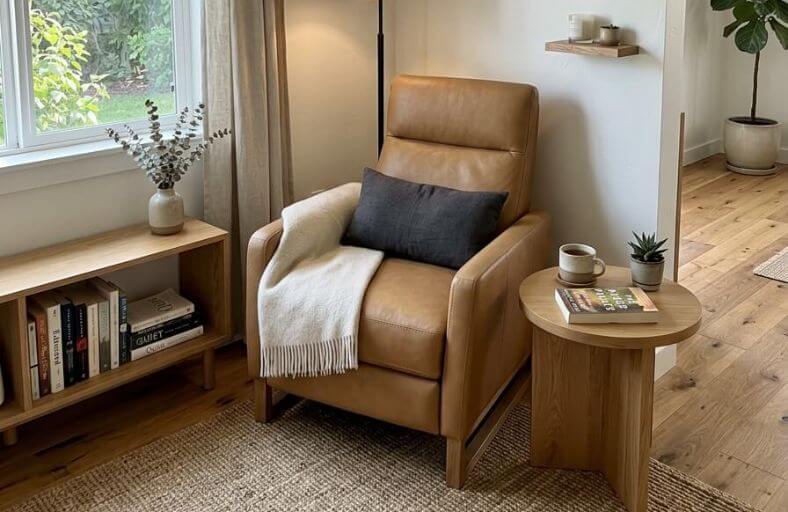
Your carefully styled living room transforms into an unorganized mess every time you lean back for a movie night.
That luxurious recliner, which should be an anchor of comfort, acts like a slow-moving glacier, drifting further away from its intended spot with every use.
This frustrating “recliner creep” does more than just annoy your sense of order; it can actually stress the carpet fibers and create permanent wear patterns in the pile.
Most recliner bases are surprisingly smooth, offering almost zero resistance against the soft, yielding texture of modern carpeting. Tackling this movement requires a strategic approach that balances floor protection with serious grip.
Premium Natural Rubber Grippers
Using premium natural rubber grippers is one of the most effective ways to introduce immediate friction between a smooth recliner base and your carpet.
Unlike cheap plastic or PVC alternatives, natural rubber has a higher tensile strength and a natural “tackiness” that creates a superior bond with the carpet fibers.
These pads are typically available in various shapes and can be cut to fit the specific footprint of your chair’s legs or ring base.
Because they are eco-friendly and non-toxic, they won’t off-gas harmful chemicals or leave sticky residues that could discolor your expensive flooring.
For the best results, you should choose grippers with a textured bottom surface designed to “bite” into the rug’s pile. Installation is simple: just clean the base of the recliner legs to ensure the adhesive stays secure, then peel and stick.
Area Rug and Heavy-Duty Rug Pad
Layering an area rug over your wall-to-wall carpet might seem redundant, but it is a powerful mechanical solution for stability.
By placing the recliner on a smaller, high-traction area rug, you distribute the weight over a larger surface area.
The real secret, however, lies in the heavy-duty rug pad placed between the two layers of carpet.
A dense felt and natural rubber hybrid pad provides the necessary vertical pressure and horizontal resistance to keep the top rug (and the chair) from shifting.
This “sandwich” method is highly recommended for low-pile or smooth carpets where traditional grippers might struggle to find a foothold. Below is a quick comparison of materials often used for this purpose:
| Material | Grip Level | Carpet Protection | Durability |
| PVC / Plastic | Low | Low | 10-15 Years |
| Felt | Medium | High | 3-5 Years |
| Natural Rubber | High | High | 20+ Years |
Clip-On Non-Slip Replacement Feet
For a more permanent and mechanically sound fix, clip-on non-slip replacement feet are often the “gold standard” for stability. These specialized accessories are designed to snap directly onto the existing metal or wood legs of your recliner, replacing the factory-standard smooth glides with high-friction surfaces.
Many modern recliners, such as those with Leggett & Platt or Berkline mechanisms, are compatible with these universal clip-on systems.
They are particularly useful because they don’t rely on adhesives, which can fail over time due to the extreme weight and frequent movement of the chair.
Once installed, they provide a consistent, stable base that resists sliding even during the forceful motion of reclining or standing up. They are virtually invisible once the chair is in its upright position.
Spiked Caster Cups
Spiked caster cups are engineering marvels for homes with medium-to-high pile carpets. These cups feature tiny plastic “teeth” or spikes on the underside that are designed to slip between the carpet fibers and anchor directly into the backing of the rug.
This prevents horizontal movement without crushing the visible pile flat, as the spikes distribute the weight more effectively by sitting between the fibers rather than on top of them.
Using these is as simple as placing one cup under each leg or at intervals along a ring base. They are almost invisible once the chair is in place and are incredibly affordable, making them a favorite DIY fix for most homeowners who want to preserve their carpet’s aesthetic. T
hey also help prevent the deep divots often caused by heavy furniture.
Mechanical Swivel Stoppers
If you own a swivel recliner, the very feature that makes it versatile, its 360 degree rotation, is often the primary culprit behind its wandering ways.
Every time you pivot to face the television or turn to speak to a guest, you generate horizontal centrifugal forces that push the base across the carpet fibers.
A mechanical swivel stopper is a specialized device designed to physically block the rotation mechanism, essentially converting your swivel chair into a stationary one.
This is considered a permanent or long-term solution for users who find they rarely use the swivel function and prioritize a rock-solid foundation instead.
Installation usually involves attaching the stopper to the chair’s internal metal frame according to the manufacturer’s instructions.
Once engaged, it eliminates the “swing” that contributes to sliding, ensuring the chair stays perfectly aligned with your living room layout.
Silicone Stretch-Fit Leg Caps
For recliners with traditional individual legs rather than a large ring base, silicone stretch-fit caps offer a sleek and highly effective grip.
These caps function much like socks for your furniture, featuring an elastic silicone body that stretches to fit snugly around the leg and a high-friction bottom layer.
While many versions come with felt bottoms for hardwood, you should specifically look for those with a textured rubber or pure silicone base for carpet use.
The benefit of silicone is its “grip-and-grab” nature; it doesn’t just sit on the carpet but creates a mild adhesive-like tension against the synthetic fibers.
They are incredibly easy to install since they require no tools or messy glues. You simply stretch them over the feet.
Because they are transparent or color-matched to your furniture, they remain virtually invisible while providing a significant boost in stability.
Large-Scale Furniture Trays
Sometimes the best way to handle a soft, slippery carpet is to introduce a solid intermediary surface.
Placing your recliner on a plastic carpet protector or a dedicated furniture tray provides a stable, rigid platform that prevents the base from digging in or sliding.
| Feature | Furniture Tray | Standard Grippers |
| Surface Stability | Very High | Medium |
| Installation | Place Under | Stick/Clip On |
| Visibility | Moderate | Low |
| Carpet Protection | Excellent | Good |
These trays are typically made of heavy-duty, impact-resistant plastic that can withstand the significant weight of a powered recliner without cracking.
This method is particularly useful for swivel-rocker hybrids because the tray allows the internal mechanism to move freely while the tray itself stays anchored to the carpet.
It also serves as a protective barrier, preventing the metal base from leaving rust stains or deep mechanical indentations in your flooring.
Strategic Wall and Corner Anchoring
The physics of reclining means that as you lean back, your body weight pushes the chair’s center of gravity backward.
If the chair is sitting in the middle of an open room, there is nothing to counteract this force except the friction of the carpet.
By simply adjusting the placement of your recliner, you can use your room’s architecture to your advantage.
Positioning the chair in a corner or directly against a wall significantly reduces the “runway” the chair has to move.
When the back of the recliner is angled toward a corner, the force is directed into the wall rather than across the floor.
If you are worried about the chair hitting the wall, “wall-hugger” models are specifically designed to slide forward rather than backward during the reclining motion, making them the perfect partners for this anchoring strategy.
DIY “Pile-on-Pile” Carpet Coasters
If you have leftover scraps from your carpet installation, you possess one of the most effective “secret weapons” against furniture sliding.
By cutting these scraps into small squares or circles slightly larger than your recliner’s feet, you can create custom coasters that utilize natural mechanical friction.
When you place a carpet scrap face-down (pile-to-pile) against your floor, the individual fibers interlock with one another, creating a surprisingly strong bond that resists horizontal shifting.
This method is virtually free and ensures an absolute color match with your existing floor.
For those who don’t have scraps, using a neutral-colored piece of heavy fabric or even a thick felt remnant can achieve similar results.
To prevent the coaster itself from moving, you can apply a small strip of double-sided tape between the recliner foot and the top of the scrap.
This “carpet-on-carpet” strategy is highly recommended by experts for heavy, static items that tend to wander over time.
Cork Sheets and Sustainable Materials
Cork is an exceptional eco-friendly alternative to synthetic rubber and foam. Unlike foam pads that often compress and lose their effectiveness under the heavy weight of a power recliner, high-density cork sheets maintain their structural integrity.
Cork has a unique cellular structure that provides natural “tackiness” and high friction, making it an ideal non-slip surface for carpeted floors.
Because cork is moisture-resistant and antimicrobial, it won’t trap odors or develop mold if it sits under a chair for years.
You can purchase cork in thin sheets or pre-cut rounds and place them directly under the recliner base.
It offers a firm, stable foundation that prevents the chair from “sinking” into the carpet while simultaneously dampening the vibrations and noise of the reclining motor. Below is a quick look at why cork stands out:
| Property | Cork Sheets | Standard Foam Pads |
| Compression Resistance | Very High | Low |
| Sustainability | 100% Renewable | Synthetic |
| Lifespan | 10+ Years | 1-2 Years |
| Breathability | High | Low |
Rubber Tubing for Ring Bases
Many modern recliners feature a large circular metal ring base instead of four individual legs. Standard furniture cups rarely fit these designs, leading many owners to believe they are stuck with a sliding chair.
The professional “hack” for this is using split rubber tubing. By taking a length of flexible rubber hose (like a clear vinyl or black rubber tube), splitting it down the middle, and wrapping it around the perimeter of the metal ring, you create a 360-degree high-traction border.
This solution is incredibly discreet because the tubing sits tucked under the frame, hidden from view.
The rubber provides a continuous line of friction against the carpet, which is far more effective than trying to balance the ring on individual pads.
It is a low-cost, durable fix that can be installed in minutes with just a utility knife and some patience.
This method is particularly popular for “Nordic-style” swivel recliners that have slim, exposed metal frames.
Non-Slip Rubber Mesh Rolls
Sometimes called shelf liner or rug underlay, non-slip rubber mesh is a versatile and economical way to secure large furniture.
This material features a grid pattern that creates thousands of tiny “grip points” across the carpet surface.
Because it comes in rolls, you can cut a custom-sized piece that matches the entire footprint of your recliner base, ensuring that every inch of the chair’s contact point is reinforced with friction.
One major advantage of mesh is its breathability; it allows air to circulate through the carpet fibers, preventing the “flattening” effect and potential moisture buildup often caused by solid plastic trays.
While it may not be as heavy-duty as a spiked caster cup, it is perfect for low-to-medium pile carpets where you want a solution that is completely invisible once the chair is in place.
For extra stability, you can layer two sheets of mesh to increase the vertical “bite” into the carpet pile.
Heavy-Duty Structural Stop Blocks
When you need a high-strength solution that provides an absolute physical barrier, stop blocks are the answer.
These are weighted or anchored blocks made of solid wood or heavy-duty rubber that you place directly behind the back legs or the base of the recliner.
They act as a “dead stop” for the chair, preventing it from creeping backward regardless of how much force you use when leaning back.
While they are less subtle than small adhesive pads, they are remarkably effective in households with active children or large pets where safety and stability are top priorities.
You can purchase pre-made furniture stoppers or easily create your own from finished wood blocks that match your furniture’s stain. For added effectiveness, you should apply a small piece of non-slip rubber to the bottom of the block to ensure it doesn’t move either.
This method effectively transfers the horizontal force of your movement into a vertical downward pressure, locking the chair in place against the carpet pile.
Double-Sided Carpet Tape
For a bond that feels almost permanent, professional-grade double-sided carpet tape is a powerful option.
This tape is designed with a heavy-duty adhesive on both sides, creating a secure link between the recliner’s feet and the carpet fibers.
It is especially useful for lightweight recliners that move far too easily on low-pile or commercial carpeting. However, this solution comes with a warning: it can leave a sticky residue or potentially damage the carpet backing if removed carelessly.
To minimize the risk of damage, you should use smaller strips rather than covering the entire base.
If you ever need to move the chair, using a hair dryer or heat gun can help soften the adhesive to ensure a clean release. Below is a comparison of stop blocks versus carpet tape for your consideration:
| Feature | Structural Stop Blocks | Double-Sided Carpet Tape |
| Stability Level | Extreme | Very High |
| Installation Difficulty | Easy | Moderate |
| Risk to Carpet | Very Low | Moderate to High |
| Aesthetic | Visible | Completely Hidden |
Carpet Grooming and Maintenance
Maintaining the integrity of your carpet is a passive but vital solution for stability. Over time, carpet fibers become flattened and lose their natural “grip,” which allows furniture to slide more freely.
By regularly using a carpet rake or a high-suction vacuum, you keep the pile upright and resilient, providing more surface area for grippers or caster cups to bite into.
Additionally, you should implement a “180-degree turn” strategy every few months. By slightly shifting the position of your recliner, you prevent permanent wear patterns and ensure the chair is always resting on fresh, sturdy fibers that haven’t been crushed flat.
Cleaning the legs of your recliner and the carpet area underneath is also crucial, as dust and debris act like tiny ball bearings that facilitate sliding. Consistent grooming keeps the “friction environment” of your living room optimal for all other non-slip devices.