Your bedroom is supposed to be a sanctuary, but nothing ruins the aesthetic of crisp white sheets quite like a mysterious yellow ring or a sudden coffee spill on the mattress itself.
It is a frustrating reality that despite our best efforts, mattresses act like giant sponges for life’s little accidents.
Leaving these stains alone doesn’t just look bad; it can lead to persistent odors and even structural damage over time.
Luckily, most mattress mishaps can be solved with a few simple household ingredients and a bit of scientific know-how. Let us dive into the best ways to restore your bed to its pristine, hotel-worthy glory.
Acidic Neutralization Mist
Distilled white vinegar is a secret weapon for neutralizing alkaline odors, especially those from fresh urine. The acetic acid (CH_3COOH) works to dissolve mineral salts and break down the initial ammonia smell before it sets into the foam.
To use this, mix a 50/50 solution of vinegar and water in a spray bottle. Mist the area lightly, remember, we want to treat the surface, not flood the core of the mattress.
Let it sit for about 10 to 15 minutes to allow the acid to work its magic. Use a clean, dry towel to blot the area thoroughly until no more moisture comes up.
This method is also fantastic for light coffee or tea spills, as the vinegar helps lift tannins from the fabric fibers.
The Triple Action Oxidation Paste
Stubborn yellow stains caused by years of sweat and body oils require a bit more chemical muscle. This is where a paste of hydrogen peroxide, baking soda, and dish soap shines.
This combination uses oxidation to break down the lipid peroxides that cause that unsightly yellowing.
| Component | Chemical Role | Purpose |
| Hydrogen Peroxide | Oxidizing Agent | Breaks down colored lipid molecules |
| Baking Soda | Basic pH Buffer | Absorbs odors and provides mild abrasion |
| Dish Soap | Surfactant | Emulsifies oily residues for easier lifting |
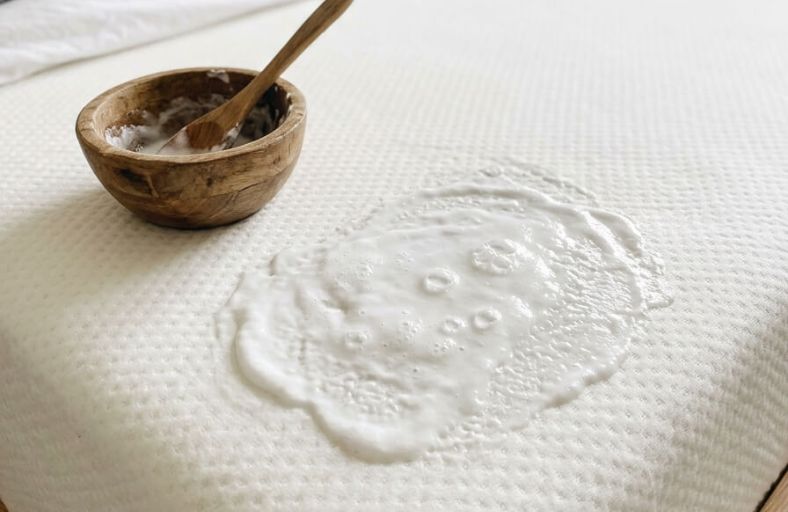
Mix three tablespoons of baking soda with one tablespoon of 3% hydrogen peroxide and a few drops of clear dish soap. Spread the paste over the stain and let it sit for at least 30 minutes.
You might see some fizzing; that is just the oxygen working to lift the discoloration. Once it is dry, simply vacuum away the residue.
The Targeted Enzymatic Digestant
For organic messes like vomit or pet accidents, standard cleaners often fall short. You need something that digests the stain at a molecular level. Enzyme cleaners are designed with specific proteins like protease and lipase that “eat” the proteins and fats found in biological fluids.
Spray the enzyme cleaner onto the stain and give it plenty of dwell time, usually 15 to 30 minutes, to allow the biological catalysts to work.
It is important to cover the area with a damp cloth during this time to keep the enzymes active, as they stop working if they dry out too quickly.
This method is the only way to truly eliminate the uric acid crystals in urine that cause smells to return on humid days.
Osmotic Dehydration Technique
When a glass of red wine or juice tips over, every second counts. Before the liquid can dive deep into the foam, you can use the power of osmosis to pull it back out. Common table salt (NaCl) is a natural desiccant that draws moisture toward it.
First, blot the spill with a dry cloth to get the surface liquid. Then, sprinkle a generous layer of salt over the damp area.
Wait about three to five minutes as the salt crystals turn the color of the spill while absorbing the liquid. Vacuum up the salty residue and repeat if necessary until no more color is drawn out. This is a perfect first-response tactic before moving on to deeper cleaning methods.
The Dry Deodorization Protocol
Even if your mattress looks clean, it can trap a musty “sleep smell” over time due to accumulated moisture and skin cells.
Baking soda is a powerhouse for general maintenance because it is non toxic and highly effective at neutralizing acidic odor molecules through a simple chemical reaction.
For the best results, strip your bed and sprinkle a generous, even layer of baking soda over the entire surface.
If you want a spa like scent, mix a few drops of lavender or eucalyptus essential oil into the powder before spreading it.
To get the most out of this method, let the powder sit for at least four to eight hours. Some experts even suggest leaving it overnight to fully draw out deep seated odors. Finally, use your vacuum’s upholstery attachment to suck up the residue.
This quarterly habit not only keeps your bedroom smelling fresh but also helps lift the dry debris that attracts dust mites.
Bromelain Protein Digestion
Blood stains are notoriously difficult because they contain hemoglobin, which bonds tightly to fabric fibers. If the stain has already dried, standard cleaners might not be enough.
A clever kitchen hack is using unseasoned meat tenderizer. These products contain enzymes like bromelain or papain, which are biological catalysts designed to break down tough protein chains.
| Rule for Blood | Why it Matters |
| Use Cold Water | Hot water “cooks” the protein into the fibers |
| Avoid Bleach | Can cause permanent yellowing or rust rings |
| Dwell Time | Enzymes need time to digest the stain |
Mix a small amount of the powder with cold water to form a thick paste. Apply it directly to the stain and wait for 30 to 60 minutes.
The enzymes will essentially “eat” the protein bonds, liquefying the stain so you can blot it away with a cold, damp cloth. Always remember the golden rule: never use warm or hot water on blood, as it will permanently set the stain.
Emollient Shaving Cream Method
If you have accidentally dropped a foundation bottle or smeared concealer on your bed, reach for your shaving cream.
Most white, foamy shaving creams contain a high concentration of surfactants and emollients that are specifically designed to break down the oils found in makeup while remaining gentle on surfaces.
Apply a dollop of foam directly to the makeup stain and let it sit for about 3 to 5 minutes. This gives the ingredients time to penetrate the oily residue. Use a clean cloth to blot the area in a gentle, circular motion, working toward the center of the spot.
The lubricating nature of the shaving cream prevents the makeup pigments from being pushed deeper into the mattress ticking. Once the stain is lifted, wipe away any leftover foam with a damp towel and let the spot air dry completely.
Surfactant Degreasing Technique
For greasy food spills or oily body lotions, a concentrated surfactant like clear dish soap is the most effective remediator. Surfactants have a dual molecular structure: a hydrophobic tail that attaches to oil and a hydrophilic head that attaches to water.
This allows the soap to emulsify the grease, breaking it into tiny droplets that can be rinsed away with water.
| Step | Action | Benefit |
| Pre-treat | Apply clear dish soap directly | Breaks down stubborn lipid bonds |
| Agitate | Use a soft toothbrush in circles | Helps soap penetrate fabric fibers |
| Rinse | Blot with a warm, damp cloth | Liquefies fats for easier removal |
Apply a small amount of clear soap and work it gently into the spot. After letting it sit for 10 to 15 minutes to fully bond with the grease, blot the area with a warm, damp cloth. The use of warm water is helpful here as it helps liquefy semi solid fats.
Finish by blotting with a dry towel until all moisture and soap residue are removed.
Essential Oil Sanitization Blend
For mattresses that have developed a persistent musty odor or where light sanitization is required, an essential oil spray offers a natural and effective solution.
Oils such as tea tree (Melaleuca alternifolia), eucalyptus, and lavender have well documented antimicrobial and antifungal properties. When dispersed in a water or alcohol base, they can help to freshen the mattress without the use of synthetic fragrances.
Mix one cup of distilled water with 10 to 20 drops of essential oil in a fine mist spray bottle. Lightly spritz this solution over the entire mattress surface. Unlike heavy cleaning solutions, this mist is designed to evaporate quickly, leaving behind the active botanical compounds.
This is an excellent final step after a deep cleaning or as a monthly maintenance routine to keep the sleeping environment smelling fresh and to provide a mild deterrent against dust mites.
Dry Vapor Steam Method
Steam cleaning can be a powerful tool for deep sanitization, as it uses heat to kill dust mites and bacteria on contact. However, it must be used with extreme caution on foam mattresses.
The key is to use a “dry vapor” steam cleaner, which produces steam with a low moisture content of less than 10% water.
Use short, sharp bursts of steam and keep the nozzle moving constantly to avoid over saturating any single area. High heat can cause memory foam to lose its supportive properties, so the steam should only be applied to the surface fabric and the very top layer of foam.
Immediately after steaming, use a high powered fan or open windows to ensure the mattress dries completely.
This method is particularly effective for removing odors that have permeated the upper layers and for sanitizing a mattress after it has been in storage.
Laundry Detergent Paste
For general or unidentified surface stains, a paste made from mild laundry detergent is a safe and reliable option.
Laundry detergents are formulated with a blend of surfactants and often optical brighteners that can help to lift surface soil and improve the appearance of the mattress ticking.
| Stage | Action |
| Mix | Combine mild detergent with a few drops of water |
| Apply | Spread the thick paste over the stain |
| Blot | Use a damp cloth to lift the dissolved soil |
Apply the paste to the stain and let it sit for 10 minutes. Using a damp cloth, blot the area while alternating with a dry cloth to lift both the detergent and the soil.
This method is ideal for removing the grayish tint that can develop on the edges of a mattress due to contact with skin and clothing.
Because laundry detergent is designed for textiles, it is generally the safest chemical option for a wide variety of mattress fabrics.