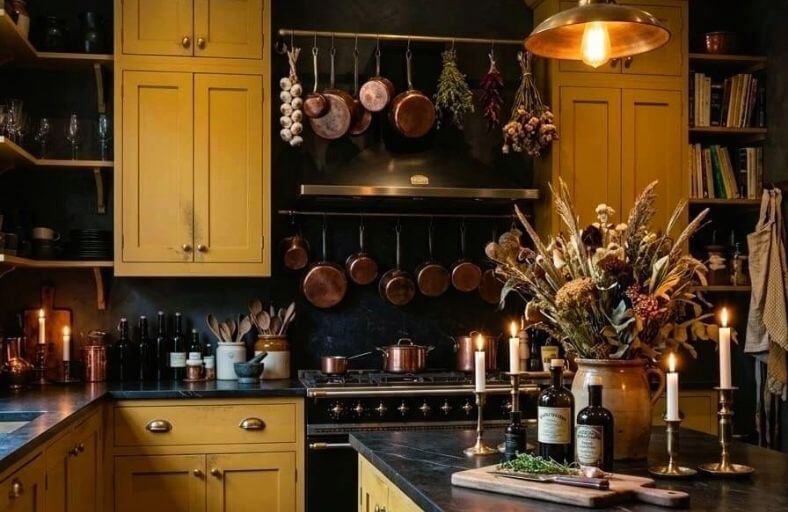
Choosing yellow for a kitchen paint color is one of the most rewarding and consistently successful decorating decisions a homeowner can make for this hardworking, high-traffic space.
Yellow’s ability to mimic the warming effect of natural sunlight makes it especially valuable in kitchens that face north or receive limited daylight, where it can single-handedly transform a dark, uninspiring space into one that feels genuinely bright and pleasant to cook and gather in.
The yellow spectrum available for kitchen decorating spans from the palest, most neutral cream tones to deeply saturated ochre and golden shades with tremendous visual impact.
These perfect yellow paint colors will guide you toward the most beautiful and livable options for your kitchen transformation.
Comparative Architectural Palette Overview
The following structured data synthesizes the technical specifications, reflectivity values, primary undertones, and optimal architectural applications for twelve premier yellow paint selections.
| Color Name | Brand & Code | LRV | Primary Undertone | Best Kitchen Application |
|---|---|---|---|---|
| Hawthorne Yellow | Benjamin Moore (HC-4) | 71.33 | Muted Grey-Yellow | Historic & Farmhouse Perimeter Walls |
| Windham Cream | Benjamin Moore (HC-6) | 79.04 | Pale Butter & Peach | Small Galley Walls & Ceilings |
| Golden Straw | Benjamin Moore (2152-50) | 71.55 | Straw & Golden Apricot | Open-Plan Walls & Dining Nooks |
| Weston Flax | Benjamin Moore (HC-5) | 76.28 | Straw Beige Neutral | Full Cabinetry Millwork & Trim |
| Butter Up | Sherwin-Williams (SW 6681) | 74.00 | Creamy Sunshine Yellow | North-Facing Walls & Breakfast Nooks |
| Friendly Yellow | Sherwin-Williams (SW 6680) | 76.00 | Neutral Grey-Yellow | Whole-Room Wall Coverage |
| Banana Cream | Sherwin-Williams (SW 6673) | 75.00 | Warm Gold-Orange | Accent Walls & Pantry Doors |
| India Yellow | Farrow & Ball (No. 66) | ~36.00 | Rich Ochre & Brown | Moody Kitchen Islands & Cabinets |
| Sudbury Yellow | Farrow & Ball (No. 51) | ~55.00 | Soft Green-Yellow | Traditional Cabinets & Sunlit Rooms |
| Babouche | Farrow & Ball (No. 223) | ~60.00 | French Mustard | Statement Cabinets & Trim |
| June Day | Behr (370B-4) | 79.37 | Clean Warm Yellow | Dimly Lit Kitchen Walls & Trim |
| Bicycle Yellow | Behr (370A-3) | 81.04 | Luminous High-LRV Yellow | Modern Accent Walls & Shelving |
Benjamin Moore Hawthorne Yellow (HC-4)
Benjamin Moore Hawthorne Yellow (HC-4) is an iconic historical yellow featuring an LRV of 71.33.
Formulated with a soft grey undertone, this balanced shade resists looking overly bright or hyper-saturated under direct southern sunlight.
Its versatile grey-yellow composition suits traditional, modern farmhouse, and historic kitchen architectures alike.
When applied to main perimeter walls, Hawthorne Yellow pairs naturally with crisp white trim, dark soapstone worktops, and unlacquered brass hardware.
In north-facing kitchens, the hue counters cool, blue-tinted shadows, infusing the culinary zone with gentle, inviting daylight.
It offers timeless elegance without saturating the visual field.
Benjamin Moore Windham Cream (HC-6)
Benjamin Moore Windham Cream (HC-6) is a luminous off-white yellow possessing an LRV of 79.04.
Combining pale butter tones with a whisper of peach, this color functions as a warm neutral while delivering significant light reflection.
It is ideal for small galley kitchens, low ceilings, or windowless pantry nooks where maximizing perceived space is paramount.
The soft peach-cream undertone coordinates harmoniously with warm butcher block countertops, glazed subway tiles, and brushed nickel fixtures.
Under late afternoon western daylight, Windham Cream deepens into a rich, cozy backdrop ideal for evening cooking.
Benjamin Moore Golden Straw (2152-50)
Benjamin Moore Golden Straw (2152-50) is an inviting golden-yellow neutral with an LRV of 71.55.
It features soft straw and subtle peach undertones that radiate earthy warmth without overwhelming the room’s palette.
Designers frequently specify Golden Straw for open-concept kitchen walls adjacent to greige cabinetry or deep navy island accents.
Its mid-tone depth grounds dining nooks, seamlessly bridging prep zones and living areas.
Under warm 3000K LED lighting, Golden Straw emits a honeyed glow that enhances natural timber millwork and warm tile floors.
Benjamin Moore Weston Flax (HC-5)
Benjamin Moore Weston Flax (HC-5) displays a quiet straw-beige identity with an LRV of 76.28.
Positioned as a pale, straw-like colored neutral, it provides a gentle whisper of yellow rather than an assertive chromatic statement.
Interior designers favor Weston Flax for full cabinetry millwork, island bases, and architectural trim because it remains sophisticated and unobtrusive.
It serves as a subtle bridge between creamy ivories and modern warm greiges.
The shade pairs beautifully with natural stone backsplashes and light terrazzo, maintaining airy visual openness in low-ceiling layouts.
Sherwin-Williams Butter Up (SW 6681)
Sherwin-Williams Butter Up (SW 6681) is a cheerful, uplifting yellow with an LRV of 74.
Defined as a pure, creamy sunshine yellow, it infuses optimism and warmth into gathering spaces.
Butter Up performs exceptionally well on perimeter kitchen walls paired with stark white cabinetry trim and dark iron lighting hardware.
The hue preserves its radiant character even in low ambient light, making it a prime candidate for north-facing kitchens that lack direct natural sun exposure.
Its friendly personality fosters a bright, cozy atmosphere in morning breakfast nooks.
Sherwin-Williams Friendly Yellow (SW 6680)
Sherwin-Williams Friendly Yellow (SW 6680) is a light yellow shade formulated with mild grey undertones, featuring an LRV of 76.
The gray undertone controls saturation, preventing the color from appearing loud or overstimulating on full-wall installations.
It reads as a soft, sophisticated drop of sunshine that keeps kitchen interiors feeling open and expansive.
Designers often pair Friendly Yellow with warm taupe or off-white lower cabinetry and bright white ceilings.
In morning eastern daylight, it showcases a clean yellow glow, while afternoon shadows retain a subdued, balanced neutral profile.
Sherwin-Williams Banana Cream (SW 6673)
Sherwin-Williams Banana Cream (SW 6673) is a playful yet soft yellow possessing an LRV of 75.
Celebrated for its bright disposition, it brings high energy to family-centered kitchens.
In spaces receiving direct sunlight, Banana Cream reveals a subtle gold-orange undertone, creating a warm, sun-kissed environment.
It excels on kitchen accent walls, walk-in pantry doors, or open shelving backdrops contrasted against slate grey or teal cabinetry.
The light reflective index brightens dark corners, making culinary spaces feel larger and more welcoming.
Farrow & Ball India Yellow (No. 66)
Farrow & Ball India Yellow (No. 66) is a deeply pigmented mustard ochre with an LRV near 36.
Characterized by rich, earthy yellow-brown undertones, India Yellow imparts dramatic warmth and historic depth to kitchen cabinetry and accent islands.
Unlike pale yellows that reflect light away, this moody mustard absorbs light to create an intimate, cocooning atmosphere.
It pairs magnificently with dark walnut millwork, unlacquered brass fixtures, and honed soapstone countertops.
Under low artificial evening illumination, India Yellow transforms into a luxurious golden backdrop.
Farrow & Ball Sudbury Yellow (No. 51)
Farrow & Ball Sudbury Yellow (No. 51) is a classic mid-tone yellow with an LRV around 55.
Renowned for its traditional charm, it incorporates subtle green undertones that give it an established, historical feel.
Sudbury Yellow is particularly effective in sunlit breakfast rooms and traditional kitchen layouts.
A major design benefit of this shade is its muted saturation, allowing brass hardware and gold accents to shine without visual conflict.
When contrasted against muted off-white woodwork, Sudbury Yellow creates a tranquil, sophisticated space.
Farrow & Ball Babouche (No. 223)
Farrow & Ball Babouche (No. 223) is a vibrant French mustard yellow with an LRV around 60.
Named after Moroccan leather slippers, Babouche delivers intense color depth without feeling aggressive or garish.
It is widely favored for application on statement kitchen cabinets, pantry doors, or window reveals to introduce a playful pop of color.
Designers combine Babouche with patterned wallpaper or crisp white surfaces to amplify its cheerful personality.
Its rich pigment formulation creates a velvety finish that reacts dynamically to natural sunlight.
Behr June Day (370B-4)
Behr June Day (370B-4) is a bright, sunlit yellow featuring a high LRV of 79.37.
Sitting near the top of the reflectivity scale, it bounces significant ambient light, making dim or enclosed kitchens feel spacious and airy.
June Day offers a balance of warmth and clarity, making it suitable for main wall painting as well as decorative kitchen trims.
It pairs seamlessly with clean white cabinets, light ash wood furniture, and stainless steel fixtures.
In cool north light, June Day compensates for shadowy cast, sustaining an upbeat mood.
Behr Bicycle Yellow (370A-3)
Behr Bicycle Yellow (370A-3) is an energetic, high-reflectivity yellow boasting an LRV of 81.04.
Operating close to off-white lightness levels, Bicycle Yellow introduces cheerful vitality without darkening small spaces.
It is an ideal pick for modern kitchens, breakfast bar backdrops, or inside glass-front cabinetry.
The high LRV ensures maximum daylight distribution across shadowy kitchen corners.
When combined with dark slate floor tiles or navy blue accents, Bicycle Yellow establishes a clean, high-contrast contemporary aesthetic.
Lighting Psychology and Surface Integration Principles
Mastering the technical performance of yellow paint requires analyzing how natural light orientation interacts with pigment undertones.
North-facing kitchens receive cool, blue-tinted natural light that flattens warm colors, causing pale neutrals to appear greyish.
To counteract this shadow cast, designers specify high-LRV yellows with soft red or golden undertones, such as Sherwin-Williams Butter Up or Benjamin Moore Golden Straw.
Conversely, south-facing kitchens experience intense, warm sunlight throughout the day.
In these spaces, highly saturated yellows can become blinding or overly aggressive; selecting muted options with grey or green undertones, such as Benjamin Moore Hawthorne Yellow or Farrow & Ball Sudbury Yellow, maintains chromatic composure.
East-facing kitchens receive brilliant warm sunlight in the morning, followed by cooler shadows in the afternoon.
Balanced grey-yellow hybrids like Sherwin-Williams Friendly Yellow accommodate this transition gracefully without dramatic shifts.
West-facing kitchens absorb low, fiery afternoon sun, which amplifies warm undertones.
Soft cream hybrids like Benjamin Moore Windham Cream capture this golden hour glow, deepening into a rich, welcoming backdrop without turning brassy.
Material selection dictates paint finish performance.
High-gloss sheens intensify color saturation and bounce direct light, making them ideal for modern cabinetry or statement trim.
Matte or eggshell finishes soften undertones, providing a smooth, velvety texture across large perimeter walls.
Integrating rich ochres alongside natural materials, such as unlacquered brass, soapstone, white oak, and subway tile, creates a balanced, visually engaging kitchen environment.
Conclusion
Selecting the appropriate yellow paint shade transforms a kitchen into an inviting, sunlit culinary sanctuary.
High-LRV creams and pale straw hues amplify daylight in compact spaces, whereas deeply pigmented ochres and French mustards create sophisticated, cozy focal points on millwork and islands.
By matching paint undertones to spatial lighting conditions and architectural materials, designers achieve a harmonious balance that elevates the entire home.