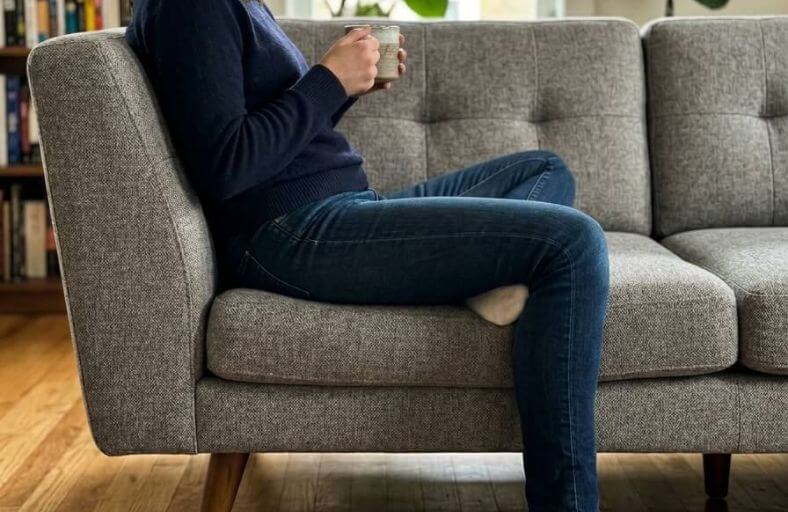
Gallery-style lighting can hide a multitude of sins in a furniture showroom. That stunning velvet centerpiece might look like a dream today, but without the right technical skeleton, it can transform into a sagging nightmare of flat cushions and creaky joints in just six months.
Buying a sofa is a major investment that sits at the intersection of structural engineering and interior aesthetics.
To ensure your living room anchor lasts for decades rather than seasons, you need to look past the fabric and understand the science of what lies beneath the surface.
Prioritize a Kiln-Dried Hardwood Frame
The longevity of your sofa starts with its skeleton. A high-quality frame must resist the natural urge of wood to warp or crack when home humidity levels change.
Experts agree that kiln-dried hardwood is the non-negotiable standard for a durable foundation. This thermal process removes nearly 95% of the moisture from the timber, creating a chemically stable material that won’t bow over time.
Look for species like maple, oak, or ash. These dense hardwoods have the structural integrity to support daily weight without flexing. You should strictly avoid softwoods like pine or cedar, as well as cheap particleboard made from wood dust and glue.
These materials are prone to cracking under the stress of daily family life. A solid hardwood frame, typically 2 inches thick, is the hallmark of a sofa built to last fifteen years or more.
Evaluate the Mechanical Suspension System
The suspension system is the mechanical heart of your sofa, responsible for absorbing weight and providing that active bounce-back feel.
For the ultimate level of craftsmanship, the eight-way hand-tied coil system remains the gold standard.
This labor-intensive method involves individual steel coils tied together in eight different directions, creating an interconnected web that distributes weight evenly across the frame.
| Suspension Type | Durability Rating | Best For |
| 8-Way Hand-Tied | Exceptional (15+ Years) | High-end comfort and longevity |
| Sinuous Springs | High (10-15 Years) | Modern, sleek, low-profile designs |
| Web Suspension | Low (5-7 Years) | Budget-friendly or light-use pieces |
If you prefer a more modern, low-profile look, sinuous springs (S-shaped wires) are a durable and more economical alternative. While they offer consistent support, they lack the multi-directional adaptability of hand-tied coils.
Understand Cushion Density and Fill
Comfort is a formula involving density and firmness. Density measures the mass of the foam per cubic foot and is the primary indicator of how long your cushions will keep their shape.
High-quality sofas should utilize foam with a density rating of at least 1.8 to 2.5 lb/ft³.
Lower density foams might feel firm at first, but they quickly succumb to cell collapse, leaving you with permanent indentations within a few years.
For a balanced feel, many homeowners prefer a hybrid cushion. This features a high-density foam core for support, wrapped in a layer of polyester fiber or down for surface softness.
While 100% down cushions offer a luxury sink-in feel, they require daily plumping to maintain their appearance and lack the ergonomic support of foam-based cores.
Check Industrial Abrasion Ratings
Before you fall in love with a color, you must check the fabric’s durability through standardized rub tests.
In North America, look for the Wyzenbeek rating (measured in “double rubs”), while elsewhere, the Martindale test is the standard.
These tests simulate daily wear and tear by rubbing the fabric repeatedly until the threads break.
For a primary living room sofa that sees daily action, you should aim for at least 15,000 to 20,000 double rubs (Wyzenbeek) or 20,000+ cycles (Martindale).
If you have a high-energy household with pets and children, choosing a “heavy-duty” textile with a rating of 30,000+ cycles will significantly extend the life of your upholstery.
Always remember that a high rub count only measures friction resistance, not stain resistance, so use this as one of several factors in your decision.
Select Performance Fabrics for High-Traffic Homes
If you have children or pets, the term performance fabric should be at the top of your checklist. These textiles are engineered at the fiber level to resist stains, odors, and moisture, rather than just being treated with a topical spray that wears off over time.
Crypton is widely considered the gold standard in this category, featuring a permanent moisture barrier that prevents liquids from ever reaching the cushion core.
For pet owners, microfiber (or microsuede) is a fantastic value option. Its extremely tight weave makes it nearly impossible for cat claws to snag, and pet hair usually sits right on the surface, making it easy to vacuum away.
| Fabric Type | Best For | Key Benefit |
| Crypton | Messy kids & spills | Built-in liquid and antimicrobial barrier |
| Microfiber | Cat owners | Scratch-resistant and easy to blot clean |
| Performance Velvet | Luxury aesthetics | High durability with a soft, plush feel |
| Protected Leather | Longevity & style | Wipes clean and develops a beautiful patina |
If you want a more luxurious look without the stress, performance velvet offers a heavy-duty rub count while resisting the watermarks that ruin traditional silk velvets.
Run the Thigh Length Test for Ergonomics
A sofa can be beautifully made but still feel like an instrument of torture if it doesn’t fit your body.
Proper ergonomics prevent posterior pelvic tilt, a common issue where your lower back flattens and strains because the seat is too deep.
To find your fit, perform the Thigh Length Test: sit all the way back so your spine is supported. There should be a 2 to 3 inch gap (about the width of three fingers) between the edge of the cushion and the back of your knees.
If the seat is too deep, your feet won’t touch the floor, leading to poor circulation. If it is too shallow, your thighs won’t be supported, putting all the pressure on your sit bones.
For households with residents of different heights, aim for a standard depth and use lumbar pillows to help shorter family members sit comfortably.
| User Height | Ideal Seat Depth | Ideal Seat Height |
| Under 5’4″ | 17 to 20 inches | 17 to 18 inches |
| 5’4″ to 5’10” | 21 to 24 inches | 18 inches |
| Over 5’10” | 25 to 28 inches | 19 to 20 inches |
Master the Geometry of Delivery
The most heartbreaking sofa mistake is finding the perfect piece only to realize it cannot fit through your front door.
Before you buy, you must measure every doorway, hallway, and stairwell the sofa will encounter.
Professional delivery teams often use the Pivot Method, which involves standing the sofa vertically on one arm to leverage its diagonal depth.