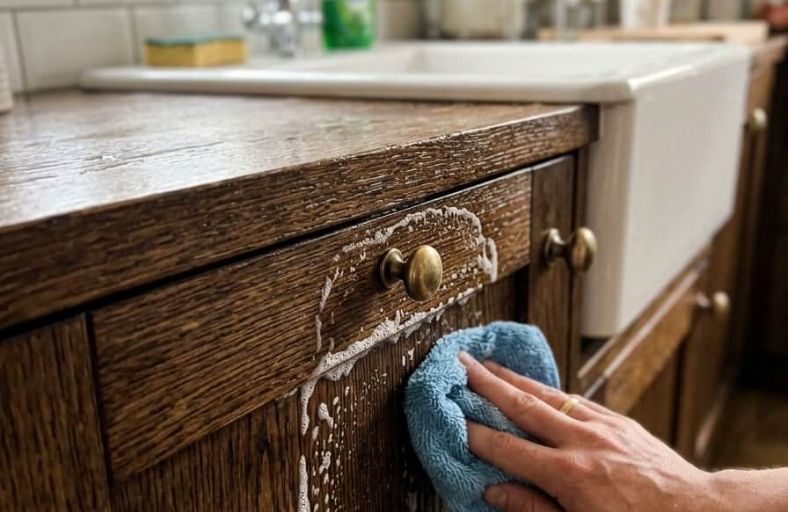
That morning sunlight hits the kitchen island, but instead of a warm glow, it reveals a sticky, amber-colored glaze crawling up your cherry wood panels.
Daily cooking sends fine oil particles into the air, where they settle and harden into a resinous film that traps dust and pet hair.
This nightmare isn’t just about looks; over time, that grime can actually bond with the varnish, making it impossible to remove without a fight.
Reclaiming the natural luster of your cabinetry requires a strategic approach that respects the delicate nature of organic wood fibers while effectively breaking down stubborn lipids.
The Gentle Surfactant Cleanse
The most effective way to tackle daily kitchen grease is through a process called aqueous emulsification.
High-quality dish soaps contain surfactant molecules that possess a dual nature: a hydrophobic tail that attaches to oil and a hydrophilic head that bonds with water.
When you apply a solution of warm water and a few drops of soap, these surfactants surround grease particles and lift them into a stable suspension, allowing them to be wiped away without aggressive scrubbing.
To protect your wood, keeping the pH level balanced is vital. Wood is naturally acidic, so your cleaner should remain near-neutral, ideally between 6.0 and 8.0.
| Component | Role | Recommendation |
| Warm Water | Softens lipids | Never use boiling water |
| Dish Soap | Emulsifies grease | pH-neutral, clear formulas |
| Microfiber Cloth | Traps particles | Damp, not dripping wet |
Always wring your cloth thoroughly before wiping, as excessive moisture can seep into joints and cause wood to swell.
Finish by drying the surface immediately with a fresh towel to prevent water marks or bacterial growth.
Solvent-Based Deep Degreasing
When kitchen cabinets have been neglected, grease undergo a process called polymerization, turning into a hard, resinous shell that soap and water cannot penetrate. In these advanced cases, you need a petroleum-based solvent like mineral spirits.
Unlike water-based cleaners, mineral spirits dissolve heavy wax and oil buildup without causing the wood fibers to swell or the grain to raise.
Safety is paramount when using solvents. Because they are volatile organic compounds (VOCs), you must ensure active ventilation by opening windows or using exhaust fans to prevent respiratory irritation.
Apply the solvent to a lint-free cloth and wipe gently in the direction of the wood grain. For intricate moldings or carvings, a soft toothbrush dipped in the spirit can help reach tight corners.
Once the grime is dissolved, wipe away any residue and allow the wood to dry for 15 to 30 minutes before applying any conditioners.
Hardware and Structural Maintenance
Cleaning isn’t just about the wood; the metal hardware on your cabinets is often the first place structural failure begins. In humid climates, hinges and handles are highly susceptible to oxidation and rust.
If rust forms on a hinge, it can spread to the surrounding wood fibers, compromising the screw’s grip and causing doors to sag.
Weekly cleaning should include wiping down handles and hinges with a dry microfiber cloth to remove acidic oils from fingerprints.
Every few months, inspect the hardware for loose screws and apply a small amount of silicone-free lubricant to moving parts to ensure smooth operation.
If you are in a particularly humid area, consider upgrading to stainless steel or anodized aluminum hardware, which offers superior resistance to moisture-related corrosion.
This proactive maintenance prevents mechanical stress on the wood panels, ensuring your cabinets remain functional and beautiful for decades.
Humidity Management and Mold Prevention
Dalat’s misty mornings are romantic, but they pose a silent threat to wood: biological degradation. When relative humidity exceeds 60 percent, mold spores find the perfect environment to germinate on organic wood surfaces.
Preventing this requires a scientific approach to water activity by keeping your indoor humidity between 30 and 50 percent.
| Tool | Purpose | Target Level |
| Hygrometer | Monitoring RH | 30% to 50% |
| Dehumidifier | Active moisture removal | Below 60% |
| Exhaust Fan | Vapor extraction | Use during cooking |
Install a hygrometer inside your cabinetry to catch humidity spikes early. If you notice a musty smell, silica gel packs or activated charcoal can act as localized moisture absorbents to keep the interior dry.
For cabinets against cold exterior walls, a vapor barrier is a smart long-term investment to prevent condensation from rotting the rear panels.
Strategic ventilation and consistent moisture control are the best defenses against warping and fungal growth.
Protective Finishes and Periodic Polishing
The final step in a strategic maintenance plan is reinforcing the wood’s protective barrier.
Whether your cabinets have a film-forming finish like polyurethane or a penetrating oil like tung oil, they eventually need a boost.
Regular polishing with silicone-free conditioners restores the natural depth of the grain without creating the tacky buildup associated with cheap waxes.
| Finish Type | Maintenance | Best For |
| Polyurethane | 1 to 2 years | High-traffic areas |
| Tung Oil | 6 to 12 months | Natural aesthetics |
| Marine Varnish | 3 to 5 years | Ultra-humid zones |
Avoid polishes containing silicone, as they trap dust and make professional refinishing difficult later on. Instead, look for products enriched with natural oils like linseed or soy.
Every few years, consider a professional tune-up where minor scratches are touched up and a fresh topcoat is applied.
This proactive care ensures the wood remains nourished and resilient against the daily rigors of a busy kitchen, maintaining its value for decades.