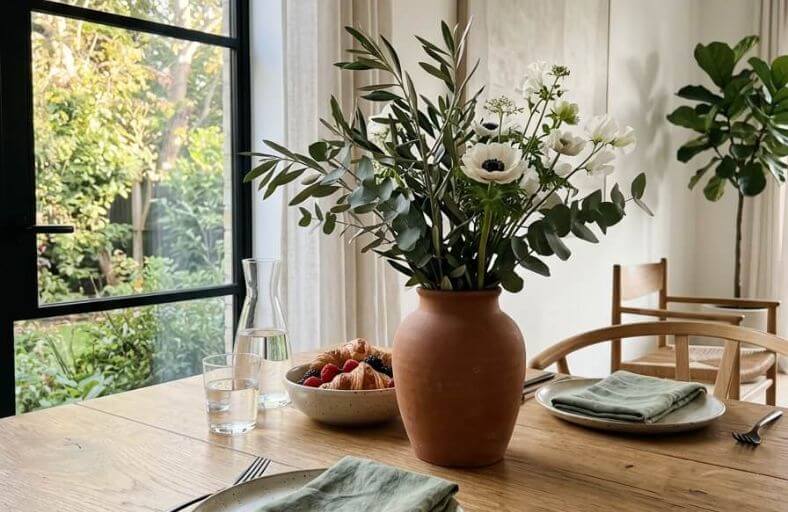
A sterile, white-on-white dining room often feels more like a clinical laboratory than a place for a cozy family dinner.
Many homeowners fall into the trap of staged perfection, where every plate matches and not a single crumb is allowed to exist.
This cold minimalism is officially taking a backseat to the warm, tactile, and deeply personal aesthetics.
Transforming your dining table into a hero piece does not require a total renovation. Instead, it starts with understanding how the colors, heights, and textures you choose can actually change how your guests feel.
Embrace Earthy Neutrals and Quiet Color Pops
The design world is moving away from stark, cold whites toward palettes that feel grounded and organic.
The trend is “Warm Minimalism,” which uses nature-inspired tones like terracotta, sage green, and creamy taupe to create a sanctuary-like atmosphere.
These colors do more than just look pretty; they actually influence our physiological responses to a meal.
For instance, warm tones like terracotta and ochre can stimulate the appetite and encourage long, lingering conversations, while muted greens provide a restorative, calming effect.
To apply this, start with a neutral foundation and layer in your personality through small accents. A light oak table pairs beautifully with sage green napkins or a clay-toned vase.
This approach ensures your dining room feels balanced and inviting rather than overwhelming.
| Color Category | Recommended Hues | Psychological Effect |
| Earthy Neutrals | Warm Beige, Taupe, Khaki | Creates a timeless, relaxed foundation |
| Grounding Tones | Terracotta, Chocolate Brown | Evokes a cozy, “cocoon” feeling |
| Quiet Color Pops | Sage Green, Dusty Blue | Adds organic freshness and calm |
| Appetite Boosters | Burnt Orange, Muted Red | Stimulates energy and sociability |
Follow the “12-Inch Rule” for Centerpieces
One of the most common styling mistakes is choosing a centerpiece that acts as a physical barrier.
There is nothing more awkward than trying to talk to a guest while dodging a massive floral arrangement or a towering candelabra.
Professional designers follow a non-negotiable “12-inch rule”: keep your table decorations at or below 12 inches (30.48 cm) in height.
This height ensures that everyone has a clear line of sight for eye contact and easy conversation.
If you absolutely love tall elements like long branches or tapered candles, place them at the very ends of a rectangular table where they won’t obstruct the view.
For daily use, a low-profile moss bowl or a cluster of small bud vases works perfectly.
Keeping your decor low-profile maintains the table’s functionality and ensures the focus remains on the people gathered around it.
Master the “Rule of Three” Grouping
When placing objects on your table, grouping them in odd numbers, specifically three, creates a composition that feels balanced and natural to the human eye.
Rather than scattering small trinkets randomly, which leads to “visual noise,” aim for a structural hierarchy within your trio.
A successful arrangement usually includes one vertical element (like a slim vase), one medium-height element (like a sculptural bowl), and one low grounding element (like a decorative tray or a stack of small books).
This hierarchy prevents decor stacking, where items of equal visual weight compete for attention and look cluttered. For a round table, place this trio in the center as a focal point.
For a longer rectangular table, you can repeat this three-part grouping along the length of a runner to create rhythm and interest without overwhelming the surface.
Layer Tactile Materials for Sensory Depth
Texture takes center stage. Instead of flat, polished surfaces, designers are leaning into Tactile Maximalism where materials invite you to reach out and touch them.
This approach means pairing high-contrast materials to create visual intrigue without relying on loud or busy patterns.
A polished stone vase looks stunning when set against a raw linen runner, while a smooth ceramic bowl gains character when placed next to a piece of weathered wood.
These sensory layers prevent a room from feeling sterile or “one-note” by adding physical depth to the table.
By mixing soft goods like bouclé or wool with hard surfaces like marble and metal, you create a space that feels both sophisticated and lived-in.
| Base Material | Contrasting Element | Sensory Effect |
| Solid Oak Table | Linen Runner | Warm and Organic |
| Marble Surface | Velvet Chair Cushions | Luxe and Balanced |
| Glass Tabletop | Jute Placemats | Airy yet Grounded |
| Metal Accents | Hand-thrown Pottery | Modern and Artisanal |
Position Your Lighting for Intimacy
Lighting functions as the emotional anchor of the dining area. A common mistake is relying on a single, harsh overhead light that flattens the space and makes it feel uninviting.
For a professional look, your hero pendant or chandelier should hang approximately 30 to 36 inches (76 to 91 cm) above the table surface.
This specific placement creates a “zone” of light that feels private and cozy, focusing the energy on the table itself.
Aim for a color temperature between 2,700K and 3,000K to mimic the warmth of a sunset. This spectrum makes food look more appetizing while ensuring that skin tones appear more flattering for your guests.
Swap Sharp Edges for Organic Curves
Furniture silhouettes are becoming softer and more inclusive in modern home design.
Behavioral science shows that humans are naturally drawn to rounded shapes because they signal safety and comfort.
Replacing a rectangular table with an oval or round one can instantly improve the social dynamics of your gatherings.
Round tables eliminate the head of the table hierarchy, making every guest feel equal and involved in the conversation.
Additionally, curved furniture improves the flow of traffic in smaller dining rooms. These organic forms prevent the cluttered feeling that often comes with sharp corners, allowing for a more soothing visual flow throughout the room.
Guard Against Daily Clutter
The most beautiful centerpiece cannot compete with a pile of mail or a set of car keys. A dining table should be a sanctuary for connection, not a dumping ground for the chaos of daily life.
To keep your styling intact, designate a separate entry station in your home for essentials like papers and keys.
When the table is not in use for a meal, keep it clear of placeholders like empty placemats, which can make the space look incomplete and unrefined.
Using a movable tray to group your daily decor makes it easy to clear the table quickly when it is time to serve food, keeping the experience practical and stress-free.