The cold glare of stainless steel reflecting off clinical, bare plaster can turn even the most expensive kitchen into a sterile operating room.
It is a common design tragedy: gorgeous cabinets and high-end appliances anchored to walls that feel utterly empty and forgotten.
Yet, the vertical surfaces of your culinary hub are prime real estate for personality, texture, and warmth.
By treating these walls as a dynamic, layered gallery rather than just a backdrop for grease splatters, you can seamlessly tie your kitchen to the cozy, lived-in aesthetic of your surrounding home.
Curated Open Shelving and Visual Balance
Trading bulky upper cabinets for floating shelves instantly opens up your kitchen, breathing fresh air and architectural lightness into the space.
The secret to keeping this look effortlessly chic, rather than chaotic, is a disciplined curation method.
Arrange your shelves with a thoughtful two-to-one ratio: prioritize functional, stacked everyday dinnerware on the lower shelves, and reserve the higher tiers for beautiful travel curios, vintage glassware, or delicate art pieces.
To elevate the entire wall, choose high-impact materials for the shelves themselves. Instead of basic painted wood, lean into thick-veined white marble or stunning Portuguese Rosa marble to introduce a luxurious, organic texture that acts as its own piece of art.
This structural contrast between the cold stone and warm ceramics creates a striking visual balance, transforming a simple storage solution into a gorgeous, personalized gallery.
Wall-Mounted Rail Systems and Cookware Curation
If you love the bustling charm of a historic European kitchen, wall-mounted rail systems are the perfect way to blend high-end utility with rustic aesthetic appeal.
By installing a solid metal rod along your primary cooking wall, you can free up valuable cabinet space while turning your everyday cookware into a striking visual installation.
For the ultimate design impact, opt for unlacquered brass rails. This living finish reacts beautifully with heat and oils, developing a deep, localized patina over time that feels incredibly authentic.
Use heavy-duty brass S-hooks to hang polished copper pots, seasoned cast-iron pans, and elegant brass utensils, organizing them by size to create a clean, rhythmic line across the wall.
This simple metal accent introduces brilliant contrast and structured order directly against your backsplash tiles.
Kinetic Sculptural Illumination and Lighting Layering
Standard recessed spotlights can often leave your kitchen walls looking flat and cast harsh shadows in the corners.
Layering your lighting with sculptural wall sconces is a brilliant way to eliminate dark spots while adding a modern, artful element to the vertical plane.
A highly celebrated choice among leading designers is the Charlotte Perriand-inspired Applique à Volet Pivotant sconce.
Featuring a minimalist metal body and an adjustable aluminum shutter, this fixture lets you manually control the direction of the light.
You can pivot the shutter to wash the wall surface in a soft, warm, indirect amber glow, beautifully highlighting the textures of zellige tiles or wood paneling below.
This kinetic function makes your wall decor dynamic, easily shifting the kitchen atmosphere from a bright workspace to an intimate dinner setting.
Narrative Art Integration and Strategic Gallery Walls
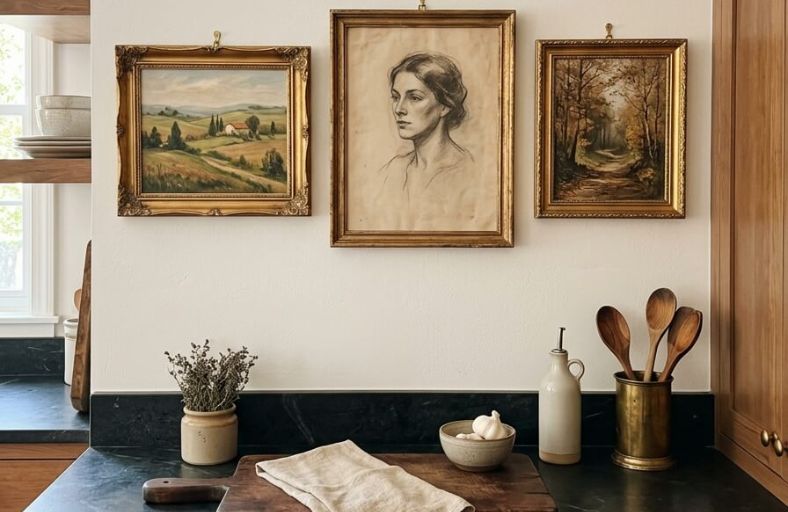
Hanging fine art on kitchen walls is the ultimate antidote to industrial coldness, immediately transforming a functional cooking space into a cozy extension of your living room.
Rather than leaving vertical planes empty, introducing framed canvases, oil paintings, or vintage sketches injects rich texture and color into the space.
The key to a successful kitchen art display is intentional placement and coordination.
You can hang a dramatic, abstract canvas to offset high-end metallic finishes, or frame a series of small, quiet family portraits to build an intimate focal point.
For those who love a balanced aesthetic, match the tones of your artwork with nearby elements like marble veins or wood cabinet grains.
Just remember to hang frames away from high-heat cooking zones and seal them tightly with archival backings to protect your beautiful investments from ambient humidity.
Built-In Culinary Literature Shelving
Prized cookbooks deserve to be proudly displayed on your walls rather than tucked away in dark pantry cabinets.
Dedicating a section of your kitchen wall to open wooden bookshelves introduces a cozy, layered bookshelf wealth aesthetic that instantly warms up minimalist spaces.
Using floating shelves crafted from warm white oak or rustic reclaimed wood adds an earthy texture that beautifully softens clinical surfaces.
Showcase your favorite culinary literature by stacking them horizontally and vertically, showing off their colorful, textured spines.
To keep the display looking highly curated and intentional, intersperse the books with small functional treasures.
A handmade ceramic mortar and pestle, small jars of dried botanicals, or potted culinary herbs like rosemary will turn a simple book display into an engaging story of slow living.
Whimsical and Playful Ceramic Displays
Mounting decorative ceramic plates directly onto the wall is a classic design technique that introduces soft, organic curves to break up the harsh, straight lines of kitchen cabinetry.
To keep this timeless style feeling completely fresh and modern, lean into whimsical motifs and clever color pairing.
Instead of scattering plates randomly, group them in tight, intentional clusters on a dedicated accent wall to create a striking gallery.
You can pair playful, under-the-sea ceramic motifs with deep oceanic wall tiles for a unified, immersive theme, or display traditional blue-and-white patterns alongside rustic wood paneling.
For an added touch of playful country charm, mount ceramic fish or animal-shaped pottery directly above doorways or cabinetry.
This playful curation immediately infuses your vertical spaces with artisanal depth, proving that kitchen decor does not have to be overly serious to look expensive.
High-Zoning and Vertical Space Maximization
In spacious kitchens with high ceilings, the extensive wall area above cabinets and refrigerators often feels cold and forgotten.
Implementing high-zoning techniques allows you to capitalize on this vertical space, turning a structural blank spot into a beautiful focal point.
Instead of leaving this upper boundary empty, install a rustic floating shelf high up on the wall, almost touching the ceiling.
Style this elevated platform with large-scale decorative objects that demand presence from a distance, such as a hand-carved wood sculpture, a substantial clay pot, or a row of vintage glass bottles.
Drawing the eyes upward not only emphasizes the generous volume of your room but also creates an intentionally layered, architectural backdrop.
This unexpected curation ensures that the entire height of the kitchen feels fully integrated and considered.
Color-Drenched Spatial Zoning
For those who want to make a bold, contemporary statement, color-drenched spatial zoning offers an incredibly high-impact wall strategy.
This technique involves painting your walls, floating shelves, and trim in a single, deeply saturated shade, visually erasing the boundaries of the room to create an envelope-like atmosphere.
While classic neutrals can feel a bit flat, designers are increasingly turning to complex, calming shades like mineral blue.
This soft, warm blue replaces cool grays, providing emotional reassurance and a sophisticated backdrop that highlights other textures without overwhelming them.
Paint your accent wall and open shelves in this single hue, then style them with matching ceramic plates and brass hardware to complete the monochromatic look.
| Strategy | Highlight Material / Tone | Spatial Impact |
| High-Zoning | Rustic wood and clay | Accents height and architectural volume |
| Color-Drenching | Saturated mineral blue | Erases boundaries and adds cozy depth |
This seamless wash of color acts as a rich, dimensional canvas, turning a simple kitchen wall into a dramatic architectural destination.