A single drop of crimson spreading across your favorite ivory linens feels like a slow-motion disaster.
One minute you are enjoying a peaceful morning, and the next, you are staring at a biological invasion that seems destined to ruin your high-thread-count sanctuary.
Blood contains hemoglobin, a protein that acts like a permanent dye once it anchors into fabric fibers. Most people panic and reach for the hot water, but that is the quickest way to weld the stain to the sheets forever.
Staying calm and using the right science-backed tricks can save your bedding from a permanent red shadow.
The Power of Cold Water Extraction
Cold water is your absolute best friend when dealing with a fresh blood stain. At a molecular level, water is a polar solvent, and fresh blood proteins are also polar, meaning they are naturally attracted to water molecules.
By using cold water, you keep the hemoglobin in a soluble state so it can be washed away.
If you make the mistake of using hot water, you trigger a process called denaturation. This essentially “cooks” the proteins, changing them from a liquid into an insoluble solid that physically weaves itself into your sheet’s fibers.
To use this method effectively, always flush the stain from the back of the fabric using high pressure from a faucet.
This pushes the blood particles out of the weave instead of driving them deeper into the yarn. If the stain is large, submerge the entire sheet in a basin of cold water for at least thirty minutes.
This rehydrates any dried bits and begins the dilution process without damaging the integrity of your luxury linens.
Proteolytic Enzyme Hydrolysis
When a stain has moved past the fresh stage, you need to bring in biological “scissors” known as proteolytic enzymes. Protease is a specific type of enzyme found in many heavy-duty laundry detergents.
These enzymes act as catalysts that target the peptide bonds holding the hemoglobin proteins together. By breaking these long chains into smaller, water-soluble amino acids, the enzyme effectively digests the stain away.
To get the best results, apply an enzyme-rich detergent directly to the spot. Let it sit for fifteen to thirty minutes. This gives the enzymes enough time to complete their chemical reactions before you start the wash cycle.
| Enzyme Type | Target Substrate | Best Use Case |
| Protease | Proteins | Blood, grass, or dairy stains |
| Amylase | Starches | Chocolate, pasta, or mud |
| Lipase | Lipids | Grease, body oils, or makeup |
Oxidative Catalysis with Hydrogen Peroxide
Hydrogen peroxide is often considered the gold standard for removing blood from light-colored sheets. The science behind it is fascinating. Red blood cells contain an enzyme called catalase.
When you pour hydrogen peroxide on a blood stain, the catalase immediately begins to decompose the peroxide into water and oxygen gas. This causes that satisfying fizzing or bubbling reaction.
Those tiny oxygen bubbles provide a mechanical lifting action, pushing the blood particles to the surface of the fibers so you can easily blot them away. However, proceed with caution on colored fabrics. Hydrogen peroxide is a mild bleaching agent and can cause localized fading.
Always perform a spot test on an inconspicuous corner first. Apply it directly, wait for the fizzing to stop, and then rinse thoroughly with cold water before putting the sheets in the wash.
Osmotic Desiccation via Saturated Saline
If you are dealing with a delicate fabric like silk or linen that might be too sensitive for harsh chemicals, a simple salt paste is a lifesaver. This method relies on the principle of osmosis.
By creating a concentrated salt solution, you create a region of high solute concentration that draws moisture and dissolved hemoglobin out of the fabric.
To apply this, mix table salt with a tiny amount of cold water to create a thick, grainy paste. Spread it over the damp stain and let it sit for about ten to twenty minutes. The salt acts as a natural desiccant, lifting the biological material into the salt matrix.
Once the time is up, rinse the area with plenty of cold water. This is a very safe method that preserves the natural cuticle of the fibers while still providing effective extraction power for fresh stains.
Sodium Bicarbonate and pH Neutralization
Baking soda is a household superhero, especially when it comes to “biological” stains. Chemically known as sodium bicarbonate, it is an amphoteric substance that acts as a gentle buffer to neutralize acids.
Since blood starts to become slightly acidic as it breaks down, applying baking soda helps to weaken the bond between the heme proteins and the fabric fibers. It is also incredibly effective at absorbing that distinct metallic scent that blood can leave behind.
To use this method, mix one part baking soda with two parts cold water to form a smooth, thick paste.
Spread the paste generously over the stained area and let it sit for at least thirty to sixty minutes. This extended dwell time allows the baking soda to physically lift the biological remnants into the paste.
Once finished, simply blot it away with a damp cloth and rinse with cold water. It is one of the safest methods for almost any fabric type, including your delicate linens.
Acetic Acid and Chemical Solubilization
Distilled white vinegar contains acetic acid, which is a mild but effective acid that helps break the chemical links formed during the early stages of protein coagulation. By shifting the pH balance, vinegar increases the solubility of the hemoglobin, making it much easier to flush out of the weave.
This is a fantastic “pantry-staple” solution if you don’t have specialized enzyme cleaners on hand.
The best approach is to create a mixture of one part vinegar to two parts cold water. Saturate the stain and let it soak for about ten to fifteen minutes. However, there is one critical rule: you must rinse the sheets thoroughly with fresh cold water before putting them in the washing machine.
The acidity in vinegar can actually erode the rubber seals and hoses inside your washer over time if it isn’t neutralized first.
| Natural Solution | pH Level | Best Use Case | Safety Tip |
| White Vinegar | ~2.5 | Breaking protein bonds | Rinse well to protect washer seals |
| Baking Soda | ~8.3 | Odor removal & lifting | Ideal for delicate linen fibers |
| Lemon Juice | ~2.2 | Natural bleaching | Only use on white fabrics |
Citric Acid and UV Photo-Bleaching
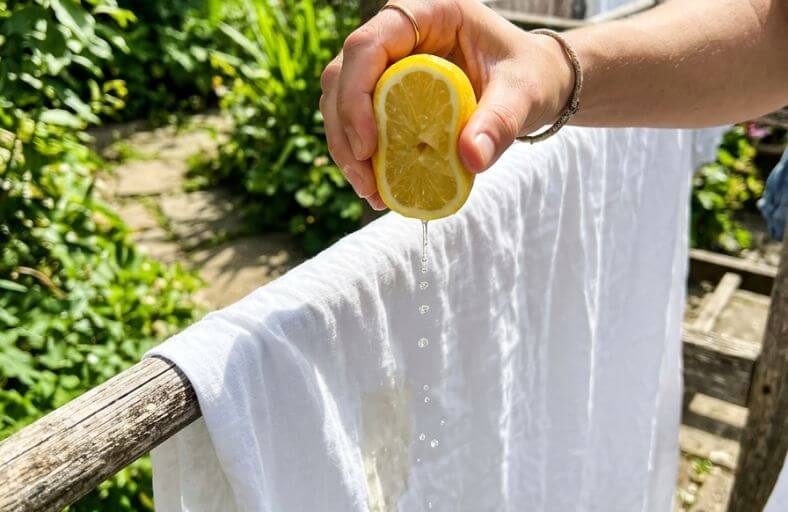
If you are dealing with white sheets and a stubborn yellow shadow left behind after washing, lemon juice is your secret weapon. Lemon juice contains citric acid, which acts as a natural chelating agent that binds to the iron in blood and strips away the color.
What makes this method truly “magic” is how it interacts with the sun. When you apply lemon juice and then expose the fabric to direct sunlight, a photo-chemical reaction occurs that accelerates the bleaching process.
Simply saturate the stain with fresh lemon juice and let it sit for about five to ten minutes. If possible, place the sheets in a sunny spot outdoors while they soak.
Be very careful to only use this on white cotton or synthetic blends, as lemon juice is powerful enough to fade colored sheets or damage the integrity of delicate linen if left too long.
Bromelain and Papain in Meat Tenderizer
It sounds like a strange kitchen hack, but using unsalted meat tenderizer is one of the most effective ways to remove old, “crusty” dried blood. Most meat tenderizers contain enzymes like bromelain (from pineapples) or papain (from papayas).
These enzymes are industrially designed to digest the tough protein fibers in meat, which means they do an incredible job of “eating” the dried hemoglobin proteins in a blood stain.
To try this, sprinkle a small amount of the unsalted powder over the stain and add a few drops of cold water to make a paste. Massage it into the fabric and let it work its magic for about thirty minutes. After the enzymes have broken down the protein matrix, rinse the area with cold water.
This is often the last-resort solution that saves sheets you thought were headed for the trash.
Saponification and Micellar Action with Bar Soap
Sometimes the most effective solution is a simple bar of laundry soap. Traditional soaps, like Fels-Naptha or pure castile soap, work through a process called saponification. These soap molecules have a double-ended nature: a hydrophilic head that loves water and a hydrophobic tail that avoids it.
When you rub the soap bar directly onto a wetted blood stain, the hydrophobic tails latch onto the biological fats and proteins in the blood, while the heads stay attached to the water.
This interaction creates tiny structures called micelles, which essentially trap the blood particles in a “cage” so they can be rinsed away. For the best results, use a soft-bristled brush or your fingers to massage the soap deep into the fabric fibers.
This mechanical agitation ensures the soap reaches the core of the yarn. This method is incredibly effective for heavy cotton sheets but requires a very gentle touch if you are working with delicate silks to avoid fraying the surface.
Percarbonate Oxidation and Color-Safe Bleaching
If the stain is widespread or has been sitting for a few hours, sodium percarbonate (commonly known as oxygen bleach) is a fantastic tool.
Unlike harsh chlorine bleach, which can react with the iron in blood to create permanent yellow-brown rust stains, oxygen bleach is much gentler and generally safe for colors.
When dissolved in cold water, it releases a surge of active oxygen that breaks down the organic pigments without damaging the fabric polymers.
| Feature | Oxygen Bleach (Percarbonate) | Chlorine Bleach (Hypochlorite) |
| Color Safety | Generally safe for all colors | Only for whites |
| Effect on Blood | Breaks down heme proteins | May react with iron to cause rust stains |
| Fabric Impact | Gentle on fibers | Can weaken cotton/linen over time |
Cornstarch and Capillary Absorption
For those moments when you catch a spill while it is still wet, cornstarch can act like a high-tech sponge. Cornstarch consists of microscopic, porous granules that are naturally highly absorbent.
When you apply a paste made of cornstarch and cold water to a fresh blood stain, it utilizes capillary action to pull the liquid blood out of the sheet and into the starch matrix.
To use this trick, mix enough cornstarch with cold water to make a thick paste and spread it over the wet area. The secret is to let the paste dry completely, ideally in a sunny window. As the water evaporates, the starch “wicks” the blood away from the fabric fibers.
Once the patch is dry and crusty, simply brush it off or vacuum it away. You will be amazed at how much of the stain disappears before the sheet even touches the washing machine. This is an ideal first step for linen, which tends to absorb liquids very quickly.
Carbonation and Mechanical Agitation
Club soda is more than just a refreshing drink; it is a gentle mechanical cleaner for your linens. The secret lies in the dissolved carbon dioxide. As the gas escapes the liquid, it creates thousands of microscopic bubbles that provide a continuous, gentle agitation directly at the fiber level.
This bubbling action helps to physically loosen blood particles that have started to settle into the yarn. Some carbonated waters also contain small amounts of phosphoric acid, which further assists in breaking down the protein bonds .
To use this method, pour cold club soda directly onto the stained area. You will see the effervescence go to work immediately.
For the best results, let the fabric soak in a shallow bowl of club soda for several hours before rinsing with fresh cold water.
It is a safe, chemical-free technique that is particularly effective for rehydrating older stains without risking damage to the delicate structure of your sheets.
Lipid Solvents and Alcohol Extraction
Even after the red pigment is gone, a faint, yellowish shadow may remain. This happens because blood cells are protected by lipid bilayers (fats) that can bond with fabric fibers.
While water-based cleaners target proteins, they often struggle with these fatty residues. Isopropyl alcohol (rubbing alcohol) acts as a specialized organic solvent that effectively dissolves these lipids, lifting them away from the surface .
To apply this treatment, dampen a clean cotton ball or a soft white cloth with a small amount of rubbing alcohol.
Gently dab the stain, always working from the outside edges toward the center to prevent the residue from spreading further into the clean fabric .
This precision method is often the essential final step required to achieve a truly invisible, professional finish on your high-end linens. It is especially useful for cotton and synthetic blends that trap oils easily.
Thermal Avoidance
The most critical factor in successful blood removal is not what you add, but what you avoid: heat. High temperatures from a dryer or an iron provide the thermal energy needed for permanent protein denaturation .
This process essentially “welds” the hemoglobin to the fabric polymers, making the stain nearly impossible to remove.
No matter how clean the sheet looks when wet, you must never subject it to heat until you are certain the stain is 100% gone .
Always air dry or line dry your treated sheets in a well-ventilated area . Once the fabric is dry, inspect the area under full-spectrum natural light, as artificial indoor lighting can often hide faint shadows .
If you see even the slightest hint of a mark, repeat the cold-water treatment process immediately. Only when the sheet is perfectly pristine should you return it to the normal drying and ironing routine.
| Cleaning Stage | Recommended Action | Risk Factor |
| Pre-wash | Cold water flush | Heat sets the stain |
| Drying | Air dry/Line dry | Dryer heat is permanent |
| Inspection | Natural sunlight | Indoor light hides residue |