Finding poop on your couch is one of those household emergencies that demands immediate action, whether it came from a young child, a pet, or an elderly family member with limited mobility.
The longer it sits, the deeper it penetrates into the upholstery fibers, making it significantly harder to remove and increasing the likelihood of a permanent stain and lingering odor.
The instinct to scrub aggressively is understandable but almost always makes things worse. A calm, methodical approach using the right products is far more effective.
Decode Your Couch’s Care Tag First
Before applying any cleaning agent, you must locate your sofa’s care tag, usually found under the seat cushions or on the bottom of the frame.
Using the wrong solution can cause permanent water rings, fabric shrinkage, or color bleeding. Always decode and follow the manufacturer’s cleaning letters :
| Cleaning Code | Authorized Cleaning Chemistry | Best Use Case |
| W (Water-based) | Mild dish soap, upholstery shampoo, water-based foam | Safe for most synthetics; handles water well |
| S (Solvent-based) | Dry-cleaning solvents, 90% rubbing alcohol | Safe for linen, wool, and water-sensitive fibers |
| WS (Water/Solvent) | Safe for both water and solvent-based cleaners | High flexibility; choose gentlest option first |
| X (Vacuum only) | No liquids allowed; vacuuming or dry brushing only | Delicate velvets; requires professional restoration |
Before proceeding with any cleaning, remember to test your chosen solution on a tiny, hidden spot of the couch to ensure it does not cause any discoloration or damage.
Soap & Water Method (For Code W & WS)
If your care tag permits water-based cleaning, a gentle dish soap mixture is highly effective.
Put on rubber gloves and carefully scrape up solid waste using a plastic spoon or spatula, being careful not to rub the stain deeper into the fibers. Blot any remaining liquid residue using heavy-duty paper towels.
Mix 1 tablespoon of clear, mild liquid dish soap with 2 cups of cool water. Dampen a clean, white towel in this soapy solution and gently dab the stain from the outside edges inward to prevent lateral spreading.
Do not rub or scrub. Blot with a dry white cloth to absorb the moisture. Finish by dabbing the spot with a cloth dampened with plain cold water to rinse out the soap residue, then blot dry.
Isopropyl Alcohol Mist (For Code S Microfiber)
Faux suede or microfiber couches with an “S” care tag are highly durable but will develop permanent water rings if treated with aqueous cleaners.
To clean these synthetic fibers safely, use 90% isopropyl rubbing alcohol, which dissolves the organic mess and evaporates rapidly before staining occurs.
First, vacuum the cushion thoroughly to remove dry debris. Pour rubbing alcohol into a spray bottle and lightly spritz the stained area.
Using a white microfiber cloth or sponge, gently blot the soil from the fabric, working in small sections so the couch does not become oversaturated.
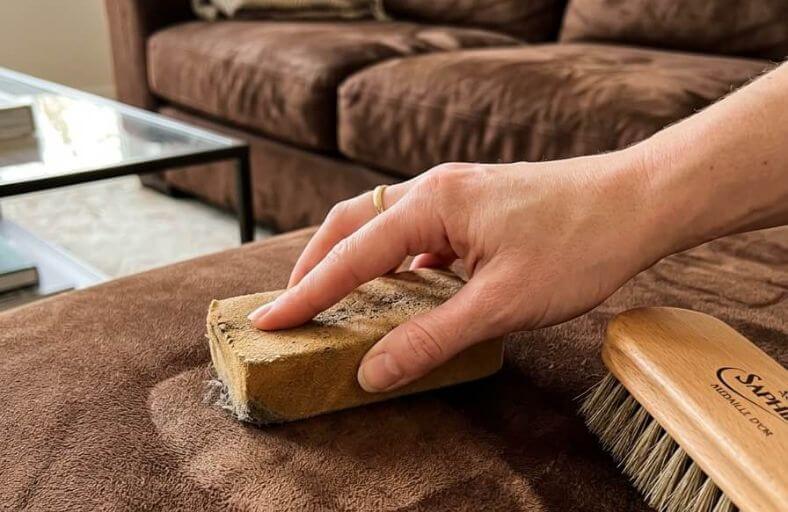
Once dry, the synthetic fibers may feel stiff. Rub a soft-bristled brush or dry sponge in circular motions to restore the microfiber’s velvety softness.
Minimal-Moisture Suede Cleaning (For Natural Suede)
Natural animal suede is extremely water-sensitive; liquid can strip its natural oils, causing stiffening or permanent darkening. To clean fecal spots, first scrape away solid waste gently with a plastic scraper.
Moisten a soft cloth with a tiny amount of white vinegar or rubbing alcohol. Gently dab the stain in a crosswise pattern, keeping moisture to an absolute minimum. Never soak the suede.
Once dry, use a specialized suede eraser or dry-cleaning block to softly rub away any dried residues.
Finish by brushing the leather in opposing directions with a soft suede brush to raise the nap and restore its uniform, luxurious texture.
Harness Bio-Enzymatic Power for Deep Protein Breakdown
Fecal matter is a complex protein-based organic stain that requires more than just standard soap to fully resolve.
While traditional chemical cleaners only mask the smell temporarily, biological enzymatic formulas contain active proteins called proteases that break down the stain at a molecular level.
These enzymes actively digest organic compounds, eliminating both the visible spot and the underlying odors that might otherwise tempt pets to return.
To apply this method, first blot away any lingering moisture from previous cleaning steps.
Spray your chosen bio-enzymatic cleaner generously over the entire stained area and let it sit for 10 to 15 minutes to allow the enzymes to work.
Gently blot up the excess liquid with a clean towel and allow the cushion to air dry completely.
Here is a quick look at some top-rated enzymatic brands that are highly safe for home upholstery:
| Brand | Best Features | Scent Profile |
| Rocco & Roxie | CRI Certified, child and pet safe | Mild and Fresh |
| Nature’s Miracle | Excellent for set-in, older stains | Citrus |
| Biokleen Bac-Out | Plant-based, fully biodegradable | Lime essence |
DIY Vinegar and Baking Soda Fizz Deodorizer
If you do not have a commercial enzyme cleaner on hand, you can easily create an effective chemical neutralizer using common household ingredients.
The combination of acidic white vinegar and alkaline baking soda creates a powerful, bubbling chemical reaction that physically lifts stubborn fecal particles directly out of the woven upholstery fabric.
Start by removing all solids and blotting the area with high-strength paper towels. Next, liberally sprinkle dry baking soda over the damp spot and let it sit for 10 to 20 minutes to absorb initial moisture and neutralize odors.
Mix 1 cup of white vinegar with 1 cup of warm water in a spray bottle, then spritz it directly onto the baking soda.
You will immediately see a fizzing reaction as the ingredients neutralize each other.
Let it sit for a few minutes, then gently blot the bubbly mixture dry with paper towels. Once the area dries completely, vacuum up any remaining baking soda residue.
Safe pH-Balanced Protocol for Leather Sofas
Because leather is a porous animal hide, treating it with harsh chemicals like bleach or ammonia can permanently damage its natural pH, causing it to degrade or crack.
Remediation on leather requires a delicate, pH-balanced approach to protect the material while eliminating organic bacteria.
Begin by wearing gloves and scraping away solid waste, then wipe the surface clean with a cloth dipped in warm, soapy water.
To eliminate persistent odors, lightly mist a mixture of equal parts white vinegar and water onto the leather and wipe it dry immediately with a soft microfiber cloth to prevent water saturation.
For deep-set odors, apply a leather-safe enzyme cleaner, such as Anti-Icky Poo, which can safely soak into the leather pores and cushion padding to digest the odor-causing bacteria.
Once the area is completely dry, always apply a high-quality leather conditioner to replenish the essential lipids stripped away during the cleaning process.