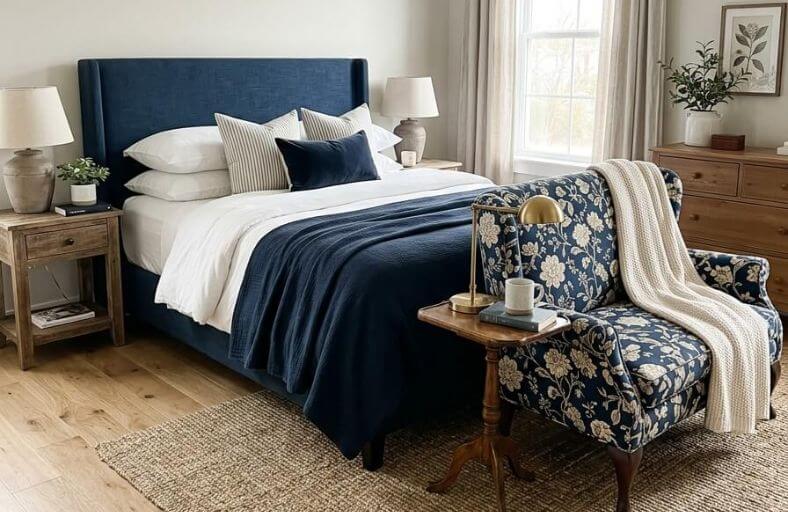
Walking into a room where every single item belongs to the same mahogany set feels like stepping into a stiff furniture showroom rather than a home.
It is a visual monotone that often lacks the warmth and personality needed for a true sanctuary.
Moving away from the traditional matching suite allows your space to breathe and tell a unique story through different eras and textures.
Curating a mixed environment is a rewarding process that transforms a generic sleeping area into a deeply personal retreat.
By understanding a few design pillars, you can confidently blend disparate pieces into a harmonious haven.
The 80/20 Rule for Style Hierarchy
Establishing a clear hierarchy is the most effective way to prevent visual chaos when mixing styles.
The 80/20 rule dictates that you should devote roughly 80% of your room to one primary foundation style, such as modern, traditional, or bohemian.
This dominant style usually includes your largest pieces, like the bed and wardrobe, providing a sense of stability and a strong visual anchor.
The remaining 20% is your “wild card” where you introduce contrasting accents to inject personality and intrigue.
For example, if your base is 80% minimalist, adding 20% vintage or ornate pieces can prevent the space from feeling sterile.
This intentional split ensures that different styles do not engage in a visual tug-of-war for dominance, allowing the room to feel curated rather than cluttered.
Matching Wood Undertones (Not Species)
Successfully mixing wood finishes depends more on the temperature of the wood than the actual species.
Woods generally fall into warm categories with yellow, red, or orange undertones, or cool categories with gray or blue undertones.
To create a cohesive look, identify your dominant wood tone, often the floor or the bed frame, and choose secondary pieces that share the same temperature.
A warm walnut dresser can pair beautifully with golden oak floors because they share a similar base heat.
If you find yourself struggling with clashing finishes, using a bridge wood like reclaimed lumber can help connect disparate tones.
Repetition is key; make sure each wood tone appears at least twice so it feels like a deliberate choice.
Scale and Proportion
Scale refers to how furniture fits the room, while proportion describes how pieces relate to one another. Even if styles differ, the visual weight must remain balanced.
A massive, chunky bed frame will overwhelm a tiny, delicate nightstand, making the arrangement look disjointed.
Designers often use the two-thirds rule to maintain balance. Your bed should ideally occupy about two-thirds of the wall length it sits against to anchor the space correctly.
For functional comfort and visual harmony, your nightstand height should align closely with the top of your mattress.
Measuring your space is vital; a king-sized bed in a small room leaves no breathing space, which kills the flow. When pieces are in proportion, the room stops trying so hard and simply feels right.
Using Color as the Invisible Thread
Color acts as the unifying glue that makes mismatched furniture feel purposeful. The industry-standard 60-30-10 rule suggests using 60% of a dominant base color, 30% for a secondary tone, and 10% for a bold accent.
In a mixed bedroom, you can use the 60% base color on walls and large items to create a neutral foundation.
| Color Role | Room Element | Purpose |
| 60% (Dominant) | Walls, Large Wardrobes | Creates a stable foundation |
| 30% (Secondary) | Bedding, Curtains, Rugs | Adds depth and visual interest |
| 10% (Accent) | Pillows, Art, Small Decor | Provides a pop of personality |
If your furniture pieces come from different eras, repeating a specific hue through upholstery or accessories can bridge the gap.
For instance, a navy modern bed and a vintage chair with navy accents will look like a set because of the shared color story.
Textural Layering and the Rule of Three
A beautifully curated bedroom should engage the senses beyond just the visual.
Texture adds a layer of depth and warmth that matching sets often lack, and the secret lies in creating a deliberate contrast between hard and soft surfaces.
Hard elements like metal lighting or wood furniture should be softened by plush textiles like velvet cushions, chunky wool rugs, or linen bedding.
To make these choices feel intentional rather than random, you should apply the “Rule of Three“.
This design principle suggests that a specific material or texture should be repeated at least three times in a room to create a natural visual rhythm.
For example, if you love the look of rattan, you could weave it into your space with a statement headboard, a small decorative tray on the dresser, and a frame for a mirror on the wall.
| Hard Surface | Soft Contrast | Resulting Aesthetic |
| Matte Black Metal | Chunky Wool Knit | Balances industrial edges with cozy warmth |
| Polished Marble | Velvet Upholstery | Creates a high-end, sensorial experience |
| Glass Side Table | Boucle Fabric | Softens geometric lines with organic texture |
Unifying with Shared Hardware
Sometimes the smallest details do the heaviest lifting in interior design. Hardware is a powerful unifying thread that can tie mismatched furniture pieces together into a single, cohesive design language.
If you have a vintage dresser and a modern nightstand that feel disconnected, swapping out their factory handles for matching custom hardware can work wonders.
Choosing a consistent finish like matte black, brass, or aged bronze creates a sense of harmony across different eras and styles.
By repeating this shared detail in at least three spots, such as on your wardrobe, dresser, and bedside tables, you create a golden thread of consistency.
This simple and affordable update tells the eye these pieces were chosen to live together, turning a random collection into a professionally curated set.
Balancing Mismatched Nightstands
Using identical nightstands is a safe default, but mixing them is one of the most effective ways to inject personality into your bedroom.
The key to making mismatched tables look high-end is maintaining consistency in scale and height.
Even if one nightstand is a mid-century wood chest and the other is a contemporary metal pedestal, they will feel like a pair if their tops align closely with the height of your mattress.
This alignment creates a continuous horizontal line that the human eye perceives as balanced and organized.
To further bridge the gap between two different styles, use identical lamps or repeat identical styling moves, such as matching stacks of books or similar ceramic trays on both surfaces.
Maintaining a similar visual weight is also crucial; ensuring that each piece has a similar presence and surface area ensures the room feels stable and calm.