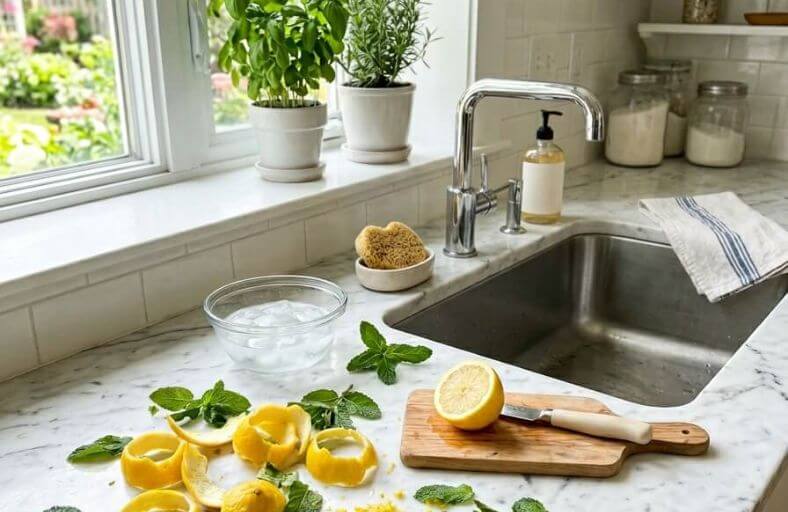
A sparkling white marble countertop and golden fixtures cannot hide the invisible truth: your kitchen sink basin often harbors 1,250 times more bacteria per square inch than a toilet seat.
It is a hidden playground for microbes that thrive on constant moisture and microscopic food scraps.
That lingering scent of a damp swamp or rotting trash isn’t just a minor nuisance; it is the result of anaerobic decomposition happening right beneath your drain.
Transforming this area back into a fresh sanctuary requires more than a quick rinse. It demands a tactical approach to plumbing sanitation and the science of odor mitigation.
Thermal Disruption via Boiling Water
The most immediate weapon against a smelly drain is simple thermal energy. Most sink odors stem from Fats, Oils, and Grease (FOG) that cool and solidify on pipe walls, trapping food particles that eventually rot.
Boiling water acts as a powerful solvent, raising the temperature of these deposits above their melting point so they can be flushed away.
To execute this, boil a full kettle and pour it down the drain in two or three stages. This staged approach keeps the heat concentrated as it moves through the P-trap.
However, you must check your pipe material first. While metal pipes handle boiling heat easily, PVC pipes can soften if the water is over 140°F. For plastic pipes, use hot tap water mixed with grease-cutting dish soap instead.
| Method | Best For | Pipe Compatibility |
| Boiling Water (212°F) | Solidified grease and soap scum | Metal or Cast Iron only |
| Hot Soapy Water (120°F-140°F) | Daily grease and surface oils | All pipes, including PVC |
Baking Soda and Vinegar
This classic DIY duo uses a rapid chemical reaction to physically dislodge grime and neutralize acidic odors.
Baking soda, or sodium bicarbonate, is a mild base that absorbs odors, while white vinegar contains acetic acid that kills bacteria.
When combined, they create a vigorous fizzing action caused by the release of carbon dioxide gas.
Start by pouring half a cup of baking soda down the drain, followed by one cup of white vinegar. Immediately plug the drain with a stopper to force the fizzing gas downward into the buildup.
Let it sit for 15 minutes to allow the acetic acid to break down the organic biofilm. Finish by flushing with hot water to rinse away the loosened residue. This method is non-toxic and safe for all types of plumbing systems.
Mechanical Scouring with Ice and Salt
If you have a garbage disposal, the smell often comes from a thin film of pulverized food stuck to the grinding impellers.
Since you cannot safely reach inside to scrub, you can use ice and salt to do the work for you.
As the disposal grinds the ice, the frozen shards act as high-velocity abrasives that knock loose the black slime coating the internal components.
Fill the disposal with two cups of ice cubes and one cup of coarse rock salt or kosher salt. Turn on the cold water and start the disposal.
The salt provides a secondary layer of grit that polishes the metal surfaces while the ice provides the impact needed to dislodge debris.
Always use cold water during this process to keep any residual grease in a solid, brittle state, making it much easier to break apart and flush out of the system.
Bio-Enzymatic Degradation
While traditional cleaners use harsh chemicals to burn through clogs, bio-enzymatic cleaners utilize a living workforce of beneficial bacteria and enzymes to digest organic matter.
These products are incredibly safe for your plumbing because they are non-corrosive and eco-friendly.
They work through a “lock and key” mechanism where specific enzymes target specific types of waste.
Unlike chemical openers that work in minutes, these biological agents colonize your pipes and work over several hours to consume biofilms.
The four primary enzymes found in these cleaners act like molecular scissors to break down the complex substances causing your sink’s malodor.
| Enzyme | Target Soil | Chemical Action |
| Lipase | Fats, Oils, and Grease | Splits grease molecules |
| Protease | Proteins (Meat, Eggs) | Breaks down food scraps |
| Amylase | Starches (Pasta, Rice) | Dissolves carbohydrate chains |
| Cellulase | Plant Fibers | Degrades vegetable peels |
This method is particularly recommended for homes with septic systems, as the bacteria actually help support the natural breakdown processes in your septic tank.
Manual Debridement of the P-Trap
When odors persist despite every liquid treatment, the culprit is likely a thick accumulation of waste inside the P-trap.
This U-shaped pipe beneath your sink is designed to hold water to block sewer gases, but its curve also makes it a magnet for heavy food particles and “black slime”.
Manually cleaning this assembly is the most definitive way to eliminate deep-seated smells.
To start, place a bucket under the trap to catch any stagnant water. Loosen the slip joint nuts by hand or with a wrench if they are stubborn.
Once the trap is removed, use a flexible pipe brush to scrub the interior walls. Removing this physical biofilm eliminates the bacteria at their source, which no liquid flush can fully achieve. Before reassembling, inspect the rubber O-rings for wear to ensure a watertight seal.
Biofilm Remediation of the Splash Guard
For sinks with garbage disposals, the rubber splash guard at the drain’s mouth is a frequently overlooked source of rot. Its underside is a prime location for food residue and slime to accumulate.
Because this part is not constantly scoured by the disposal’s mechanical action, it becomes a massive breeding ground for bacteria.
Cleaning the splash guard is a high-impact task that requires very little effort. If your guard is removable, you can pull it out and soak it in warm, soapy water or run it through the dishwasher.
For fixed guards, use an old toothbrush dipped in grease-cutting dish soap to scrub the underside of each rubber flap.
Always ensure the disposal is disconnected from its power source before you begin cleaning near the drain opening for your safety.
Natural Solvents and Essential Oils
Once you have cleared the biological source of the odor, you can apply a finishing touch that utilizes natural solvents and aromatic compounds.
Citrus fruits like lemons, limes, and oranges contain d-limonene, a powerful natural solvent found in their rinds.
Running citrus peels through your garbage disposal helps break down any microscopic grease residue while providing an immediate burst of fresh fragrance.
For an even deeper aromatic effect, you can use essential oils such as peppermint, tea tree, or eucalyptus.
These oils possess natural antimicrobial properties that help inhibit the return of odor-causing bacteria. Simply add five to ten drops of your chosen oil to a baking soda scrub or drop them directly onto the disposal splash guard.
This step moves beyond simple cleaning toward a holistic approach to kitchen wellness, leaving your workspace smelling like a high-end spa rather than a utility area.
Proactive Waste Management
The most effective way to manage sink odors is to prevent the accumulation of waste before it starts. High-quality plumbing maintenance is largely a matter of disciplined habits, particularly regarding Fats, Oils, and Grease (FOG).
These substances should never go down the drain because they solidify into a sticky glue that traps food particles.
Using a simple mesh strainer is another low-cost, high-impact tool that catches debris before it enters your plumbing.
Integrating a few simple rules into your daily routine can significantly reduce the need for deep cleaning.
| Action | Why It Works | Frequency |
| Use Mesh Strainers | Catches large food scraps before they rot | Every use |
| Wipe Greasy Pans | Prevents FOG from coating the pipes | Before washing |
| Flush with Cold Water | Keeps grease solid so it can be moved out | Post-disposal use |
For instance, always wipe greasy pans with a paper towel before washing them and ensure you run the water for thirty seconds after using the disposal to flush waste completely through the P-trap.
Identifying Structural Issues
In rare cases, a persistent sink odor is not caused by decaying food but by a failure in your home’s plumbing architecture. The most common structural issue is a dry P-trap.
This U-shaped pipe relies on a water seal to block sewer gases from entering your home. If a sink is infrequently used, this water can evaporate, allowing methane and hydrogen sulfide to leak into the kitchen.
The fix is remarkably simple: run the water for thirty seconds to re-establish the seal.
If the smell resembles sewage and persists even after cleaning, your plumbing vent stack might be blocked.
This pipe extends through your roof and allows the system to breathe. If it is clogged with leaves or bird nests, it creates a vacuum that siphons water out of your traps.
For these situations, or if you notice multiple drains smelling at once, it is best to consult a professional plumber to inspect the venting or the main sewer line.