A thin whistle of freezing wind cuts through the living room, sending a physical shiver down your spine while the thermostat screams at maximum capacity. This is the silent home-energy heist.
Windows with failing seals account for up to 20% of your home’s heat loss, turning your cozy sanctuary into a drafty, expensive icebox.
Resealing your windows is a remarkably satisfying weekend project that keeps the outdoor elements where they belong while keeping your hard-earned money in your wallet.
Hunt Down the Drafts with a Candle Test
Before buying tubes of caulk, you need to find exactly where the air is slipping inside.
On a breezy day, light a simple candle or incense stick and slowly pass the flame along the interior seams of your window frame.
If the flame flickers wildly or the smoke dances horizontally, you have located a thermal bypass.
Don’t forget to gently tap the glass panes too; a rattling windowpane is a surefire indicator that the exterior glazing putty has deteriorated and requires restoration.
Tracking these cold paths ensures you apply your seals exactly where they are needed most.
Strip Away the Old, Deteriorated Gunk
Trying to run a fresh bead of caulk over old, crumbling sealant is a recipe for immediate failure.
For a durable seal, you must scrape the joints completely clean down to the bare wood or vinyl substrate.
Apply a caulk softener to stubborn areas and let it sit for two hours before scraping with a stiff putty knife.
Once the bulk of the old sealant is gone, scrub away dirt, mold, and dust with soapy water.
Finish with a quick wipe using isopropyl alcohol and a lint-free rag to eliminate any oily residues that could prevent the new caulk from bonding.
Master the Exterior Seal with High-Performance Caulk
For exterior window joints, you need a high-durability polymer that can withstand intense UV rays, wind-driven rain, and structural movement. Polyurethane and silicone are your best choices here.
| Sealant Type | Best For | Notable Benefit | Drawback |
| Silicone | Glass-to-metal / non-porous | 50-year lifespan, highly flexible | Non-paintable |
| Polyurethane | Dissimilar materials / wood | Superior adhesion, paintable | Long curing time |
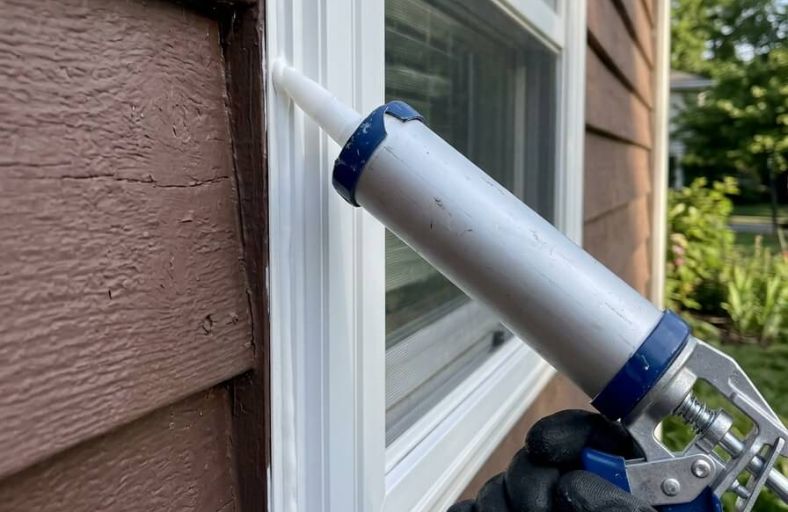
Load your cartridge into a smooth-rod caulking gun, slice the nozzle at a 45-degree angle to create a tight 1/8-inch opening, and pull a steady bead toward your body.
Immediately smooth the wet bead using a damp finger or a tooling spatula to push the sealant deep into the joint.
Seal the Interior Trim for Extra Protection
Do not ignore the interior margins where the window casing meets your drywall. For these dry, low-movement areas, a siliconized acrylic latex caulk (often called painter’s caulk) is the ideal choice.
It is inexpensive, virtually odorless, extremely easy to tool, and cleans up effortlessly with plain water.
Run a continuous bead along the inner trim lines and smooth it with a wet finger.
Unlike pure exterior silicone, siliconized acrylic latex accepts paint beautifully, allowing you to seamlessly match the sealed joint to your interior wall colors once it has dried.
Restore Wood Windows with Classic Glazing Putty
If you live in a charming older home with classic wooden window frames, standard caulk is not the answer for sealing the glass panes.
Instead, you need traditional glazing putty, which acts as both a secure adhesive and a weather seal.
To start, lay the window sash flat on a table to prevent the glass from slipping. Carefully scrape out the old, brittle putty with a putty knife. If the putty is stubborn, use a heat gun on a low setting to soften it first.
Here is the golden rule: always apply a high-quality oil-based primer to the bare wood rebate before putting down new putty.
Unprimed wood acts like a dry sponge, sucking the linseed oil right out of the compound and causing your new putty to crack and fail within weeks.
Once primed, press a thin 1/8-inch rope of glazing compound into the L-shaped groove.
Place the glass pane, secure it with metal glazing points every 8 inches, and tool the putty to a smooth 45-degree water-shedding angle.
Upgrade Active Sashes with Mechanical Weatherstripping
While caulking handles the static, non-moving parts of your windows, you need weatherstripping to seal the active joints that slide or swing open. Choosing the right material ensures a tight seal without jamming your window.
For sliding and double-hung windows, V-strip (or tension seal) is incredibly durable and slides smoothly in the side tracks without creating friction.
For casement windows that swing shut, compressible EPDM cellular foam or hollow silicone bulb tape is perfect because it compresses flat to block drafts completely.
First, scrub the window tracks and jambs with soapy water and let them dry completely. Measure the length of the window frame and cut your weatherstripping with a utility knife.
Peel off the adhesive backing and press the strip firmly into place, working from corner to corner.
For wooden windows with sliding sashes, you can nail metal V-strips into the jambs for a highly effective, classic look that lasts for years.
Defeat Stubborn Drafts with Shrink-Film and Treatments
Sometimes, even the best caulking and weatherstripping need a little extra help during extreme winter months.
This is where temporary auxiliary systems shine. A plastic shrink-film window kit is a highly affordable, effective winter upgrade.
Simply apply the included double-sided adhesive tape to your clean window trim, press the clear plastic film onto the tape, and use a standard hairdryer to shrink the film taut.
This traps a protective layer of dead air between the cold glass and your warm room, dramatically improving insulation.
To complete your defense, pair your sealed windows with high-performance window treatments. Cellular (honeycomb) shades trap air in their hollow fabric cells, acting as an extra thermal barrier.
Alternatively, hang heavy, closed-weave thermal drapes as close to the window frame as possible, letting the bottom pool slightly on the sill.
These layers work together to stop lingering drafts and keep your heating bills beautifully low.